

D.C.’s new rules are pushing streateries off the street
The District made streateries permanent. But restaurant owners say the rules are too costly and complicated to keep them up.
The District made streateries permanent. But restaurant owners say the rules are too costly and complicated to keep them up.

Candidates want to lower the cost of living, but a slowing market and policy divides could get in the way.

A roundup of recurring local events where you can have fun, learn something, and build community.

The District made streateries permanent. But restaurant owners say the rules are too costly and complicated to keep them up.

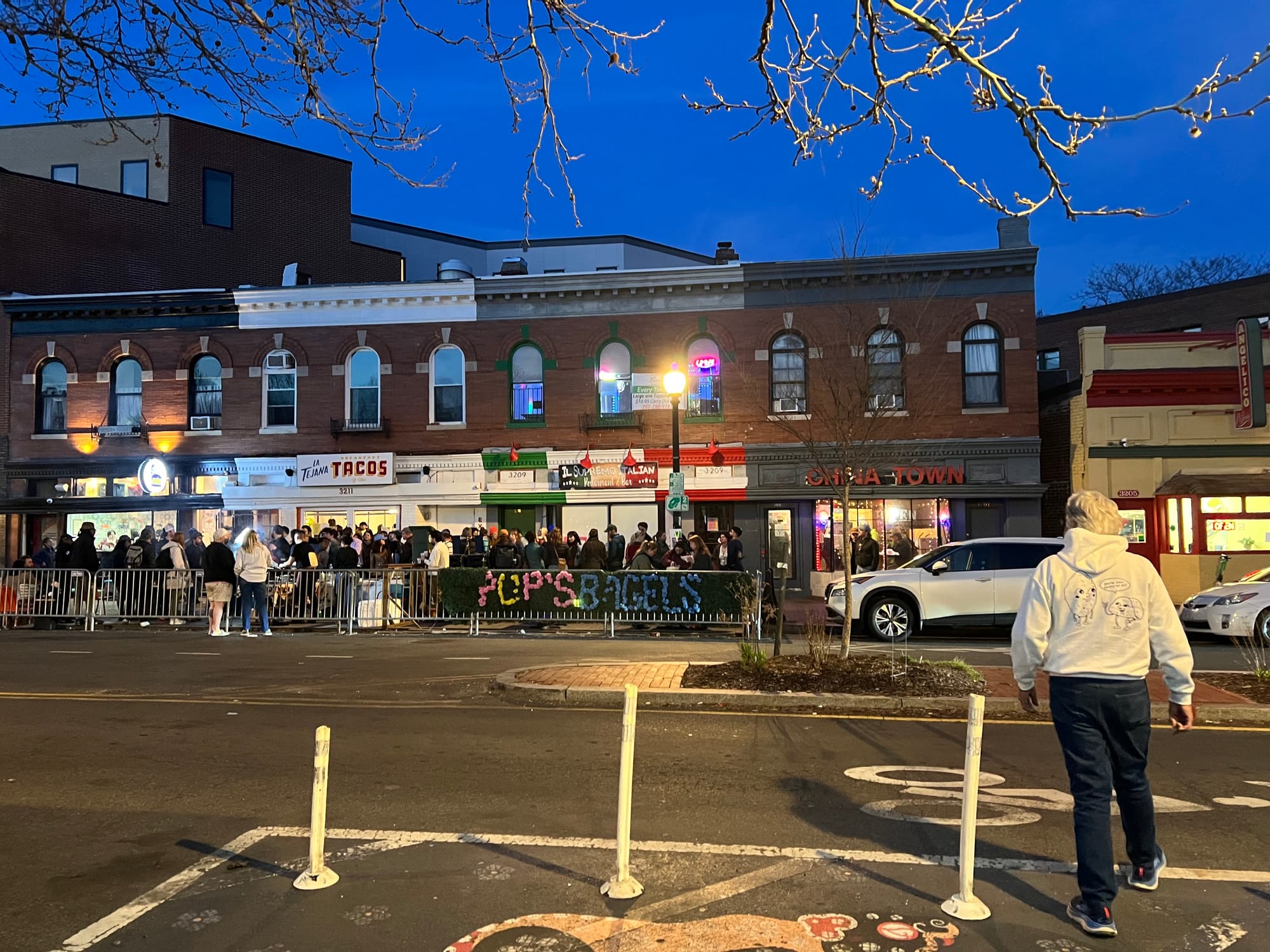
The team at La Tejana waited as long as they could before taking down their streatery; when they did, they knew they wanted to make a moment of it. “This thing has been such a great asset. Let's have a party and shut it down,” said Gus May, co-owner of the popular breakfast taco spot in Mount Pleasant.
May said hundreds of people attended last week's goodbye party for the outdoor dining patio, including Ward 1 city council candidates Aparna Raj and Miguel Trindade Deramo, as well as D.C. Attorney General Brian Schwalb's campaign staff. “It kind of turned into a political thing, but we just wanted to have a party. And it was an awesome party,” said May.
Newly implemented District Department of Transportation (DDOT) rules include stricter design requirements, such as requirements around barriers to protect patrons from traffic. Additionally, businesses now have to pay an annual fee of $15 per square foot, on top of costs to apply for a permanent permit and to rent concrete barriers from the city.
May estimates the changes would have cost their restaurant $20,000 — a price burden that’s prohibitive for many small businesses like theirs.
“The city values the revenue generated from a single parking spot over what that space can mean to the people who live here,” May said. “That just seems like a failure of public policy.”
Several other streateries have been taken down in Mount Pleasant as a result of the changes, right at the time of year when they would be packed with customers. May listed the ones near his store that are now gone: Ellē, Marx Cafe, Joia Burger, Il Supremo, Suns Cinema, and Beau Thai. “I think there's a lot of frustration and resentment amongst the small business community, at least here in Mount Pleasant,” he said.
DDOT says that these new regulations reflect the more permanent nature of streateries, and that they’ve worked hard to communicate with restaurants about the changes.
“The temporary program was created as an emergency response to the Covid-19 pandemic and was never intended to allow for permanent installations,” a spokesperson for DDOT wrote in an email to The 51st. “The permanent program provides a robust framework that allows businesses to thrive, keeps streets safe and accessible.”
Nearby in Adams Morgan, 18th Street was once lined with these outdoor dining structures. Today, the popular dining strip that used to hold streateries for restaurants and bars like Air, Andy’s Pizza, Madam’s Organ, Tryst, and The Diner is now occupied by about ten parked cars.
For La Tejana, the streatery was an essential part of their business, as inside seating is pretty limited. “To have that additional 15-20 seats, where people could sit, especially on the busiest days — it got a ton of use,” said May.
Knowing they had to get rid of their streatery was part of the reason they stopped doing their nighttime service in December 2025, said May, since the extra seating was essential for attaining the amount of business necessary to stay open in the evening. A few doors down at Marx Cafe, owner Daniel Quiroz said he expects to see a 20 to 25 percent loss in gross sales from April to October, which means he won’t hire more staff for those busier months. And over at The Green Zone in Adams Morgan, owner Chris Hassaan Francke said they’ve had to trim staff as a result of the changes.
While Marx Cafe’s streatery is now gone, Quiroz said they’re trying to bring it back. But fronting the cash to pay for an architect to design a structure that fits the new specifications, in addition to paying for permits and construction, is difficult — not to mention logistically challenging.
“The common thing that kept coming up every time I was checking in with restaurant businesses specifically was the streateries,” said Mitra Moin, who works closely with local businesses as District Bridge’s Main Street Manager for Columbia Heights and Mount Pleasant. “And how complicated it was to get the permits as part of the permanent program.”
Quiroz said he’s struggled to find reliable architects who can help him meet the new design requirements, despite shelling out thousands of dollars. And once a business applies for their streatery permit, they need to go through a hearing with D.C.’s Public Space Committee, which takes place on a monthly basis. Currently, 5 streateries have been approved under the new permanent program. 76 applications are still pending review by the Public Space Committee.
Quiroz said Marx Cafe probably won’t be able to go through a hearing until June or July. Then his business would need to actually build the structure, which would happen in August or September. At that point, the warmest, busiest months of the year will already have passed by.
“It feels like the city is doing all this to try to discourage us to actually build it, so that way we don't have it,” said Quiroz. “Because they got so many restrictions and it's expensive.”
The loss of these outdoor dining structures has become an election issue. “We wanna bring back streateries,” mayoral candidate Janeese Lewis George said outside La Tejana in a recent Instagram video. In December, mayoral candidate Kenyan McDuffie co-authored emergency legislation that eased regulations and reduced the cost of streateries to business owners.
And when the topic of streateries came up at a Ward 1 election debate hosted by DC Nightlife Council this week, candidates like Miguel Trindade Deramo, Aparna Raj, and Rashida Brown called the rollout of the permanent program a failure. Trindade Deramo brought up the challenges of businesses hiring architects. “Why didn't the District just provide five or six pre-approved plans that restaurants could choose from?” he asked.
Candidate Terry Lynch said the updated guidelines are “both right and wrong.” While some streateries were well-used and added vitality to the neighborhood, Lynch pointed out that some were closed and took up parking spots that patrons of other businesses could use. “It's a site by site situation,” he said.
But streateries didn’t just benefit businesses, said May, who sees them as incredible community spaces. “It was a place where neighbors would catch up with each other,” he added.
For Liz Borkowski, a Columbia Heights resident with long Covid, streateries offered options for a safer dining experience. “I am a little bit sad to see that there are fewer opportunities for those of us who are still trying really hard not to get Covid,” she said.
“We're really comparing, are you using this space on a public street for three or four cars to park, or are you using it so a whole bunch of people can go out and enjoy a meal outdoors and bring in some revenue to the restaurant and to the city?” she said.
Quiroz said that customers miss Marx Cafe’s streatery. “And I tell them we're applying for it, and hopefully, we will have it back soon,” he said.
In her role at District Bridges, Moin has been helping restaurants like Marx Cafe navigate the process. After hearing a lot of conversation from community members about streateries, District Bridges started a campaign to raise $60,000 to help restaurants offset some of the costs.
“For the community, I think it's a huge loss of the vibrant atmosphere,” said Moin. “It feels really romantic and lively and fun to be walking around and seeing people out, and it's just a bummer that now, instead, it's like two parked cars.”

Candidates want to lower the cost of living, but a slowing market and policy divides could get in the way.

Steep city budget reductions mean patients are going without medicine, losing teeth, and living with pain.


They collect memorabilia and create tributes to the iconic system.

Feds say the 15th Street protected bike lane will cause more traffic during cherry blossom season, but bike advocates say it makes everyone safer.
With your help, we pursue stories that hold leaders to account, demystify opaque city and civic processes, and celebrate the idiosyncrasies that make us proud to call D.C. home. Put simply, our mission is to make it easier — and more fun — to live in the District. Our members help keep local news free and independent for all: