


Goodbye Gas? Inside the battle over your home heat
D.C. and Washington Gas are at odds over the future of the city's pipeline network.

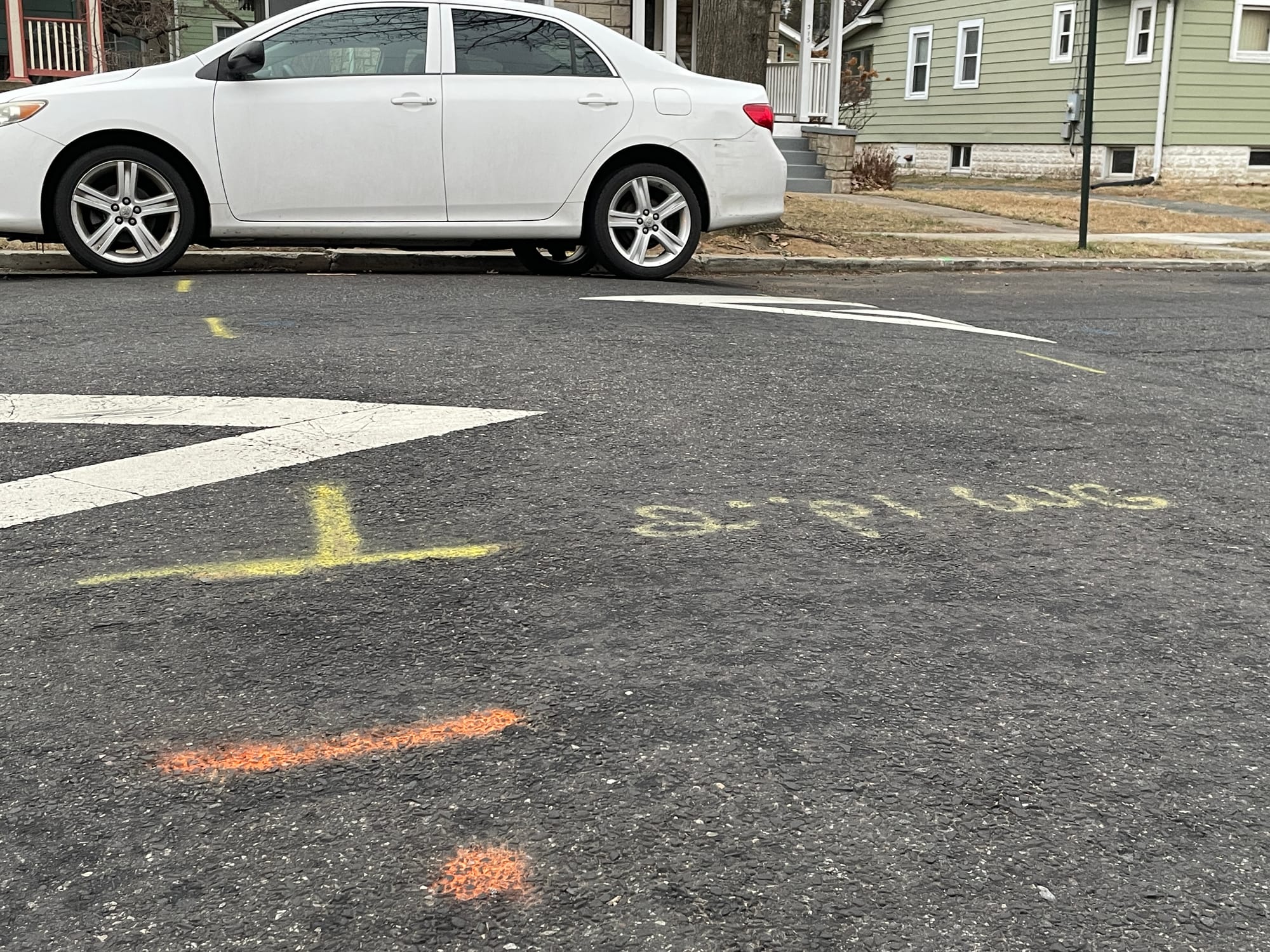
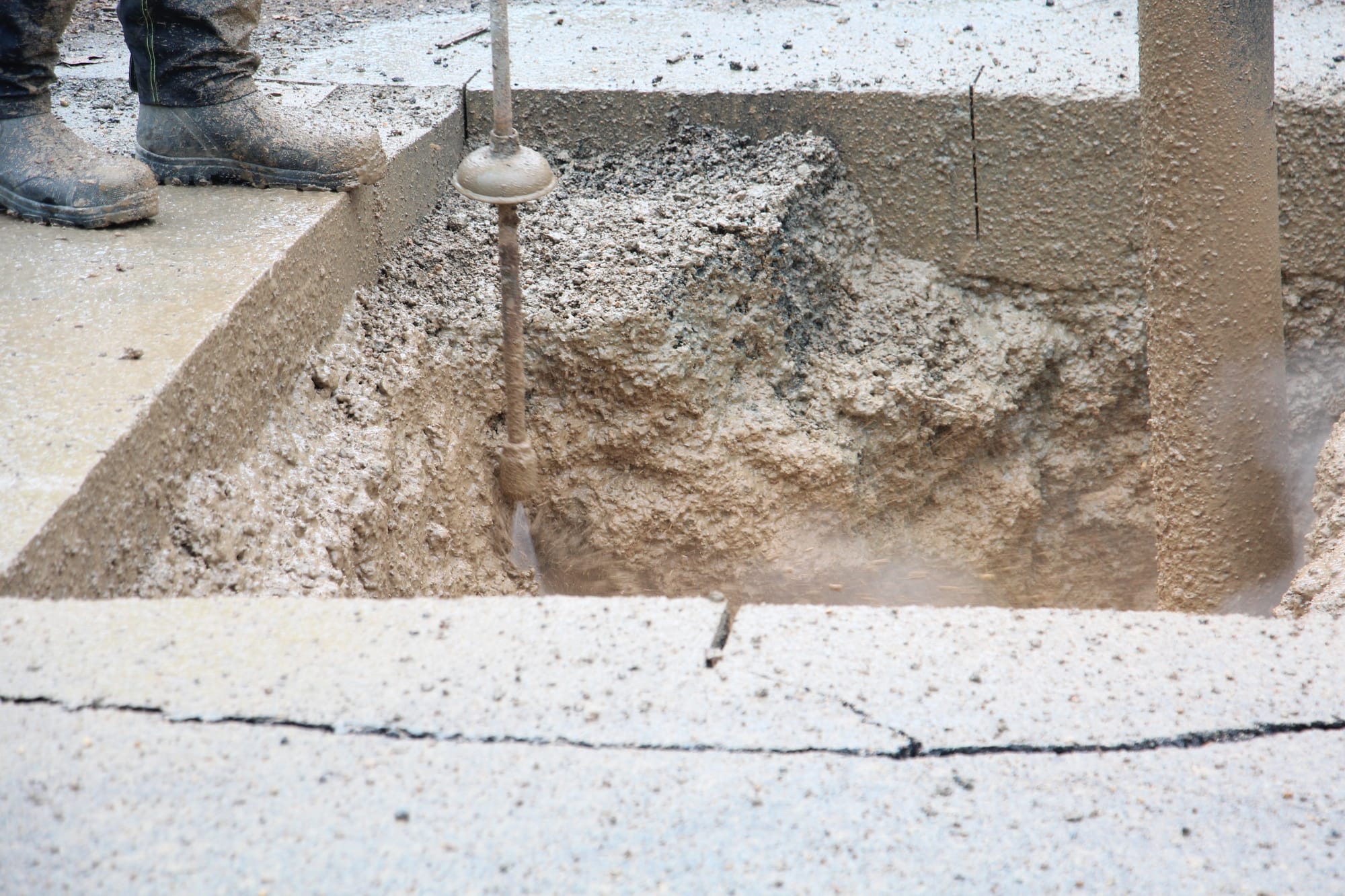
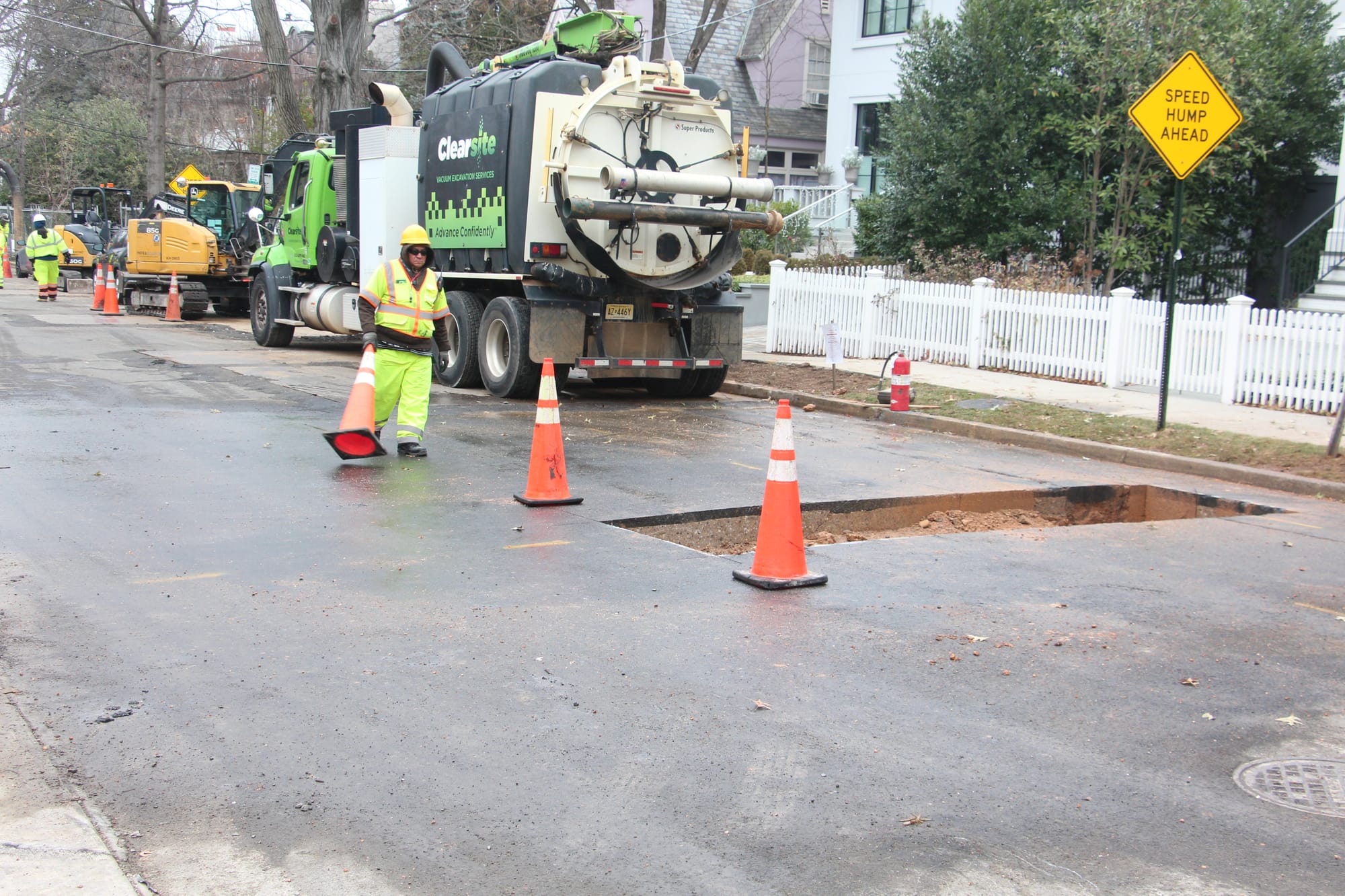
Replacing gas pipes looks a little bit like digging graves. On a recent weekday afternoon, yellow-vested workers clustered around coffin-sized rectangles carved into the asphalt of 38th Street NW near the Washington Cathedral. They blasted away the red dirt underneath with high-pressure jets of water, uncovering decades-old metal pipes.
A worker explained the plan: insert new plastic tubes, which are less prone to potentially dangerous leaks, into the existing service lines that deliver fuel to furnaces, water heaters, and stoves.
This is PROJECTpipes, now renamed District SAFE, Washington Gas’s ambitious attempt to systematically replace old gas pipes across the city. The company started doing this more than a decade ago, and has so far spent almost $400 million, but it still hasn’t touched the vast majority of pipes it says need replacing. The entire project could take decades and cost billions of dollars — but now, it’s at a crossroads.
In 2024, Washington Gas asked its regulator, the DC Public Service Commission, for approval to extend the program into a third phase, spending another $215 million over the next two years to replace 12 miles of main distribution lines and around 3,600 service lines in the District.
But District officials and environmental activists have asked the PSC to reject the request. They argue that pouring money into fossil fuel infrastructure contradicts the city’s goal of going virtually carbon free by 2050. They also say the company is wasting residents’ money — the project has already contributed to a 13 percent increase in gas rates at the start of this year.
“It’s a massive hit to people’s ability to pay their bills,” says Councilmember Charles Allen. Gas pipes, he says, belong to the past, not the future. “We are going to be moving away from gas and fossil fuels, as we should be. So building out an infrastructure that is trying to use the old way is just not very smart.”
Washington Gas declined an interview request, but provided answers to written questions, saying that the company is doing what’s necessary: “following federal guidance that calls for the targeted replacement of high-risk pipes.”
Part of the dispute between the District and its gas supplier revolves around a technical question: is it more cost-effective to fix individual leaks as they appear, or follow a comprehensive plan to replace all aging pipes? But the PSC’s decision will also amount to a fork in the road for the city: Will D.C. homes and businesses be able to successfully transition to an electric future, or will gas continue to power the city for decades to come?
Hundreds of millions of dollars, and perhaps the future of Washington Gas itself, are riding on the commission’s decision, which could come any day now.
How the fight began
It’s a fact: D.C.’s gas network is old and prone to leaks. In 2014, researchers from Duke and Boston Universities cruised the city’s streets with high-tech sensors and detected methane in 6,000 spots. Most of the leaks were very small, but a few were releasing more gas each day than a normal home would typically use.
Much of the District’s gas network was installed before 1940, and hundreds of miles of pipes are made of cast iron, which is prone to cracking. When that happens, they release methane — a powerful greenhouse gas. When leaks are big enough, a spark can ignite the gas and cause catastrophic explosions. (Just last month, a Northeast daycare was evacuated due to a nearby gas leak.)
The same year as the study, Washington Gas launched its effort to fight leaks by rebuilding its network. Many gas utilities across the country were doing the same thing.
Environmentalist groups like Sierra Club and Chesapeake Climate Action Network (CCAN) fought the plan, saying that the city should instead try to wean itself from fossil fuels, but they faced an uphill battle. “When we first launched this, there was a feeling that it couldn’t be done,” says Claire Mills, the D.C. campaigns manager for CCAN.
Within a few years, though, PROJECTpipes started to fall out of favor.
“The advance of technology changed the equation,” says Edward Yim, who served as energy policy advisor at DOEE from 2014 to 2021. New high-performance heat pumps and induction stoves allowed homeowners and landlords to switch from gas to electricity for heating and cooking. For people worried about climate change, it offered hope: electricity, if it comes from the sun or the wind, can power a home without heating the planet.
Matthias Paustian, a Sierra Club activist in the Crestwood neighborhood, made the switch. “We had a gas boiler, a gas stove, a gas dryer — any appliance you can imagine, we had on gas,” he says. Paustian replaced them all and cut off his gas service.
In 2017, the city got on board. Mayor Bowser promised that the city would cut its net greenhouse gas emissions to zero by 2050 — which would require drastic cuts in gas consumption.
That same year, when a Canadian energy company, AltaGas, launched a successful bid to buy Washington Gas, the city forced AltaGas “to officially acknowledge that we had a goal of net zero carbon [emissions] for the city,” says Tommy Wells, who led D.C.’s Department of Energy and Environment (DOEE) at the time and negotiated the agreement with AltaGas. The company promised to come up with a business plan reflecting D.C.’s climate goals. According to Wells, however, “Washington Gas has done everything possible to not come up with a future business model, other than selling gas and building new gas pipelines.”
The city and its gas supplier have been at odds ever since, and PROJECTpipes is the main flash point. When Washington Gas proposed expanding it, Yim and his colleagues at DOEE asked the company to consider alternatives. Perhaps the utility could take leak-prone pipes out of service instead of rebuilding them. Perhaps those homes could switch to electric appliances instead.
“They just sort of gave us the middle finger,” Yim says.
In 2022, Washington Gas proposed a much larger extension of the pipe replacement program, to the tune of $672 million. But the PSC rejected it in 2024, ordering the utility company to “change the focus of the pipe replacement program to address the District’s climate policies, which promote electrification as opposed to use of natural gas.”
In its revised proposal, Washington Gas now says it will create a “Customer Choice Pilot Program” that would give customers the option to permanently disconnect from gas service as an alternative to getting replacement gas pipes. But the overall goal, to replace aging pipes, would proceed as previously planned.
The District government still opposes this new version, calling it, in a brief filed with the PSC, “simply a more expensive continuation of PROJECTpipes with fewer guardrails.” Eight members of the city council, led by Charles Allen, also signed onto a letter asking the PSC to reject it. Yet many activists think that the three-member commission is still likely to rule in favor of it. “We have two commissioners [Chairman Emile C. Thompson and Commissioner Ted Trabue] who are really deferential to the utility,” says Mills, from Chesapeake Climate Action Network.
In a statement, Thompson wrote that the PSC has taken a “balanced approach” and has “taken multiple actions that show we hold utilities accountable.” According to Thompson, the PSC has approved “critical safety work” on the city gas pipes “while we develop a better long-term program that prioritizes safety, cost-effectiveness, transparency, and accountability.”
(Dan Charles)
Comparing the cost
These days, when it comes to home electrification, city officials are talking much less about fighting climate change. Instead, they’re making a simpler argument in its favor: It’s cheaper than replacing gas pipes.
Nick Burger, a deputy director of D.C.’s Department of Energy and Environment, lays out the basic arithmetic. It costs Washington Gas, on average, $35,000 to replace each gas service line, the smaller pipes that deliver gas to each home or commercial building. That’s not even counting the millions of dollars it costs to replace each mile of mains, the larger pipes that run down the middle of a street. When the work is done, the gas supply may be more secure, but people don’t actually see any improvement in their homes.
By contrast, Burger says, it has been costing less than that — between $30,000 and $35,000, on average — to switch homes in the District from gas to all-electric appliances. (That’s according to the DC Sustainable Energy Utility, which uses funding from several sources to help electrify homes.) The cost does vary widely, depending on how the house is built and what kind of heating system it already has.) Not only is it cheaper, people get brand-new appliances like water heaters and stoves. “That electrification process feels like a pretty good tradeoff,” Burger says.
There are two complications with that comparison, though. First, there’s no good way, currently, to share the cost of electrification, meaning many homeowners, landlords, or tenants have to foot the upfront bill for new electric appliances. When Washington Gas replaces a pipe to someone’s home, on the other hand, that cost gets shared amongst all of the company’s customers in the form of higher bills. (In fact, according to a new study from The Future of Heat Initiative, more of an average gas bill pays for the distribution infrastructure than for the gas itself.)
The closest version of this, for electrification, is the District’s Sustainable Energy Trust Fund, which has a variety of programs that help D.C. residents get off gas, from a solar panel and electrification program targeting low-income residents, to a series of rebates that partially cover the cost of electric appliances — up to $5,000 for heat pump systems and $1,600 for the most efficient electric water heaters. Documentation requirements can be cumbersome, however, and for rebates customers have to be able to cover the upfront cost.
The second problem is that even if scattered households get rid of their gas burning equipment, gas will continue flowing through the network to serve the remaining customers. The danger of leaks remains, and so does the cost of maintaining those pipes.
“One of the things we talk about within our office, and with other jurisdictions that are pursuing this work, is that scenario,” Burger says. “You electrify all but one [house]. And that last person is a holdout. And you can't shut off that larger pipe until you get that final person electrified.”
In fact, as individual homes stop using gas, a kind of “death spiral” could take hold, with fewer and fewer gas customers shouldering the burden of maintaining the entire gas network. The remaining customers, perhaps those who lacked the money for new electric appliances, or whose landlords just weren’t interested in change, could see their gas bills skyrocket.
So, down the road, electrification advocates want to get homes off gas in an organized way, street by street and neighborhood by neighborhood, especially in low-income areas that might get left behind. That way, entire segments of the gas network can be shut down. But they admit that they don’t really have a plan for getting there.“That’s the dream,” says Sidra Siddiqui, a community organizer with the Washington Interfaith Network. “But it’s pretty tricky. It would involve a lot of organizing that we just haven’t had the capacity, quite frankly, to do.”
It also would face determined opposition from Washington Gas, which calls government programs that promote electrification “efforts to limit customer choice.” The company has well-connected people making its case: Former D.C. Councilmember Brandon Todd is now its vice president for government affairs, policy, and advocacy, and the company has retained lobbying firms led by former Councilmember David Catania and Corey Arnez Griffin, former chief of staff for mayoral candidate Kenyan McDuffie.
According to Siddiqui, many people are attached to their gas stoves and don’t want to give them up. Some, however, changed their mind after hearing that burning gas creates indoor air pollution. “We tested nearly 700 kitchens in D.C. and Montgomery County, and found that nearly two thirds of them exceeded the EPA’s healthy standard for safe outdoor exposure to nitrogen dioxide,” she says. Nitrogen dioxide exposure raises the risk of getting asthma, and studies have also linked it to cancer.

Trying it out in Deanwood
Last summer, a combination of technical snafus cut off gas service to homes on a street in Deanwood, in the far eastern corner of the District. For more than a month, residents like Nina Brooks had no gas for cooking or hot water.
“It took me, like filibustering” to get the city’s attention, says ANC commissioner Patricia Stamper, who lived on that street. But District officials then realized it was a chance to put their electrification dreams into action, using money from the city’s Sustainable Energy Trust Fund.
“We went in and said to the homeowners, ‘Hey, look, could we talk to you about electrification as a way to get you up and running faster?’” says Burger.
It sounded good to Stamper. “Get rid of one bill! Why pay more?” she says. Her neighbor, Nina Brooks, also was intrigued. “I would be interested in it, but I definitely need a little bit more information,” Brooks says.
Yet various obstacles got in the way. There were difficulties contacting landlords, and delays in follow-up. Some residents, including Stamper, moved away from the street. And the program that pays for electrification used up its budget for that year. So far, Stamper says, no one on the street has fully electrified their home. Meanwhile, gas is flowing again.
Stamper, who is now running for an At-Large seat on the D.C.Council, says it will take more public education and shoe leather to overcome such obstacles. “It could work, but you have to tell people. They need to come out here and be knocking on doors.”
It will also require much larger financial investments than the city has made thus far, and more robust political intervention.
While the District’s elected officials have no direct control over Washington Gas, they can put pressure on the PSC, which does.
“I think that we have a duty to be much more muscular when it comes to oversight around utility costs,” Allen says. “Do we need to look at changes to the Public Service Commission? We might.”

Read next

D.C. healthcare cuts leave low-income residents with fewer options and worse care
Steep city budget reductions mean patients are going without medicine, losing teeth, and living with pain.


As Metro turns 50, transit diehards are keepers of its history, quirks, and identity
They collect memorabilia and create tributes to the iconic system.


The Trump administration is about to kill a popular D.C. bike lane
Feds say the 15th Street protected bike lane will cause more traffic during cherry blossom season, but bike advocates say it makes everyone safer.

With sharp attacks and high stakes, the mayoral race kicks into gear
The three-month sprint to the June 16 primary election is on.