

Dinner under $15? It's possible at these 7 D.C. spots
With food prices on the rise, these restaurants still provide real value.
With food prices on the rise, these restaurants still provide real value.

A punk show on the Mall, a Palestinian film festival, a Halloween-themed bike ride, and more

A new Obama Center sculpture honoring Harriet Tubman has thrust one of the District's most talented artists into the national spotlight.


It’s just before lunch in Arlington’s Amazon-owned Metropolitan Park, and a mix of tech employees and luxury apartment residents trickle into the urban green space, where feel-good music blasts as if it’s not a Tuesday morning.
As customers order burrito bowls and shawarma from a circle of food trucks, only a few people seem to notice “Queen City,” the 35-foot-tall brick monument created by D.C.-born artist Nekisha Durrett just a few hundred feet away. That's because Durrett's work is meant to blend into its surroundings, while also surfacing a painful past.
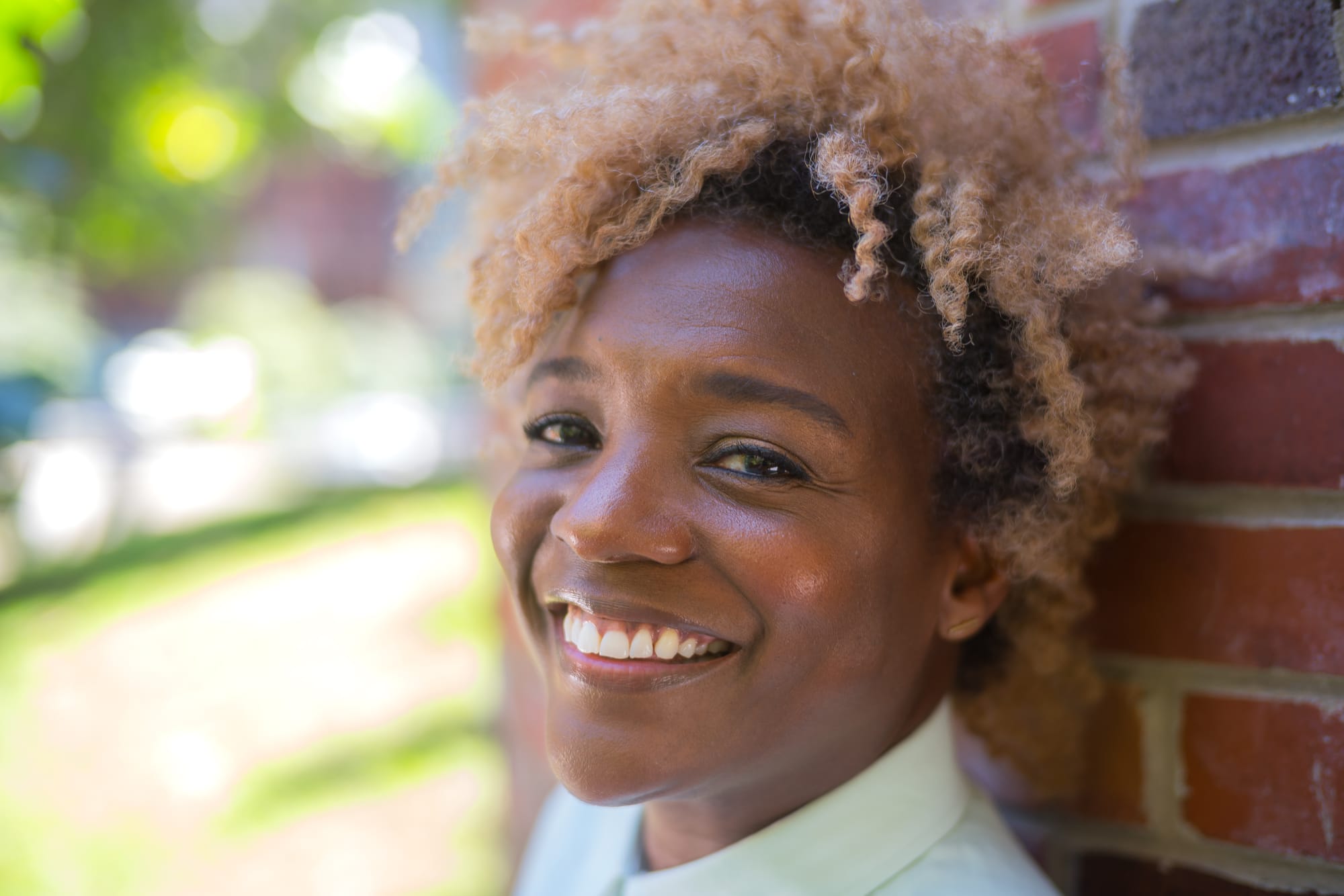
Durrett herself also goes largely unnoticed by the denizens of “National Landing” (a hasty neighborhood rebrand in 2023, courtesy of the tech giant’s second headquarters). She wears a white button-down shirt, oversized brown slacks, and stylish sneakers. She greets the security guards who keep watch over the tower and then ducks inside through its large, wooden door.
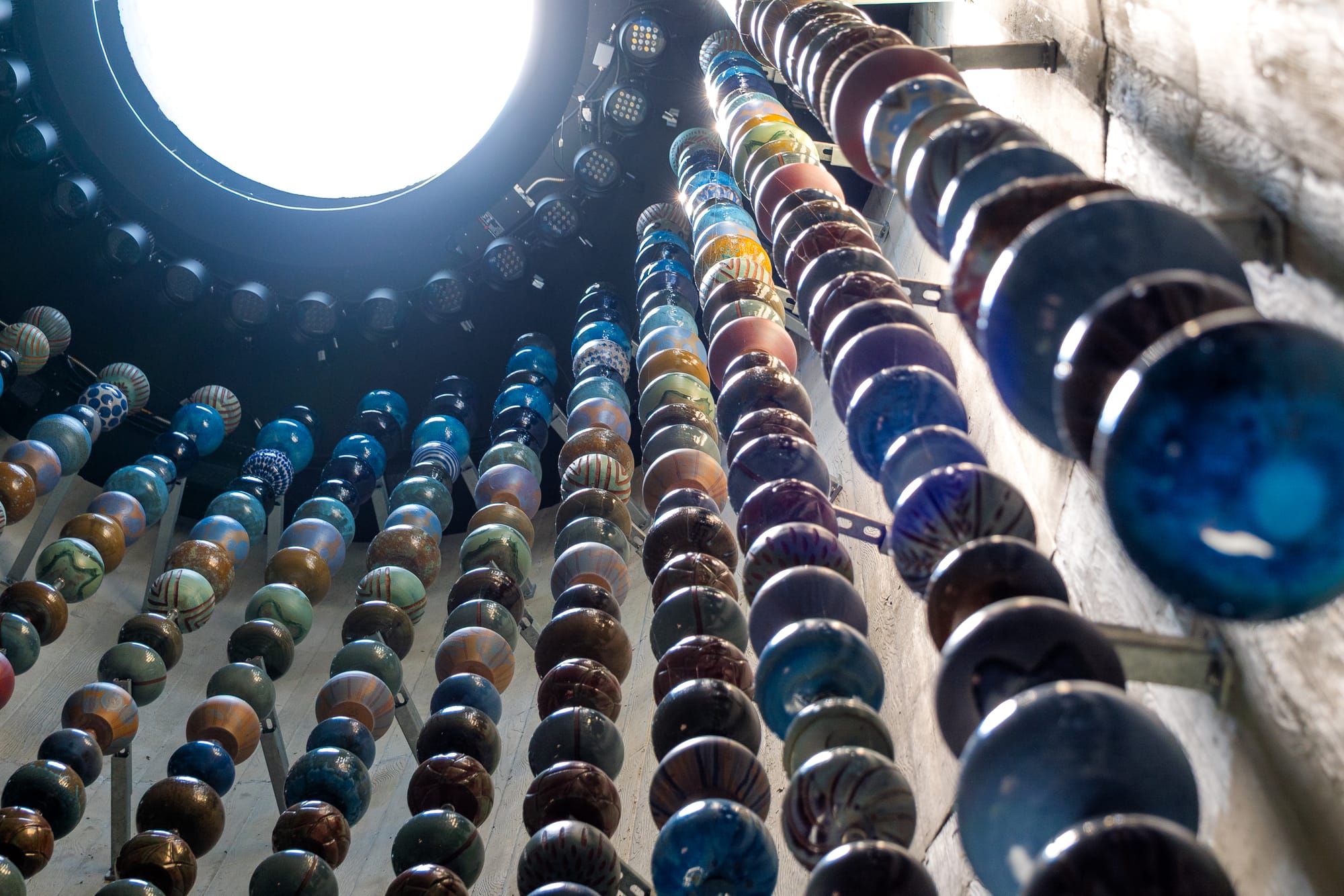
Hanging from what looks like the heavens above are 903 teardrop-shaped ceramic pieces, one sculpted for each member of the Black community ripped apart when the federal government burned the neighborhood down to build infrastructure for the Pentagon in the early 1940s. Durrett interviewed William Vollin, a surviving resident of Queen City, who was 12 years old at the time and described the emotional toll of carrying “a forgotten history” for decades until Durrett’s piece illuminated it.
“I'm very interested in unearthing or shining a light on Black histories that are lesser known,” says Durrett during a stroll through the park. “Even though I grew up not too far from here, I didn't know that there was once a thriving Black community.”
For at least the past decade, Durrett has created similarly monumental works in and around D.C., exhuming the past and inviting the public in. If you’ve lived in the region long enough, there’s a good chance you’ve encountered her work, which includes the Art Deco-style stained glass windows that adorn the bridges inside the Phillips Collection; large-scale digital prints on the walls of the West End and Martin Luther King Jr. Memorial libraries; and three-dimensional clay portraits of James Baldwin that went up at the National Portrait Gallery and at her alma mater, the Duke Ellington School of the Arts.
Local curators and collectors adore her. Still, she isn’t what most would consider a household name. She's naturally a private person, and for an artist of her stature she has a relatively modest social media following and limited press coverage. Early in her career, she once choked up and went completely silent during a panel discussion, making her so anxious about public speaking that she avoided making art for a while.
“I've been striving and pushing for my work to be a part of this conversation around monuments and memorials and public art, but I don't want to be the conversation,” she says. “I just want my work out there.”
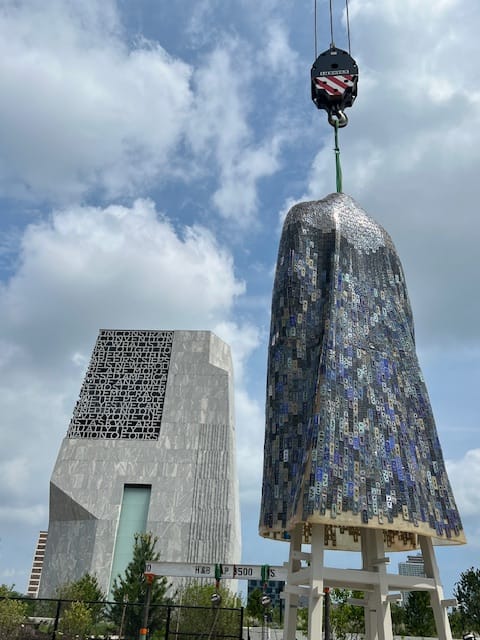
And yet, this year, the 50-year-old Petworth resident was thrust into the national spotlight after she was handpicked to create a piece for the new Obama Presidential Center in Chicago. The June unveiling of “The Hem of Heaven,” her enormous sculpture honoring the legacies of Harriet Tubman and Frederick Douglass, has led to a feature on CNN and regular invitations to speak about her work, including recent conversations in D.C., Chicago, and New York. Durrett, it would seem, is finally being recognized as one of the nation’s preeminent artists — and it’s happening at a time when, in her view, bringing our nation’s most troubling memories to the forefront is more vital than ever.
Before attracting this attention, Durrett took years to build a national portfolio: In Miami’s historically Black Liberty City neighborhood, she collaborated with the famous conceptual artist Hank Willis Thomas on the 2017 mixed-media mural “I See Myself in You,” portraying a woman with large reflective sunglasses, crafted with stainless steel, gazing out from a bubblegum pink wall. During the pandemic, she projected motivational phrases for frontline workers on screens in Times Square.
Bryn Mawr College, in the Philadelphia suburbs, is home to her courtyard installation “Don’t Forget to Remember (Me),” an homage to the invisible labor of Black servants who worked at the school in the early 20th century. Critics named the winding brick pathway, inscribed with the names of the school’s first Black student as well as those of domestic workers and groundskeepers, among the world’s best public art of 2025.
“She can make the very intimate feel monumental and the monumental feel quite intimate, both with scale and emotion,” says Caitlin Berry, director of the Irene and Richard Frary Gallery at the Hopkins Bloomberg Center in D.C. In past roles, Berry has represented Durrett and curated exhibitions of her work. “She is one of the artists whose work will withstand the test of time and one of the best artists of this generation or any other,” Berry continues. “We're so lucky she's in D.C.”
Berry and other colleagues described Durrett as a “national treasure,” but the artist and her creative roots are firmly planted in the D.C. area.
For a citywide arts festival in 2018, she created temporary, text-based art featuring Baldwin quotes on the grounds at the old Walter Reed site. One of her pandemic-era creations, “Up ‘til Now,” allowed passersby in Dupont Circle to look through a peephole in a sculpture carved from reclaimed hemlock at images depicting what Durrett imagined D.C. would look like hundreds of years ago, before the buildings and concrete. And to process her grief and anxiety in 2020, she converted fallen magnolia leaves from Rock Creek Cemetery into golden, acrylic tributes to Black women killed at the hands of police. The collection, titled “Magnolia,” went on display at Marymount University in Arlington, and the Phillips Collection acquired a piece of it.
“Her work conjures up history and memory, which are different things,” says the Phillips Collection’s Director Emerita Dorothy Kosinski, who led the museum from 2008 to 2023. “Maybe history is factual — or pretends to be factual — and memory is poetic. And somehow, she brings fact and poetry together.”
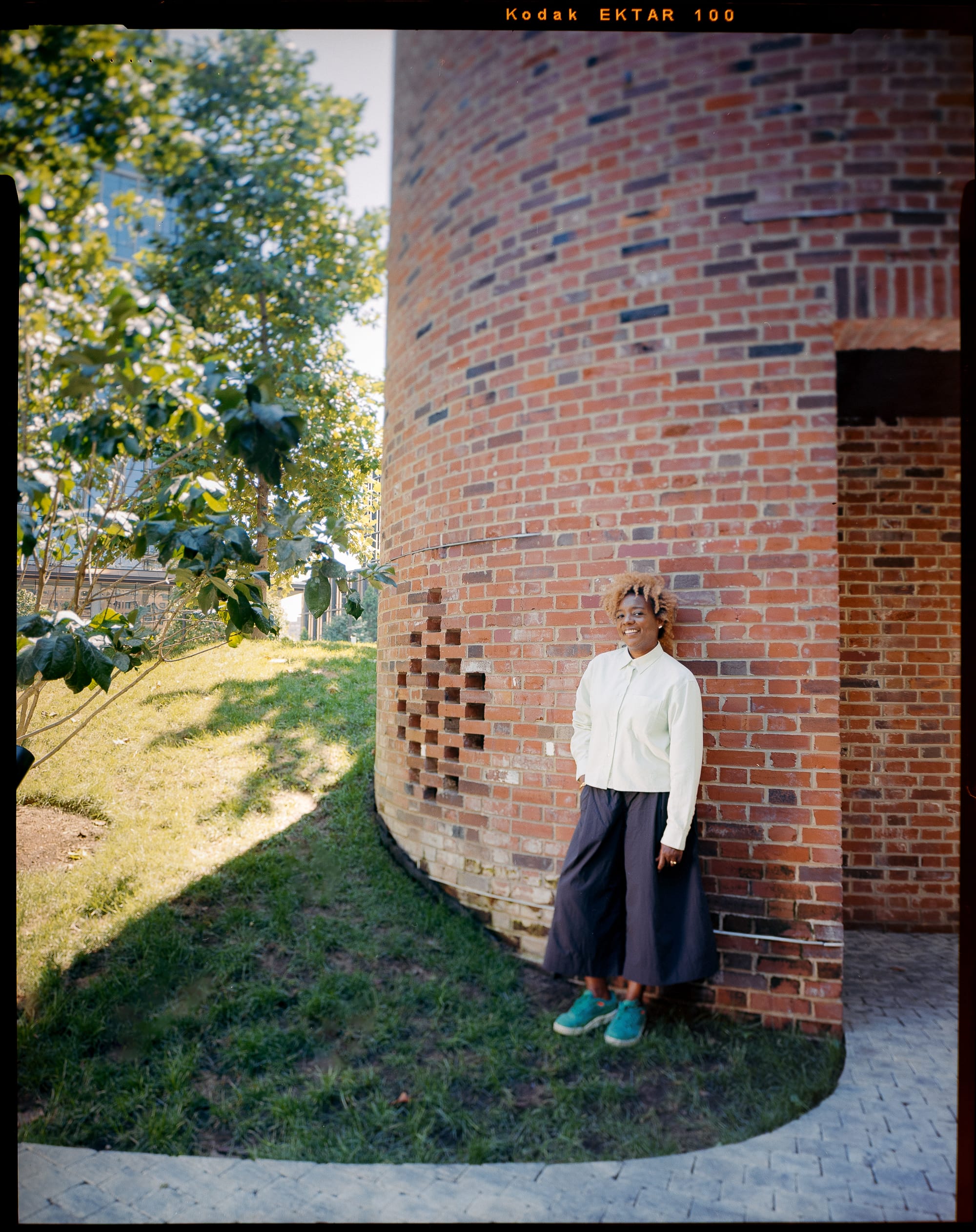
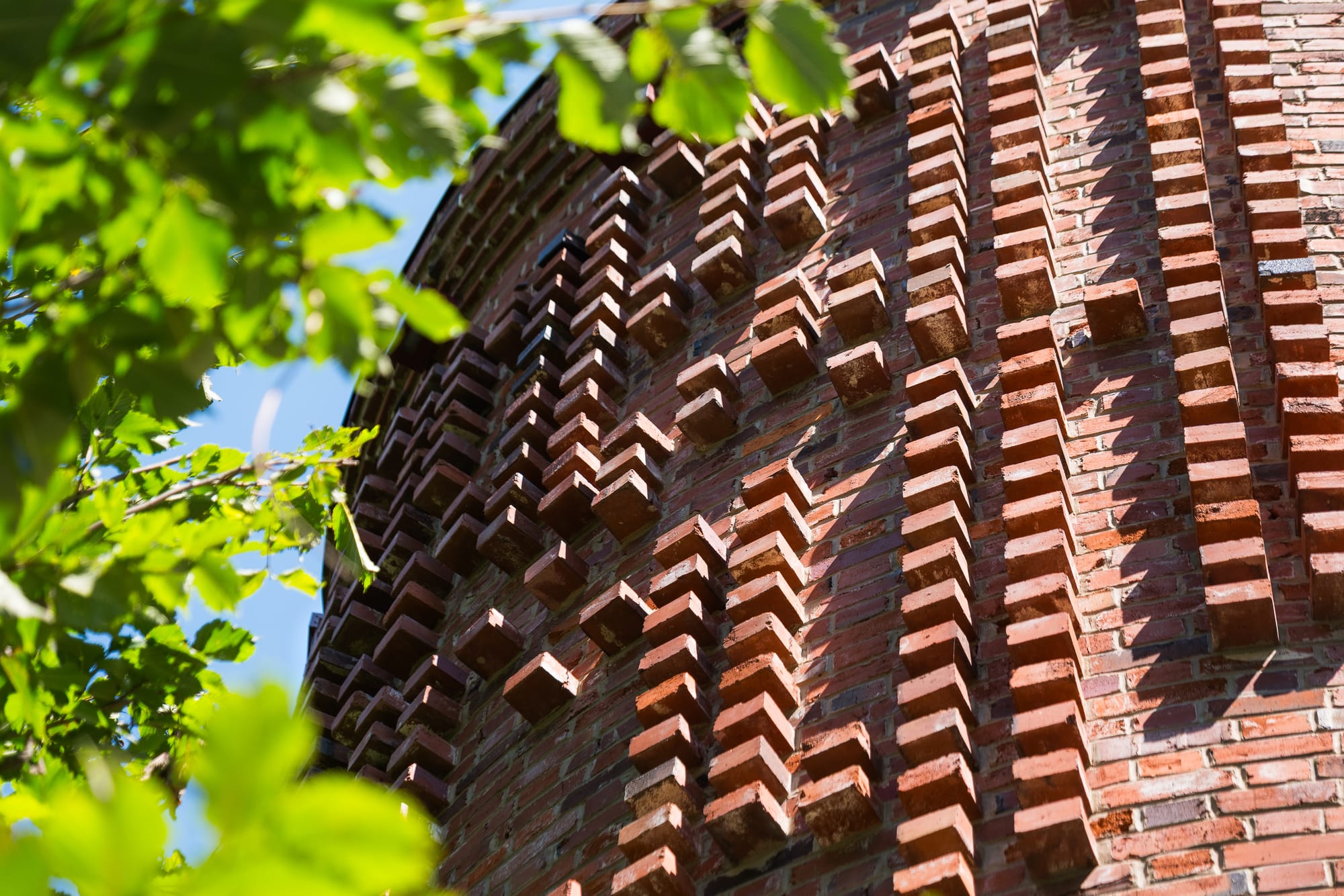
Durrett used reclaimed century-old bricks to spell out "Queen City" on the tower's exterior. (Shedrick Pelt)
As Durrett's star has risen, escalating national turmoil has put a spotlight on the issues her work seeks to address. It's left her grappling with what her voice means as a Black, queer artist today.
“In this moment, I feel more of an urgency that my work stay true to my values,” she says. “There are just certain opportunities that I don't even look at because they don't allow for that voice to come through.”
This tension was evident as she wrestled with whether to accept the Queen City commission in 2020, which she learned was tied to Amazon only after receiving the paperwork from the client, the real estate firm Seneca Group. If she accepted the offer, it would be the biggest commission of her career. She mulled the decision over with her wife, wondering whether she could take on a project affiliated with the billionaire-owned corporation. She told her therapist she was going to turn it down.
“She's like, ‘Nekisha, this could be a really great opportunity because you're going to do what you always do,’” she recalls her therapist saying. “‘You're going to bring your ancestors' history to the fore, and what better place to do that?’”
Durrett, a fourth-generation Washingtonian, thought of her great-grandfather who was a concrete mason and migrated from North Carolina to D.C. to find work building the Pentagon. She thought of the East Arlington neighborhood that was erased to construct it. (Many Black residents of Queen City also worked on the Pentagon before learning that their own community would be destroyed in the process, Durrett says.)
Ultimately, she accepted the job and justified the decision by hiring 17 Black ceramicists — including several from the D.C. area — to create the 903 unique pieces inside the tower. Each earth-toned vessel is shaped like a drop of water, representing tears and the fact that the homes in Queen City lacked basics like running water. The building itself resembles a water tower.
“Black ceramicists are often sidelined. They’re pretty much invisible,” Durrett says. “If you do a [Google] search for ‘ceramics,’ Black people are never first in the list. So I thought this could be a way to really uplift and spotlight this community.”
For her Obama Center commission, she brought in six ceramicists to create more than 5,000 tiles that surround the 24-foot sculpture, which evokes a feminine form draped in a shawl, similar to one Harriet Tubman wore later in life. The tiles are cast in metallic shades of blue, purple, and gold — luminescent, like the stars that guided Tubman on her path to free enslaved people on the Underground Railroad. “The midnight sky and the silent stars have been the witnesses of your devotion to freedom and of your heroism,” Frederick Douglass wrote to the abolitionist in 1868.
Durrett wanted “D.C. to be represented in Chicago,” so the Baltimore-based ceramicist V Walton organized community workshops where dozens of locals learned how to work the clay. For the final sessions, Black-led advocacy groups Free DC and Harriet’s Wildest Dreams helped glaze pieces that were included in the sculpture.
Since the beginning of Trump’s second term, those groups have been among those speaking out against federal occupation of D.C. — protesting the Metropolitan Police Department’s collaboration with ICE, hosting virtual teach-ins about D.C. statehood, and organizing “cacerolazos,” or nightly noise sessions to protest fascism.
Durrett says she and her wife joined many of those efforts. They even drove children of “mixed status” to school in the mornings as part of organized carpools during last fall's surge of federal agents, in the hopes of protecting them from possible immigration enforcement in their neighborhood.
Free DC and Harriet’s Wildest Dreams have “kind of been the North Star through all of this,” Durrett says.
Durrett’s home, the District, has also been a guiding light throughout her career. She says she’s been able to take risks here and stand out as a creative “unicorn” among the politicos and attorneys the city is often associated with.
“I've built a whole life here,” she says. “D.C. has been incredibly supportive of me as an artist. There are a lot of things that I was able to do here that would have been harder for me to do in New York.”
Born at George Washington University Hospital and raised in Landover in nearby Prince George’s County, Durrett remembers her mother taking her to sketch the D.C. monuments for fun. On weeknights, she couldn’t wait to finish her homework so she could practice drawing. At an early age, she turned even the simplest class projects into freeform art experiments, which she says her teachers didn’t always love. Recognizing her creativity, her parents enrolled her in the Duke Ellington School of the Arts in the 9th grade.
After racking up prestigious art degrees at The Cooper Union for the Advancement of Science and Art in New York and at the University of Michigan, she returned home in 2000, seeking work at the Smithsonian.
“Opportunity kept me here,” she says, reflecting on her life in D.C. “That's one of the things that drew my family here. My ancestors came to D.C. for opportunity.”
After a stint at the D.C. Commission on the Arts and Humanities, she landed her job at the Smithsonian, first answering phones and then working on teams that mounted large-scale works for exhibits at various museums.
“I just kind of kept my head down and kept doing the work,” says Durrett. “And sure enough, all those things that I was doing became a part of my [artwork].”
She spent 10 years in their exhibits department before working in the National Portrait Gallery, where part of her duties included dusting off the paintings in the morning before guests arrived: “I loved being in the museum when no one was there and just walking around looking at those walls and thinking, ‘Wow, maybe one day I can have work here.”
She left the Smithsonian for a teaching role in the museum studies department at Duke Ellington, where she worked from 2013 to 2023. At the famed public arts school, Durrett says she finally became confident as a public speaker in front of “the most difficult audience on the planet: teenagers.”
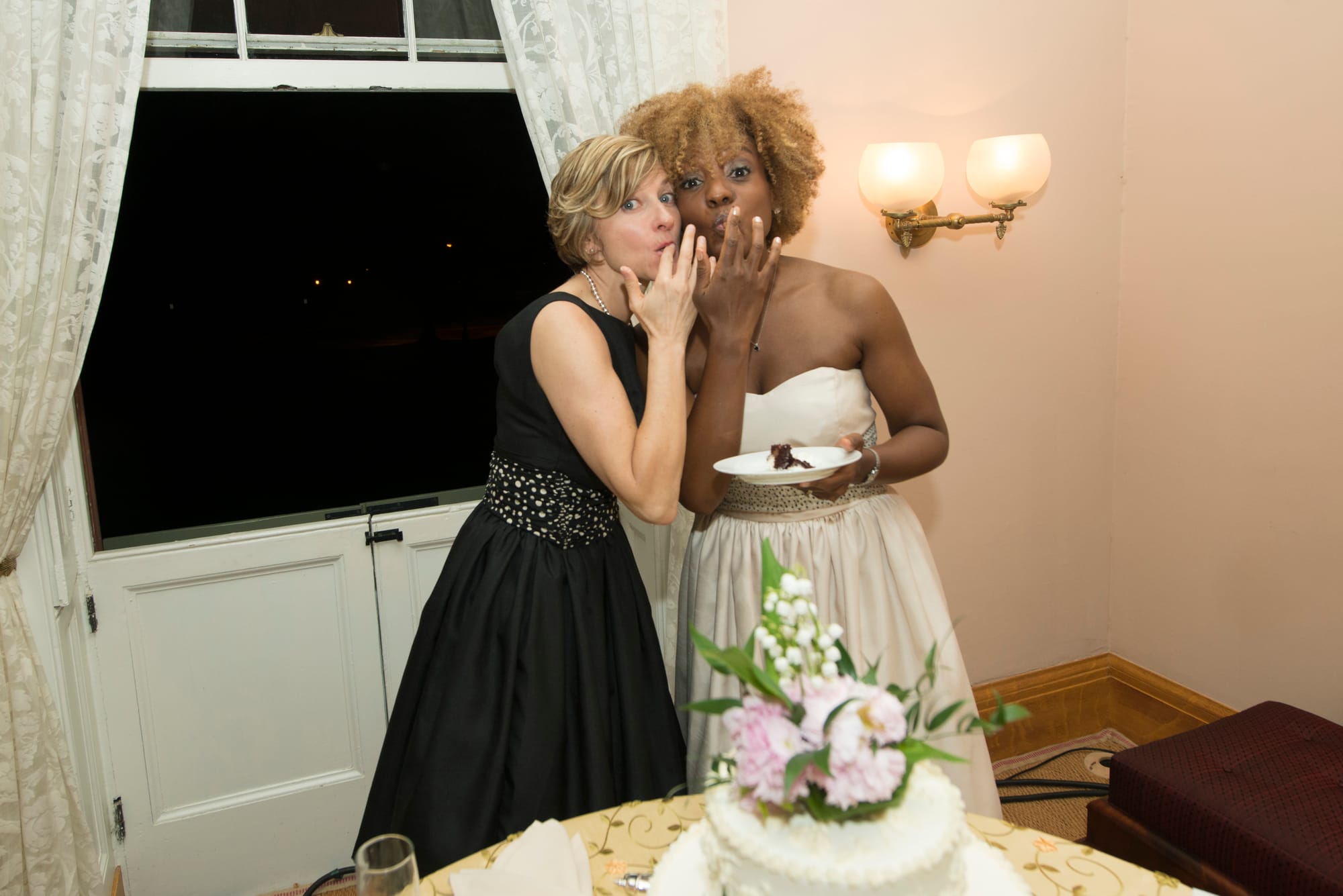
She met her wife, Erin McCleary, a realtor-turned-therapist, in 2008 at a Human Rights Campaign holiday party at Town, a gay club on U Street that has since closed. The two were married at President Lincoln’s Cottage and have been Petworth residents ever since, with their cat, Tubesock, and a 50-pound pitbull mix.
Their dog’s name? Harriet, of course.
No longer a teacher, Durrett has been exploring life as a full-time artist. She has several projects in the works, including a forthcoming public piece in College Park — but she can’t share details just yet.
Durrett does reveal she proposed a temporary installation to memorialize the Congressional National Cemetery’s unmarked Black burial site. The cemetery and local ANC want to involve Durrett because of her signature ability to weave together history, memory, and beauty. She’s hoping to receive a grant from the D.C. arts commission to move the project forward.
It’s projects like these that keep her motivated, keep her grounded in D.C., she says.
“I look forward to adding nuance to the story we tell about America, about telling the whole truth, about shining a light in those dark places,” she says. “And if it’s a place that's not going to allow me to do that, then I'm just not going to do that work.”

With food prices on the rise, these restaurants still provide real value.


Where the competitive local races are, an unusual At-Large voting situation, the fate of foie gras, and more.


Yasmin Williams is helping to book artists for the free Millennium Stage concert series.
With your help, we pursue stories that hold leaders to account, demystify opaque city and civic processes, and celebrate the idiosyncrasies that make us proud to call D.C. home. Put simply, our mission is to make it easier — and more fun — to live in the District. Our members help keep local news free and independent for all:
