

Goodbye, Dukem, and thanks for 30 years of service
As the iconic U Street Ethiopian restaurant prepares to close, thousands on social media shared their praise and memories
As the iconic U Street Ethiopian restaurant prepares to close, thousands on social media shared their praise and memories

The outlet is pitching its newly robust metro section with ads and activations around town

The Revada Arts Center will be home to a theater company, film house, and “anti-opera” collective.

There are three candidates vying for the rest of Kenyan McDuffie's term, after he stepped down to run for mayor.

As the many campaign signs around town attest to, D.C. is in the midst of one of its most competitive election seasons in years. There are multiple open seats across the District government up for grabs — including the mayor’s office, two At-Large council seats, the Ward 1 seat, and the role of congressional delegate — after longtime politicians opted not to run again. But perhaps the most confusing is the At-Large seat reserved for independents.
Unlike the other races, in which the winners of the primary will go on to face candidates from other parties in November, this is a special election to serve out the rest of Kenyan McDuffie’s term (until January 2027). Then, a separate race in November will then determine who would serve out the next four-year term.
(The other At-Large primary is to replace longtime councilmember Anita Bonds, who is retiring. In that race, there are nine candidates running for the Democratic nomination — you can read about them here.)
The three candidates running in the special election are Doni Crawford, a former McDuffie staffer who was appointed to At-Large councilmember as an interim replacement; Jacque Patterson, president and the At-Large member of the D.C. State Board of Education; and Elissa Silverman, who held the same At-Large seat for eight years until losing it to McDuffie in 2022.
The race is something of a redux, with Silverman now facing her former opponent’s protege. She is again endorsed by several labor unions and pro-transit groups like Greater Greater Washington, while Crawford has earned the backing of associations for the city’s realtors and the Restaurant Association of Metropolitan Washington, as well as the pro-business group Opportunity DC. Patterson has the endorsement of education equity group, ElectED DC.
But the dynamics of the race are also shaped by the introduction of ranked-choice voting. Crawford and Patterson have chosen to cross-endorse one another, asking their supporters to rank the other one second, in a strategic move to try to push Silverman aside.
While only registered party members will be able to vote in the primaries, all voters will be able to weigh in on this race. But be sure not to miss it; the special election section is all the way on the back of the second page of mail-in ballots.
The 51st sat down with each of the candidates to learn why they decided to run and why they think voters should rank them number one. Crawford sees herself as a consensus builder, Patterson says he has deep experience with underserved D.C. communities, and Silverman is pointing to her past track record on the council, including passage of the city’s paid family leave law.
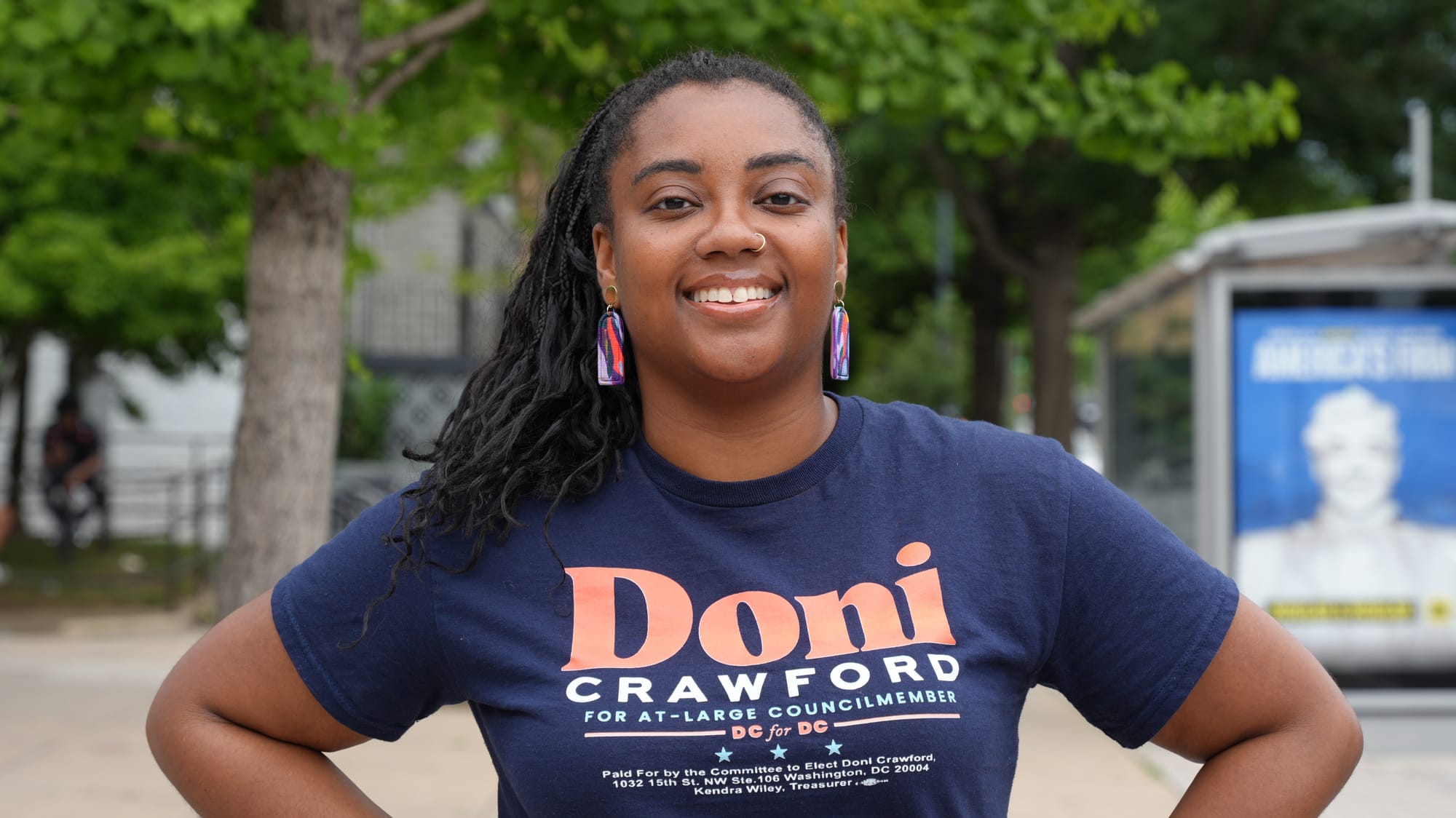
Doni Crawford’s campaign is unusual for someone running for office for the first time — she’s asking voters to elect her to the council, while also currently serving on it.
Originally from Pittsburgh, Crawford moved to D.C. in 2019 to work as a policy analyst at the DC Fiscal Policy Institute. Her work involved digging through budget books, testifying at the Wilson Building, and writing research reports to help shape local policy.
At that time, she got to know Kenyan McDuffie in his role as a councilmember. “We worked really well together,” Crawford, 36, told The 51st. So when a spot opened in his office in 2022, Crawford joined the team as a senior policy advisor.
“I knew at that point I wanted to see how the sausage was made,” said Crawford, adding that she wanted to move from advocating for legislation to helping write it.
Over the course of four years, Crawford worked on a number of issues that came before the council, including the RFK stadium deal and putting funds toward a direct cash assistance program. During her time in McDuffie’s office, Crawford eventually rose to the director for the Committee on Business and Economic Development.
When McDuffie stepped down from the At-Large seat to run for mayor, Crawford threw her hat in the ring for the interim appointment (along with 41 other candidates that included opponents Elissa Silverman and Jacque Patterson), and ultimately was chosen for the role.
She says she didn’t immediately know if she wanted the permanent job. But “when I got in that seat, and I started taking votes and introducing bills … there was a part of me that just didn't want to give that up,” said Crawford. “I wanted to continue to do really great work on behalf of District residents.”
One of her first major tests as a councilmember was the debate about the Metropolitan Police Department continuing to have the ability to designate extended youth curfew zones. Crawford thinks they are short-term tools that aren’t effective in the long-run — but she also heard from constituents that they wanted the zones to continue, amid a rise in “teen takeovers.”
Her office ended up proposing amendments to a curfew bill that included provisions about when police officers can approach youth about curfews and a requirement that the city offer programming for young people whenever the zones are established. Her amendments helped the council finally pass a permanent bill, which requires curfew zones to sunset by the end of 2028, after weeks of back and forth.
If she gets to stay on the council, Crawford wants to continue focusing on youth issues, aiming to make a deeper investment in out-of-school programming time, ensure there’s a behavioral health clinician in every school, and extend the weekend hours at recreation centers.
“I'm hoping this budget season that my colleagues and I put money toward these investments for youth, so that we're not just telling youth where not to go, but we're providing real sustainable opportunities for them,” she said.
As a renter, Crawford says she is acutely aware of the housing challenges that many residents face. She wants to work on decreasing rent costs by increasing housing supply, as well as help seniors pass down their homes to the next generation.
Among the candidates, Crawford is the newest face to the public. But her pitch is that she’s proven that she is equipped to do the job over the past few months of her appointment. And she’d bring the experience of serving as a staffer on the council, which involves getting in the weeds on the issues and knowing the ins and outs before making a decision.
Ultimately, she sees herself as a consensus builder. “If the council is stuck on an issue or we're trying to identify a path forward that might be politically challenging, I'm willing to dive in and help find a solution for the body,” she said. “And hopefully end up in a position where we're all stronger together as a District.”
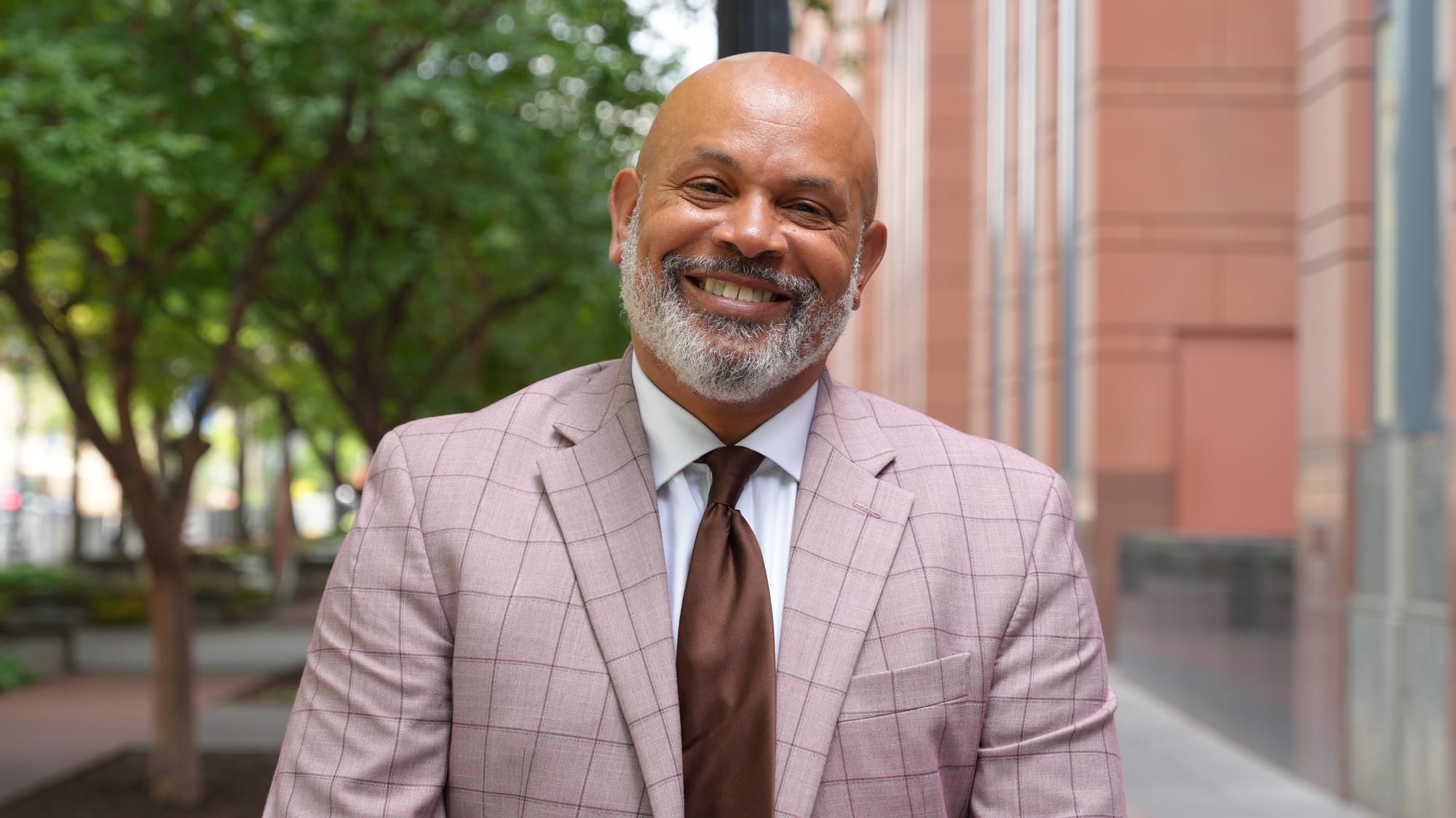
When Jacque Patterson was stationed at Fort Andrews Air Base in the mid-1990s, most of his friends were looking at places to live in Maryland. But Patterson wanted to live in D.C., and after driving around Ward 8 with his daughter, he bought the townhouse in Shipley Terrace that his family still lives in today.
Patterson, 61, soon became involved in local civic life. He served as an ANC for five terms, for a total of 10 years. Parents in his district would often bring up concerns around schools, an issue that was personal for Patterson. His own parents, who only received a middle school education, emphasized the opportunities that a full education can unlock.
“It catapulted my life and my quality of life so much,” said Patterson about getting his undergraduate and graduate degrees while serving in the Air Force. “So that's why I decided that that's the place where you fight the most, because of the impact it can have so quickly on a generation.”
Over the course of his career, Patterson has had a diverse range of roles. He’s worked in the District government as a community affairs coordinator for Mayor Anthony Williams and later as a program and policy analyst at D.C. Health under Vincent Gray’s administration, at two charter schools, and for nonprofits, including the Federal City Council and Martha’s Table.
Running for office is not new to Patterson. He ran for D.C.’s board of education in 2007, Ward 8 councilmember in 2012, and again for the State Board of Education (SBOE) in 2016. Each of those attempts were unsuccessful — but in 2020, he ran for the At-large SBOE seat and finally won. He currently serves as SBOE’s president.
So why run for the At-Large council seat? One major reason is the District’s current budget challenges. “A lot of times, because it has such a big budget, education comes up on the chopping block,” Patterson told The 51st. Members of the SBOE aren’t a part of the budget process (and generally have little power, though they can set standards around graduation and academics), and Patterson wanted to be one of the people making funding decisions on schools.
Naturally, education would be a top priority if he's elected to the council. He says he’d advocate for more community schools, which serve as both educational institutions and resource hubs where students and families can access services. “School should be a one-stop shop, specifically in underserved and marginalized communities,” Patterson said. “Not just the student, but also for the family.”
With teen takeovers in the news and as a father to two teenagers, public safety and youth well-being are also important issues for Patterson. He is in favor of curfew zones — but only temporarily, until there’s more investment in teen programming. He says a lack of investment in youth programs and unaddressed mental health concerns from the COVID-19 lockdowns have created a “cauldron” for teen takeovers to brew. He proposes having conversations with young people on solutions going forward.
“We're going to hold you accountable,” said Patterson about teens who participate in the takeovers. “But at the same time, what can we do to make sure that you have the right places where you feel the warmth of this city, and you're seeing the programming that you need?”
Patterson also wants to address D.C.’s affordable housing crisis by creating denser, mixed-income housing. He pointed to the long-running Barry Farm redevelopment project, which plans a one-for-one replacement for former public housing units and hundreds of other additional units, as an example of the type of housing initiatives he’d pursue. He also would like to increase the funding for the Housing Production Trust Fund, the city’s main tool for financing affordable housing, to an ambitious $250 million a year (it typically is funded at $100 million a year, though Bowser proposed a 50% cut in her most recent budget).
His pitch to voters is that his career has consistently been about working alongside communities, particularly underserved communities. He says he’d take that experience with him as he works on the city’s budget. “By selecting me, you're getting somebody who is deeply ingrained in the history of D.C. and all of its mechanics,” said Patterson. “I truly understand how this city works, but I also have a vision for going forward.”
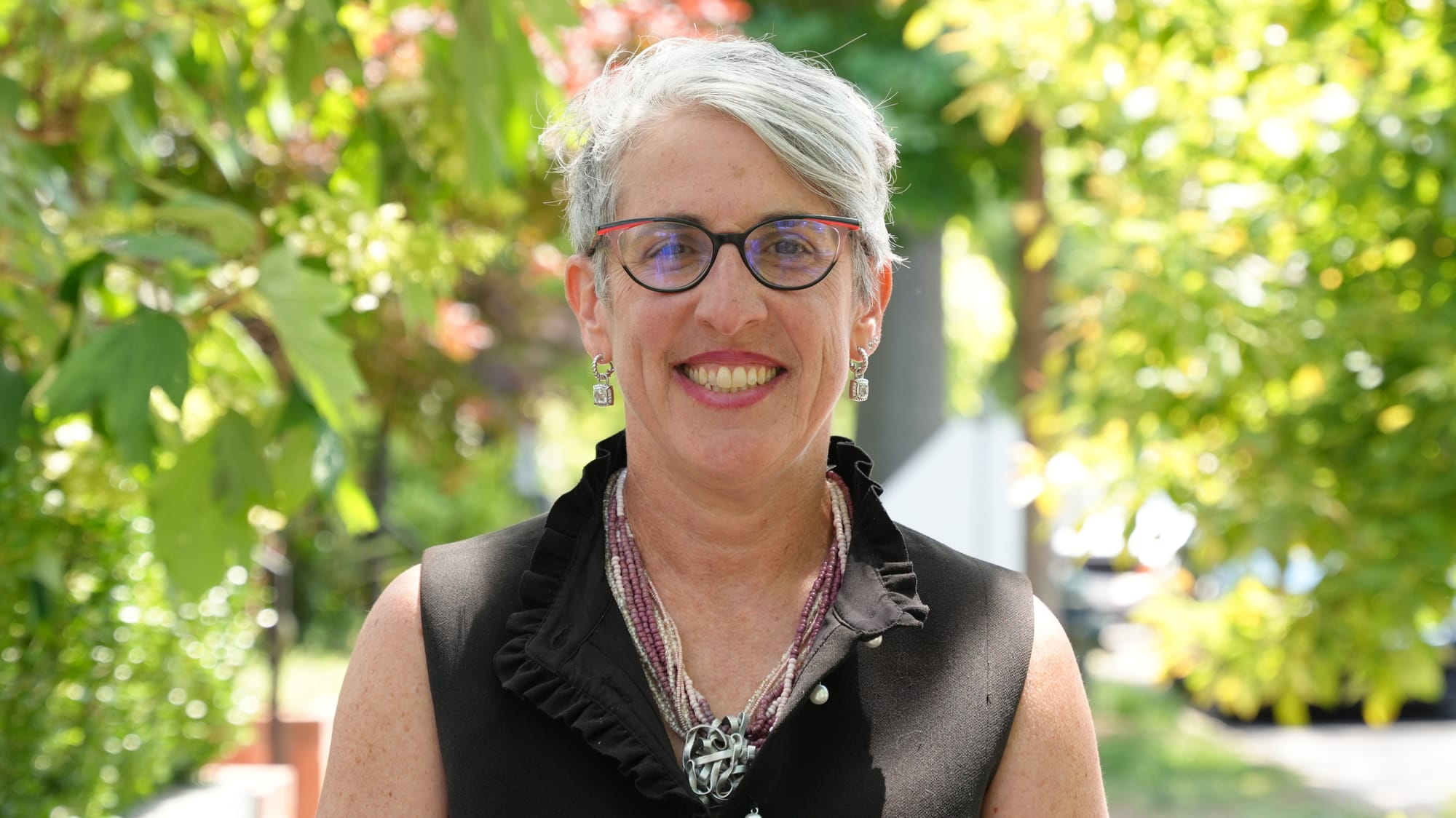
A familiar face for many D.C. residents, Elissa Silverman is running to reclaim the seat she held from 2015 through 2022, before she lost the role to Kenyan McDuffie.
Most candidates who lose a race just move on. But Silverman spent months after the election fighting multiple Office of Campaign Finance complaints that had been filed against her, including one that initially ruled that she misused public campaign funds. By April 2023, all the complaints – which she considered a “smear campaign” – had been dismissed.
In 2024, Silverman, 53, went on to work in Maryland Gov. Wes Moore’s administration as chief strategy officer in the state’s Department of Labor, but she left the office after nine months. “That wasn't where I was supposed to be,” said Silverman, who lives in Capitol Hill. “I was supposed to be here.”
After her loss, Silverman said she heard from residents that the council wasn’t holding agencies accountable and that they were feeling the consequences in their day-to-day lives. She also thought the city was “flatfooted” when it came to the Trump administration’s interventions. So when the At-Large seat opened up, running again felt like the right thing to do.
So what would a Councilmember Silverman 2.0 look like? She says she’d focus on three things: Trump, housing, and truancy. She wants the council to do a “Trump analysis” any time the city does something that the White House or Republican lawmakers might push back on, and to coordinate with other offices, like the D.C. attorney general and the congressional delegate, ahead of time.
On housing, Silverman says she’s interested in working with the D.C. Housing Authority (DCHA) to redevelop public land to create mixed-use communities. In general, she thinks the city’s different housing tools — including vouchers, the Housing Production Trust Fund, private partnerships, and the housing authority itself — aren’t being optimized. “Right now they're sort of all in these separate spheres and not coordinating together,” Silverman told The 51st. “We just need to have much more coordination, and have a ‘north star’ of goals.”
Truancy would be a new issue for Silverman. She wants to bring down the nearly 40% student absenteeism rate by working with the DCPS chancellor to make schools feel like a space where students are safe and want to go to. “Those folks aren't going to be prepared for adulthood and the work world,” said Silverman about kids who are missing school. “So I think it's, in my opinion, a house-on-fire issue.”
When asked about her opponents Doni Crawford and Patterson cross-endorsing each other, she cites her own endorsements from multiple labor unions, Sierra Club DC, and the Bike Walk Bus PAC. “There's a lot of people behind me,” she said, and wished the other candidates good luck.
Silverman doesn’t want to rehash the past, but did mention that she’s grown since her loss in 2022. One thing she’d do differently this time around is try to prevent an adversarial relationship with the mayor's office, which she says happened during her work on paid family leave (Mayor Muriel Bowser opposed the legislation and only let it pass without her signature, given that it had a veto-proof majority on the Council). “I will do everything to avoid that, because in the end … the north star here is to have a successful city, so let's work together where we can,” she said.
When it comes to the two mayoral frontrunners, Silverman said while she aligns more with Councilmember Janeese Lewis George, she would want McDuffie to be successful in office if he were to win. “As I told everyone, I put the past in the past,” she adds, referring back to the 2022 race.
Ultimately, Silverman thinks voters should rank her first because of her prior experience as a councilmember. She pointed to her work on getting paid family leave passed in D.C., helping create a maintenance and repair fund for public housing, and holding city agencies accountable.
“I have the experience of getting really hard things done,” said Silverman. “I have the track record of asking the key questions that lead to good decisions about their tax dollars that make their lives better.”

The Ward 8 councilmember remains in legal limbo and confronts an uncertain political future.

Plans to build a new commercial corridor at Capitol Gateway are finally inching forward.

Undercover videos show the Ward 8 councilmember both deeply involved in the community and taking wads of cash from a businessman.

Candace Tiana Nelson is eyeing a run in Ward 4, but new allegations could complicate a bid.
With your help, we pursue stories that hold leaders to account, demystify opaque city and civic processes, and celebrate the idiosyncrasies that make us proud to call D.C. home. Put simply, our mission is to make it easier — and more fun — to live in the District. Our members help keep local news free and independent for all: