

11 ways to build a better D.C. this week
Pumpkins for a cause, film screenings, and more ways to plug in.
Pumpkins for a cause, film screenings, and more ways to plug in.

Where the competitive local races are, an unusual At-Large voting situation, the fate of foie gras, and more.

Yasmin Williams is helping to book artists for the free Millennium Stage concert series.

Five Democrats are vying for the open D.C. Council seat to replace Brianne Nadeau.


With two months left until the Democratic primary, more than half of Ward 1 voters are undecided on who they are hoping to represent them as their next councilmember.
After D.C. Councilmember Brianne Nadeau decided not to run for reelection, the city’s smallest and densest ward saw five people jump into the race to replace her: advisory neighborhood commissioners Rashida Brown and Miguel Trindade Deramo, communications manager and tenant organizer Aparna Raj, nonprofit leader and longtime civic gadfly Terry Lynch, and former Bowser administration official Jackie Reyes Yanes.
It’s exactly the kind of crowded situation that proponents say is helped by ranked choice voting, which is being implemented for the first time in D.C. this year and gives voters the opportunity to select candidates by order of preference rather than picking just one. It also incentivizes campaigns to leave no voter off the table, in hopes of earning a spot on their ballots as a second or third choice.
All five candidates are participating in the city’s Fair Elections program, which provides matching funds for campaigns that only accept contributions from individuals. So far, Raj has outpaced the field in fundraising, with a total of over $330,000 – double the next-highest candidates, Reyes Yanes and Brown.
It is one of several races that will dramatically reshape D.C.’s political landscape this year. In addition to Nadeau, longtime lawmakers Mayor Muriel Bowser, Congresswoman Eleanor Holmes Norton, and At-large Councilmember Anita Bonds all opted not to run for reelection (Kenyan McDuffie’s At-large seat is also up for grabs after he vacated it to run for mayor), opening up competitive races for their seats for the first time in years.
Nadeau, who has been a consistent progressive voice on the council for more than a decade, has thrown her endorsement behind Brown, a former social worker turned policymaker. Raj, a democratic socialist, has earned support from a number of labor and tenant groups. Reyes Yanes is a former Bowser-appointee making a pitch to be the ward’s first Latina representative. ANC chairman Trinidade Deramo wants to bring his on-the-ground, constituent-forward experience to the council. And Lynch, a longtime civic activist, is pledging to fix the urban blight that he has long railed against.
A recent public poll commissioned by Greater Greater Washington found Raj leading the field, with Brown behind her for voters’ first choice, though just 46 percent of voters had decided who they’re supporting – leaving the race still quite competitive. (Whomever wins will go on to face non-Democratic candidates in the November election if any qualify for the ballot.)
The candidates share a number of similar priorities, particularly around the need for more affordable housing and standing up against federal overreach, with more significant differences in how they intend to accomplish their vision — whether it be through ambitious policy aims or a more pinpoint focus on the quality of Ward 1 neighborhoods. The 51st recently sat down with each candidate to discuss their track records, vision, and what they believe makes them the best fit to represent the ward.
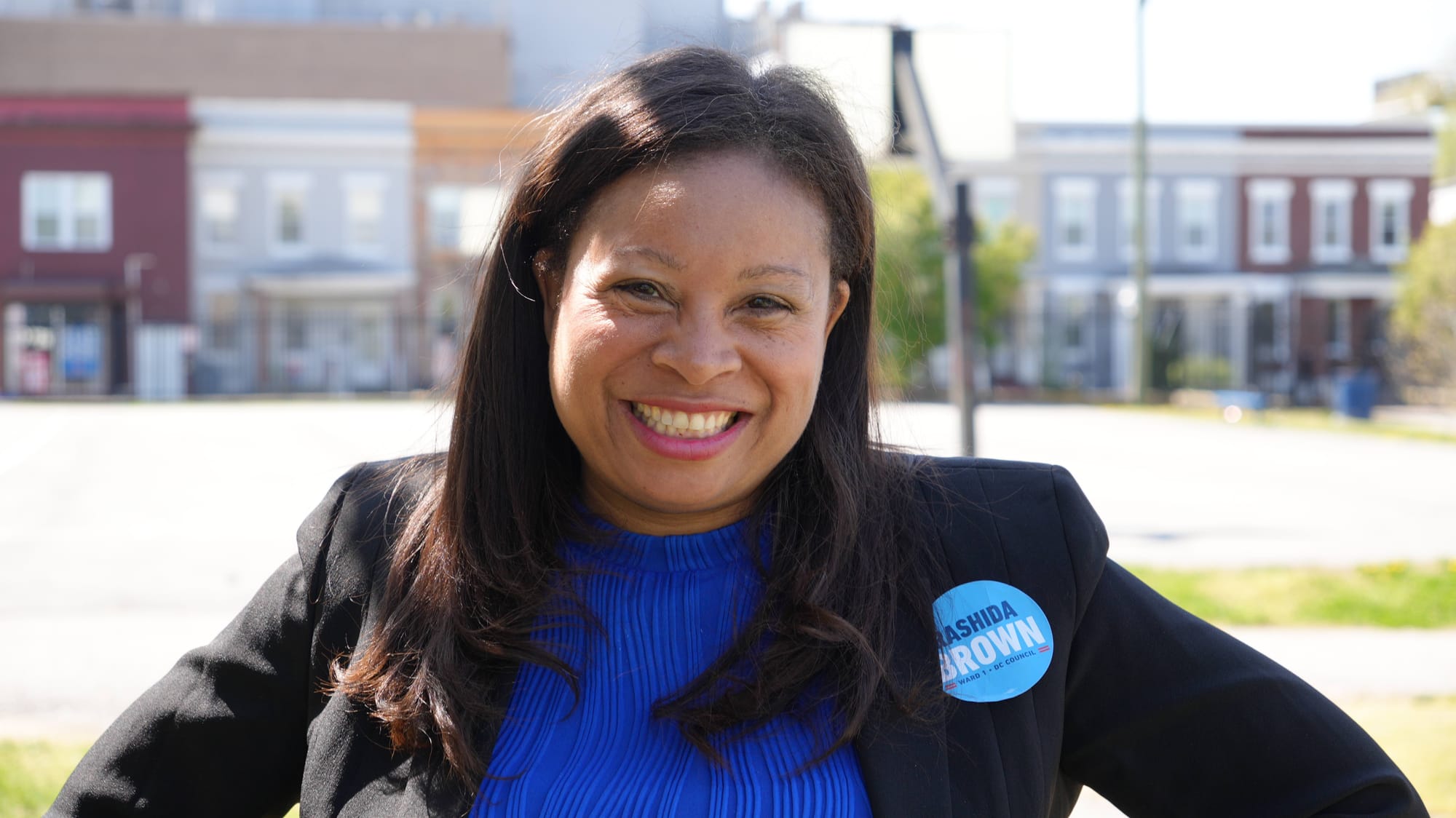
As a student getting her masters degree in social work at Howard University, Rashida Brown recalled the feeling of her first night in Howard Plaza Towers, after she heard gunshots outside her window. “It was a very scary night. I kind of felt alone, and I slept on a sleeping bag,” said Brown, 47, who grew up in Charleston, South Carolina and moved to D.C. in 2000. “But then I heard the laughter of the Howard students and the music of the 9:30 Club behind me, and then I knew I was home.”
With her studies concentrating in direct service and community organizing, Brown also started to organize clean-ups and inform her neighbors about community meetings. So it made sense for her to run for ANC in 2015, a position she’s held for the last decade.
After serving as a child welfare social worker, Brown worked on policy in a series of roles across both national organizations and inside the D.C. government. After deciding to run for office last year, she also started a consulting firm that provides guidance to city-level elected officials on developing early childhood programs.
Though no longer a practicing social worker, the field still informs much of Brown’s work. “I’m a social worker, so I think systems change, policy change,” she said.
Brown says that addressing affordable housing is where she would set her sights as a councilmember. If elected, she says she would prioritize restoring rights to TOPA that were rolled back last year, proposing changes to the Future Land Use Map to bring in more affordable housing opportunities, and investing in programs like the Home Purchase Assistance program and Emergency Rental Assistance Program.
Like a number of other candidates running for office this cycle, she wants to address red tape that slows down the housing production process. “I'll take a look at all of the regulations that we have, seeing if there's anything duplicative [or] overlapping that bars folks from building housing,” said Brown.
Brown also expressed frustration with Mayor Bower’s handling of the Trump administration during the federal takeover. “Complicitness in silence is not strategic,” said Brown. “I’m not seeing the strategy.”
She thinks the city needs to build out local resources — like funding legal clinics and supporting the D.C. Attorney General’s Office in filing lawsuits against the Trump administration — to push back on the White House. “When we are under attack, we still flex, we still leverage our platform to resist and fight back,” Brown said.
When it comes to why Ward 1 voters should rank her first on their ballots, Brown says it's her track record, including working with the District Department of Transportation as an ANC to help create protected bike lanes along Kenyon Street, Warder Street, and Park Place. She also points to her work on the redevelopment plan of Park Morton, which is set to create over 450 new units, many of which would be affordable. (The part of the project that would sit on the site of Bruce Monroe park is currently facing a $30 million budget gap, a problem that she says the next council will need to address; it has also been controversial in the neighborhood, with some residents lamenting the loss of park space).
Brown says if she were elected, residents can still expect to see her around Ward 1’s neighborhoods, whether it’s at the meditation meet-ups held on Sundays at Double’s, listening to jazz at Haydee’s in Mount Pleasant, or going on dates at St. Vincent Wine.
If it wasn’t obvious, Brown has a particular love and appreciation for Georgia Avenue — it’s where her story and work as a community leader in Ward 1 began.
“I am a product of this ward,” said Brown, who has been endorsed by Nadeau. “I just want people to see that that’s what makes me stand out.”
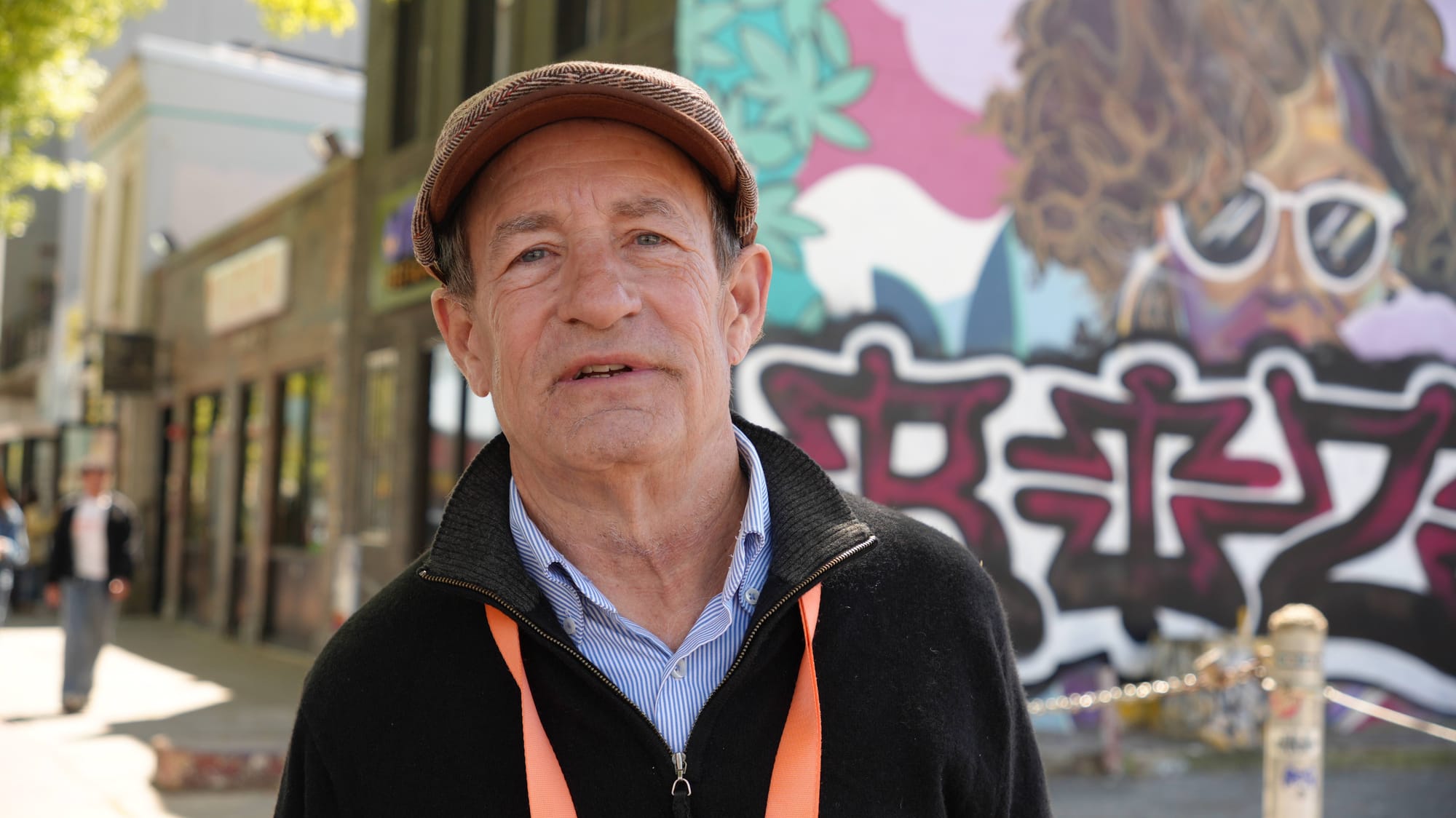
When meeting Terry Lynch at the corner of Georgia Avenue and Kenyon Street NW, he came bearing a notepad. On just the first page were dozens of lines of notes to himself: details about a broken streetlight here, an unemptied trash can there.
“I have filed thousands of 311 requests,” he said, pointing to each entry on his notepad. “Every day I’ll take a two-hour exercise walk, I’ll write things down. This morning I put in 100. I’ve been doing 311 citywide for the last 15 years, doing anywhere from 20,000 to 25,000 a year across all eight wards.”
Terry Lynch, 311 Super User.
It might be a quirky habit, but it’s one that Lynch, 66, has long been known for. For decades, the longtime Mt. Pleasant resident has been the quintessential squeaky wheel of municipal government. No problem is too small to escape his notice; in fact, he says, the smallest of issues can contribute to the biggest of problems.
Take a spate of recent shootings in Columbia Heights, for example (including one in early April when more than 20 shots were fired). Lynch has been filing 311 requests and sending countless emails to city officials to ask that they more proactively tow cars that are illegally parked or have out-of-state tags. “I firmly believe regular parking enforcement can positively impact safety for residents and prevent other crimes from occurring,” he wrote in one recent email.
Housing? Lynch says Ward 1 could easily add 5,000 more units if the city more aggressively tackled vacant and blighted properties.
To that end, he says his first bill as a councilmember would be what he calls “use it or lose it”: any property tagged as vacant or blighted could be taken by the city after three years to be put back into productive use. “Every brick in the house counts,” said Lynch when he met us at Georgia and Kenyon, itself the site of a vacant commercial property that could fit, to his estimation, some 200 units of housing.
He is running a much leaner campaign than his opponents; in fact, as of this month, he’s basically got no cash left. And Lynch is running in a Ward 1 that has changed significantly since he first arrived more than four decades ago. He thinks his candidacy will appeal to older homeowners who may be more focused on getting the streetlight in their alley fixed than whether D.C. will implement universal free child care.
Lynch, who moved to D.C. in 1977 to attend Georgetown University, has served as the director of a coalition of downtown religious organizations since the 1980s. While he has run unsuccessfully for office a couple of times before, he says his long time in the ward and focus on the details make him the right man for the seat.
“I’m not here to be a lifelong politician. I’m the old guy in the race,” he said. “I’m going to act with urgency knowing that I’ve got limited time. I’ve got to get it done in the next four years, eight years at most.”
With that, he set off back down Georgia Avenue. Somewhere there was an issue to be reported to 311.
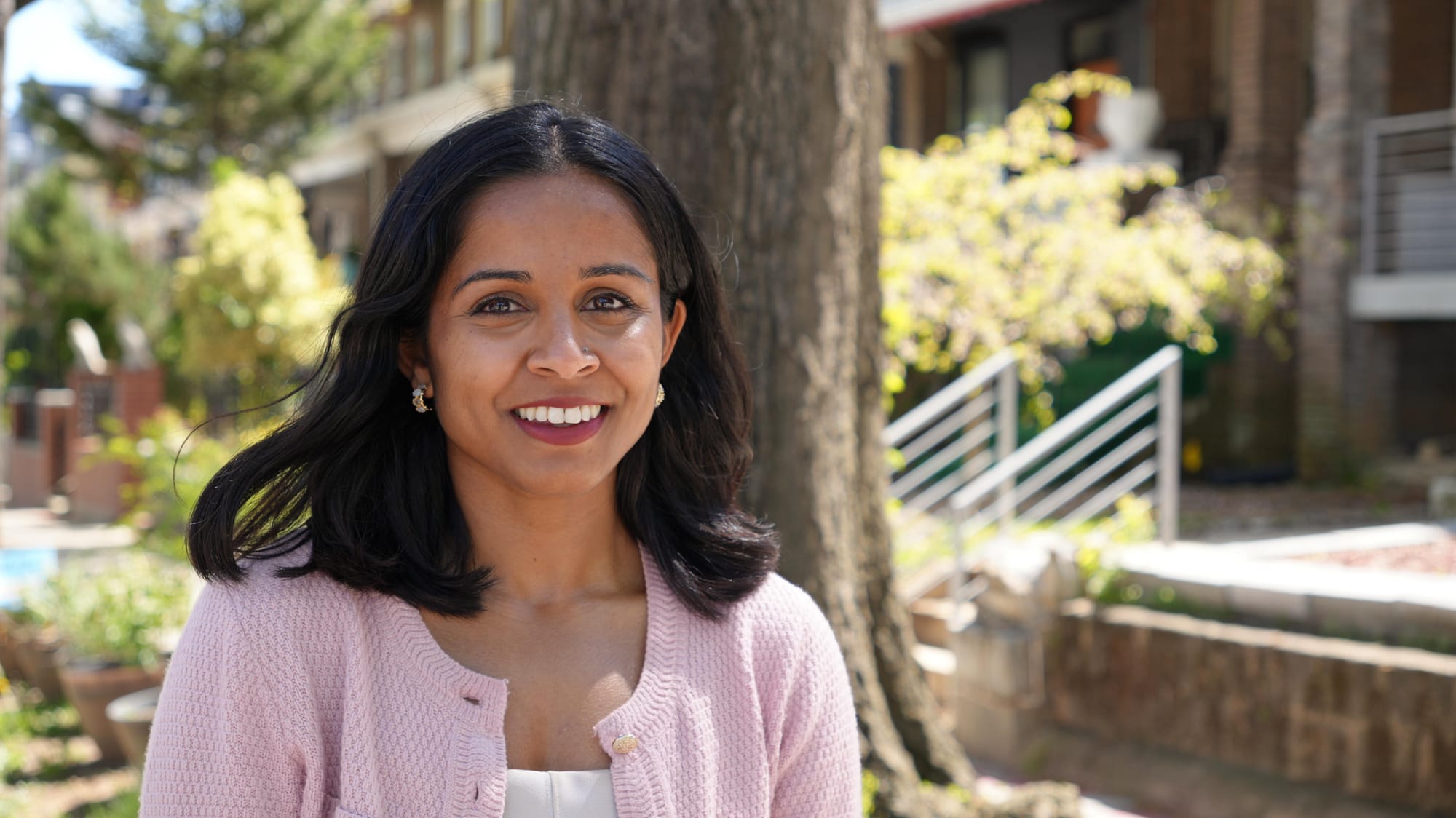
Aparna Raj was brought into local politics by an issue many renters can relate to: dealing with an unresponsive landlord. The whole process, including eventually getting pushed out of her Columbia Heights group home after a new owner took over, shaped her understanding of the city’s political conditions.
“A lot of our systems don't work for the people who live here and the people who work here,” said Raj, who works as a communications manager at the progressive policy advocacy group Local Progress and is originally from West Chester, Pennsylvania.
After she started tenant organizing as a volunteer with Metro DC Democratic Socialists of America, Raj, 32, recalled having meetings with councilmembers about renter protection legislation. “I could see their eyes glaze over in those meetings,” said Raj, adding that she’d later hear those same councilmembers make claims that renters are taking advantage of the system.
“We just need more voices on the council who understand what renters and working families and immigrants are going through, and are willing to have those fights and push back against a lot of the more corporate talking points,” she said.
A longtime member of D.C.’s chapter of the DSA, Raj is the left-most candidate in the race. Her campaign platform includes big policy swings, like expanding rent stabilization to more properties and funding universal childcare by taxing large corporations that do business in the District.
Raj said voters resonate with her message, regardless of what political philosophy they subscribe to, because they share similar hopes, fears, and frustrations. “People see their neighbors getting kidnapped and they're pissed off about it,” she said. “People are seeing their energy bills go up hundreds of dollars, and they have no idea how they're going to pay for it.”
Raj thinks it's important for her campaign to be clear about its values — and that this moment in D.C. requires “a new vision and a new philosophy to be able to make it a place where everyone can live.”
So how does she plan to get her ambitious policy goals enacted? By leaning on her organizing experience. “So much of it is having one-on-one conversations with people and building relationships,” she said. “And I think that's going to be a core part of being on the council.”
Aside from building new relationships and finding partners on legislation, Raj also intends to bring her current allies into the fold to help her understand what’s happening on the ground on issues like MPD and ICE sightings, utility bill spikes, and tenants’ rights. “If we want to design policy that's effective for people, I think a lot of these community groups are going to need to be a part of that,” she said.
Raj is the first (and so far only) candidate to hit the maximum for the public matching funds from the DC Fair Elections program, and her campaign has racked up more than two dozen endorsements, largely from unions and progressive groups.
Ultimately, her work as an organizer is what she says sets her apart from the other candidates.
“That energy and that fight is what I would bring to the councilmember’s office,” Raj told The 51st. “That's me bringing that fight individually, and that's me bringing also this broad coalition of organizations and allies who are also ready to fight for those same things.”
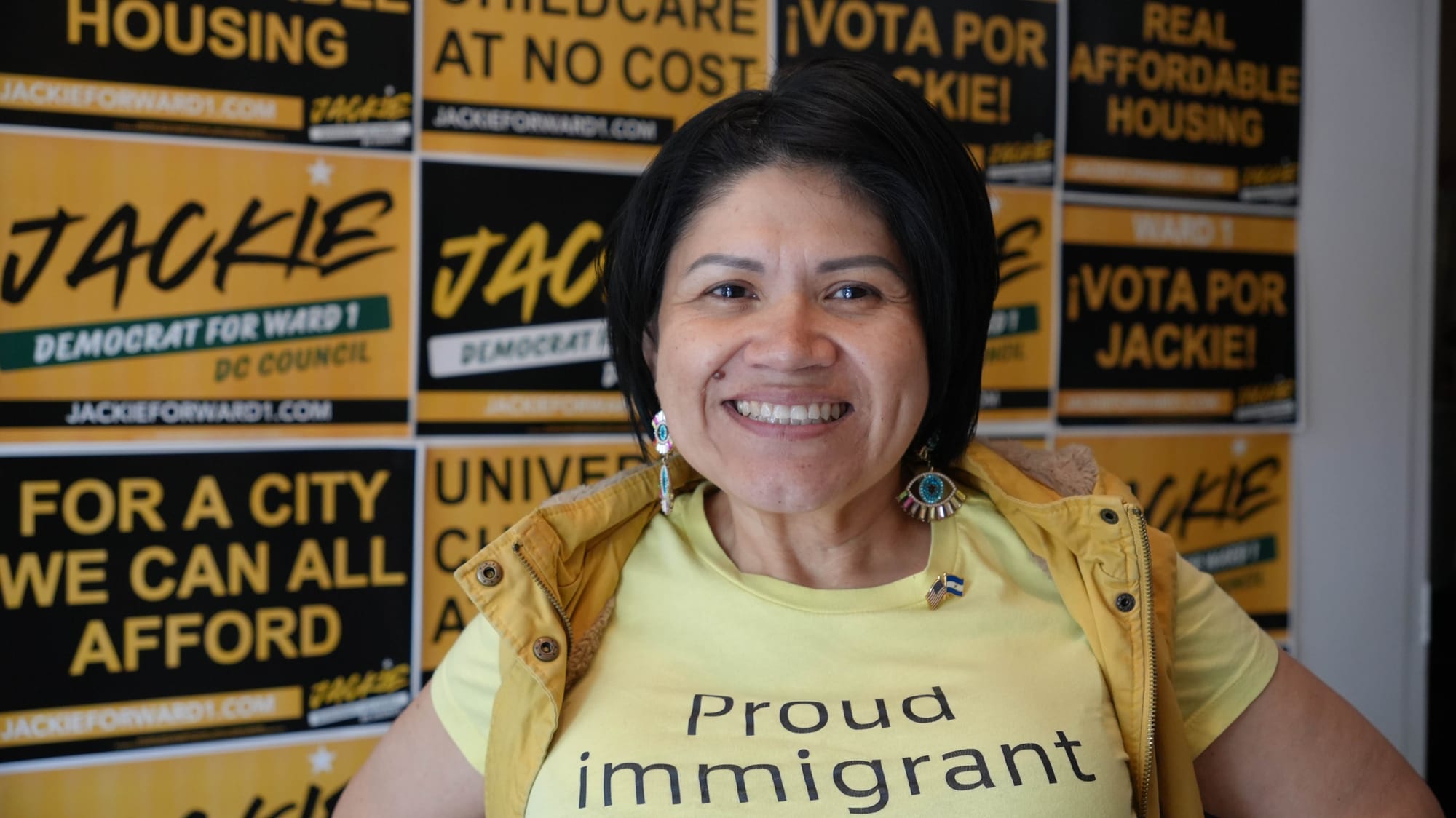
If there’s one uncomfortable truth about Ward 1 – the historic heart of D.C.’s Latino community – it’s that it’s never had a Latino councilmember to represent it. “It’s long overdue,” says Jackie Reyes Yanes, one of two candidates in the Ward 1 race that hail from Latin America. (The other is Miguel Trindade Deramo, who has Brazilian heritage.)
Reyes Yanes, 48, arrived in D.C. in 1990 after her family fled the civil war in El Salvador. Calling herself a “homegrown Ward 1 person,” she was a teen mother and experienced homelessness before eventually working in local politics, including as director of Latino affairs and community outreach for the late former Ward 1 councilmember Jim Graham.
She says that much of her perspective on what Ward 1 needs is shaped by what she saw growing up: Latino immigrants coming to D.C., where they were able to start businesses and buy houses that today would be far out of their reach.
“Our small businesses are taking a hit after COVID. There was not a recovery plan. We were focusing on downtown, but what about Ward 1? I want to be that voice,” she says. (Her campaign office is located in the back of Morgan’s Seafood on Georgia Avenue.)
And being that voice can put her at odds with many of her opponents, who tend toward the progressive side in what’s already one of D.C.’s most left-leaning wards (a recent poll found that Janeese Lewis George currently has more than double Kenyan McDuffie’s support in the ward for the mayoral race). “You cannot go to the far left and say everything’s going to be for free,” she says of pledges to make child care, buses, and other services free.
But like the other candidates in the race – and many voters in Ward 1 – Reyes Yanes has been angry to see MPD officers cooperating with federal agents on immigration enforcement and is convinced that it has only done damage to public trust in the local police department.
Still, she has been a longtime ally of the mayor’s, working for her administration for the past decade, most recently as director of the Mayor’s Office of Community Affairs.
Reyes Yanes says she was able to accomplish more for the Latino and immigrant communities as a member of Bowser’s team than if she had been on the outside. “Things that we got done are because I was in her ear,” she says, citing a fund that Bowser created in 2020 to help pay for legal services for immigrants.
She also says she understands the difficult position Bowser has been in when it comes to dealing with President Trump. “You can criticize the mayor, but if she didn’t act the way she acted, we could have had more [ICE agents],” she says. “An African proverb says, ‘He who has been carried doesn’t know how far he has gotten.’”
Reyes Yanes concedes that she’s a step removed from her progressive opponents. But she’s also critical of some progressive advocates, notably labor union leaders who have endorsed Aparna Raj. “Who are your members? Put me in front of your members. Most likely they will look like me and have my accent. We’re the workforce,” she says.
Ultimately, Reyes Yanes says that there’s a perfectly progressive case to be made for electing her to the D.C. Council. “If you’re progressive, yes, look at me,” she says. “You want to be a progressive, then give us that piece of the pie and give me that seat at the table. If you’re going to be a real progressive, then stand for what you believe in.”
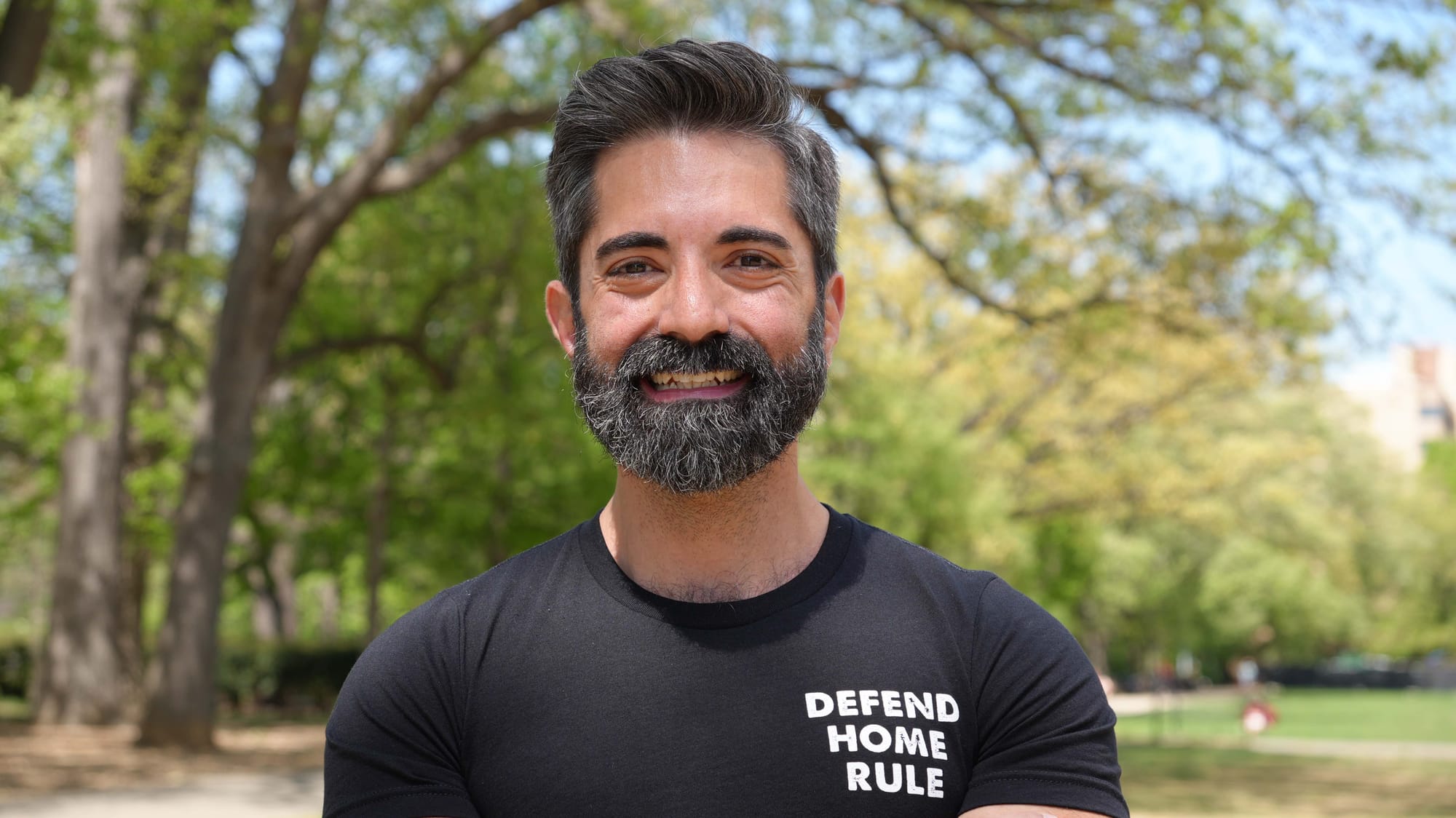
Miguel Trindade Deramo wanted to be the Lorax of Malcolm X Park.
He sees the large green space, located in the heart of Ward 1, as D.C.’s “one true urban park,” where anyone can come and hang out. And like the Lorax, he wanted to protect and preserve the space after he moved into the ward in 2023, which is what motivated him to run for ANC in a three-way race that same year.
“Now I do a whole park-specific newsletter,” said Trindade Deramo, 39, who grew up just outside Detroit. “Just to try to keep people connected to it, give them a sense of ownership in it, build community around it.”
Trindade Deramo’s local politics origin story starts at Malcolm X Park, but he came to D.C. in the same way as many residents: to work for the federal government. Previously an analyst in the U.S. Department of Homeland Security, Trindade Deramo left his job four years ago to pursue local public service full-time. Aside from working closely on the park, he also was an organizer for the successful 2024 ballot initiative to implement ranked choice voting.
When he initially heard that Nadeau was considering not seeking re-election, Trindade Deramo wasn’t sure he wanted to leave his post as the chairman of his ANC and as the leader of the ANC Home Rule Caucus to run. At the time, he was also working on starting a nonprofit to educate voters on ranked choice voting.
But the federal takeover of the city in August and subsequent targeting of immigrants in Ward 1, along with ongoing threats to Home Rule, motivated Trindade Deramo to start his campaign. “Being from a Latino immigrant family, it was terrifying,” said Trindade Deramo, whose mother is Brazilian.
Now, his full-time job is campaigning. If elected, chief among Trindade Deramo’s policy priorities is housing. He says he wants to take an “all of the above” approach, including exploring the social housing model seen in places like Montgomery County, utilizing the District Opportunity to Purchase Act (a law that gives the city rights to purchase buildings for the sake of preserving affordable housing), and making it easier to build housing.
Transit is high up on Trindade Deramo’s list, too, including supporting ongoing projects to bring bus lanes to U Street and expanding them along Georgia Avenue and 14th Street.
“The humble bus. It's not glorious, not romantic,” he said. “But it does all the work, and especially in Ward 1.” Seeing such projects to completion is all about what streets are seen as important, he says, “so the ward councilmember needs to get a person who is there every day with DDOT saying, ‘Okay, this has to get done.’”
As an ANC, Trindade Deramo is focused on all the granular, day-to-day things — like how wide or narrow a street is, or when trash gets picked up — that contribute to how people experience a neighborhood. He uses 14th Street in Columbia Heights as an example, an area where Latinos have long built businesses, but that he says hasn’t been properly managed by the city. “We are not seizing all of that,” said Trindade Deramo. “The ingenuity, the entrepreneurship of our people — and saying, ‘This is a showcase. Come here, spend money.’”
Dimly-lit streets, trash on the ground, closed pharmacies, a lack of late-night eateries — all of it adds up. “When you go block by block and you look at every single tiny thing, you see as a whole that makes up an experience — good or bad.”
It’s that hyper-local perspective and a “sharp sense” of what constituent services looks like in Ward 1 that Trindade Deramo says makes him the right fit to be the ward’s next councilmember.
“There isn't somebody with this perspective who's saying, ‘Hey, the core of the city, the densest part of the city, this diverse part of the city, this engine for the city, is really feeling left behind and disinvested,’” he said. “And that's what I carry with me from this block-by-block stuff.”

Where the competitive local races are, an unusual At-Large voting situation, the fate of foie gras, and more.

The recent death of a city official in a scooter collision, alongside riders landing in the ER “every week” has trauma experts questioning whether rental e-scooters should be allowed.

Facing high maternal mortality rates, the District made doula care free for Medicaid patients. But experts say the benefit isn't working out in practice.

As the iconic U Street Ethiopian restaurant prepares to close, thousands on social media shared their praise and memories
With your help, we pursue stories that hold leaders to account, demystify opaque city and civic processes, and celebrate the idiosyncrasies that make us proud to call D.C. home. Put simply, our mission is to make it easier — and more fun — to live in the District. Our members help keep local news free and independent for all: