

Yes, D.C. does still have a general election … Here’s what to know
Where the competitive local races are, an unusual At-Large voting situation, the fate of foie gras, and more
Where the competitive local races are, an unusual At-Large voting situation, the fate of foie gras, and more

Yasmin Williams is helping to book artists for the free Millennium Stage concert series.

The team plans to ask for an exemption to the city's climate law that would allow it to add a natural gas-burning plant, which is worrying environmentalists and lawmakers.
Cornelia Poku of Black Girls Explore DC tells us her favorite spots to get this celebrated West African dish.


In Black culture, some dishes are best left to the culinary experts in the family when hosting a potluck gathering. Think: macaroni and cheese and potato salad. While they seem like mere sides, the pressure for flawless preparations cannot be understated.
Similarly, across the African diaspora, jollof rice is a beloved and hotly contested dish.
“Jollof is a kind of rice that’s cooked in stew, so every single grain is coated in flavor,” explains Cornelia Poku, founder of Black Girls Explore DC, whose Ghanaian parents cooked the dish at least once a week. “It's like you remove the step of having to mix a rice and a stew or a sauce — it's all right in there.”
Jollof is believed to have originated in Senegal, but it is among West Africa’s most famous dishes, spawning friendly rivalries among countries including Ghana, Cameroon, Liberia, and Nigeria.
“Just because somebody makes it differently doesn't mean it's bad. The point of food is to have fun with it,” says Poku, noting that from her experience, even two Nigerian restaurants can have completely different versions.
Since launching Black Girls Explore DC in 2018, Poku has dined at nearly 500 restaurants across the region, sharing recommendations for all types of cuisines on Instagram and TikTok (she has also contributed to The 51st, among other outlets.) While she rarely posts about a restaurant more than once, Poku satisfies her urge for jollof at least twice a month — either cooking it herself or trying it at a new restaurant.
Poku says the best preparations are flavorful on their own. “I don't want you to make the jollof as if it's definitely going to be relegated to a side,” she says, noting that it should also be rich in color. “If you see a pale jollof, that means there was more rice than seasoning … so that makes me a bit nervous.” And in her opinion, if it’s made with jasmine rice, “you’re already ahead of the pack” (this editor’s Nigerian husband swears by parboiled rice).
From carryouts to fast-casual spots and fine dining restaurants, Poku tells us her five favorite places to get jollof rice in D.C., plus one bonus recommendation for when you’ve reached your carb limit.
Spicy Water African Grill
2019 11th St. NW
Serving up Ivorian food that’s good for takeout or a cozy dinner, this U Street spot might have the simplest preparation on the list, but it’s set apart by its accompaniment of extra stew on the side, according to Poku. “That makes it more flavorful, more interesting, and you can turn up or turn down the tomatoey goodness.”
Sost
1901 9th St. NW
The jollof at Sost — a multi-level cafe, speakeasy, and lounge with an Afro-fusion menu in Shaw — has a standout texture. “You know a jollof is good if all the grains are individual — that means it was cooked to perfection and you don't have any mushiness,” Poku explains. Their version also comes as a side to suya (skewered meat coated in a spicy rub), she says. “The iconic combination: suya and jollof. It’s like ‘yes, give me that.’”
Hedzole
5505 Colorado Ave. NW
This build-your-own-bowl style restaurant, which showcases Ghanaian and other African diasporic ingredients, makes jollof the base of your meal. “I chose to have a really rich stew on mine that was so good and made everything else even more flavorful,” says Poku, who also topped her bowl with salmon, plantains, cabbage, and shitto (a Ghanaian hot pepper sauce). Hedzole also offers waakye, a labor-intensive Ghanaian dish of rice and beans that’s not offered at many West African restaurants. “You can go back and forth between the two rices, and it's just really enjoyable,” she says.
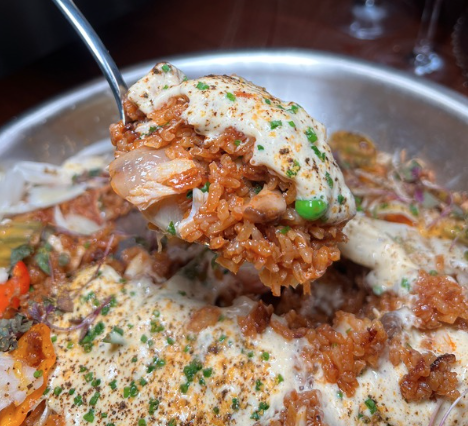
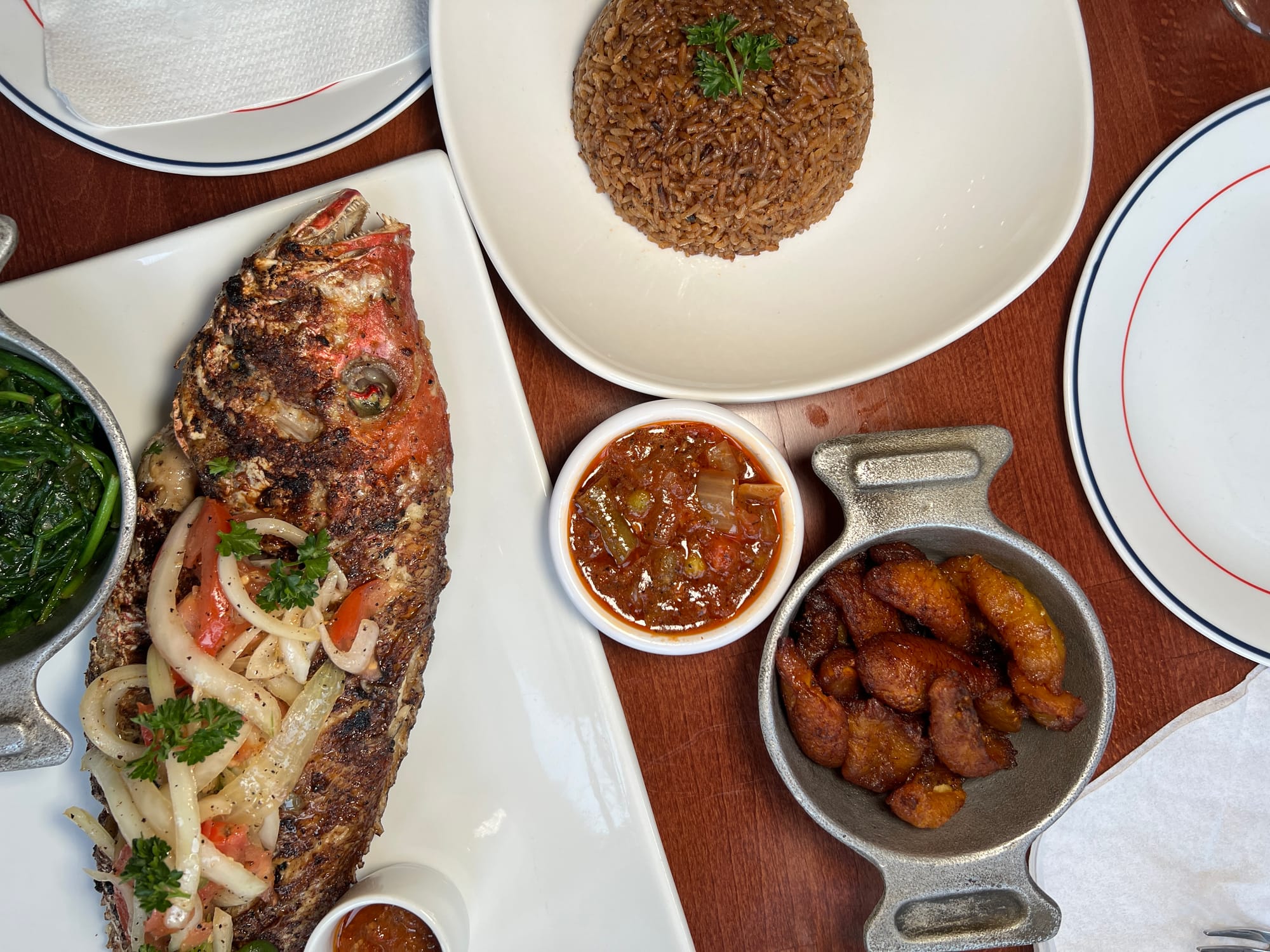
Crab fried rice at Marcus (left) and red snapper and jollof rice from Spicy Water African Grill. (Cornelia Poku)
Elmina
2208 14th St. NW
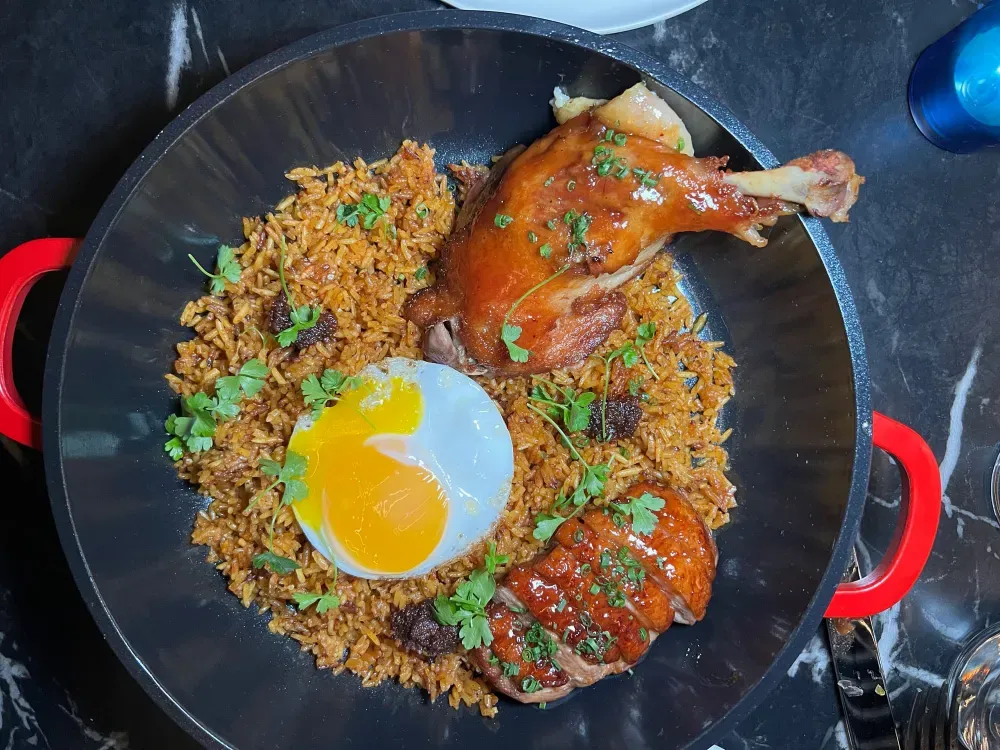
Elmina, owned by Eric Adjepong, a Ghanaian chef who has competed in culinary competitions like Top Chef, serves two “jollof pots”: one seafood and the other duck (you can also just get the rice as a side). Poku says the duck is unique because it’s not a protein typically found in African dishes. “That extra fattiness gave it a fuller, layered taste — buttery almost,” she says, and the rice on the bottom of her plate was crisp as if it were cooked in a cast iron pan. “I’ve heard mixed feelings about that, but I really enjoyed it.” Their preparation is also the spiciest on her list. “It takes a lot for me to register spice, so when I say that the Elmina one is spicy,” she adds, “that means it is actually spicy.”
Marcus DC
222 M St. NE
Celebrity Chef Marcus Samuelsson — who has roots in Ethiopia, Sweden, and Harlem — has a rice dish on his menu that is so reminiscent of jollof that it made Poku’s picks. Though he calls it crab fried rice, the deep orange-red color of the tender rice is spot-on as a jollof interpretation, and “you can tell it’s cooked in a rich stew or sauce,” she says. Samuelsson’s version includes peas and carrots, which Poku typically finds at African parties, and it’s “drenched in a crab sauce that adds this creaminess that you obviously can't get in a traditional jollof,” she says. “I really enjoy that — it's just a different way [to make it].”
Bonus rec: Once your jollof tour is done, Poku recommends visiting her favorite non-food related date spot: Sandbox VR in Tysons. “I thought it was going to be really corny but we had so much fun,” she says of the Squid Games virtual reality experience. “It was really interactive, and it felt so real.” (Editor’s note: There’s also a Sandbox location in Gallery Place.)

Yasmin Williams is helping to book artists for the free Millennium Stage concert series.

As the iconic U Street Ethiopian restaurant prepares to close, thousands on social media shared their praise and memories


The Revada Arts Center will be home to a theater company, film house, and “anti-opera” collective.

As a new parent, I needed activities that were child-friendly but not child-centric. These spots did the trick.
With your help, we pursue stories that hold leaders to account, demystify opaque city and civic processes, and celebrate the idiosyncrasies that make us proud to call D.C. home. Put simply, our mission is to make it easier — and more fun — to live in the District. Our members help keep local news free and independent for all: