


MLK Library sleeping ban could lead to arrests and displacement, advocates warn
New enforcement includes rope barriers and police to keep homeless people from sleeping under the library's overhang.

Georgiann had been sleeping under the loggia of the Martin Luther King Jr. Memorial Library since February. Along with about 60 other people, she spent each night under the protection of the building’s overhang, seeking shelter in one of the last outdoor places in downtown D.C. where people experiencing homelessness could reliably stay the night.
But in July, the D.C. Public Library began enforcing rules banning people from sleeping outside the building. Georgiann, who requested that only her first name be used to protect her privacy, and dozens of other people have had to find new places to rest. Many of them now spend the night just feet away on the uncovered sidewalk, staring at rope barriers, police cars, and officers who line the front of the library.
This new enforcement, which is expected to last for at least 90 days, isn’t the first time the library has banned people from seeking refuge there. In 2024, the MLK Library restarted enforcement of its policies against sleeping or lying down inside or immediately outside the library. The library implemented a 30-day overnight patrol and posted signage banning sleeping, but many still gathered under the overhang each night.
Library officials said the new enforcement, which includes rope barriers and police, is meant to address longstanding complaints about safety and conditions outside the building. Outreach organizations worry it will simply move people elsewhere, making it harder to connect them with housing and services while doing little to address homelessness.
The pilot began on July 6 with a two-week warning period, during which people sleeping outside the library reported seeing yellow tape along the loggia at night. Beginning July 20, library police said they would issue written notices to anyone who stays under the overhang after they've been asked to leave banning them from library property.
Starting Aug. 3, those people could be arrested for trespassing. The enforcement is framed as a 90-day pilot, but library officials said they will use that period to evaluate the policy and determine future enforcement. Several unhoused people sleeping near the MLK Library in mid-July said they were unaware they could face arrest.
“The Library is enforcing rules related to the Loggia because conditions in that area have created a barrier to participation at the MLK Library. Enforcement removes that barrier,” a D.C. Public Library spokesperson wrote in a statement. “Even with daily cleaning, the area under the loggia has become unwelcoming.”
According to the library, patrons complained about conditions near the entrance, such as urination, defecation, violence, and theft. With the new policy, facilities staff need less time and fewer resources to clean and prepare the space each morning.
But outreach organizations say it's also stripped people of a refuge, with people now forced to find shelter under the awnings of neighboring buildings.
People sleeping outside the library said a few people had snuck under the barricade to sleep, but they were quickly escorted out by library police. The increased police presence initially led to some conflict, but people sleeping outside said it's since decreased the visible incidences of crime.
“It's been quieter, because there's more security,” Georgiann said.
Shannon Clark is the executive director of Remora House, a mutual aid organization that provides food, clothing, and supplies to people experiencing homelessness in D.C. She said she sees the library enforcement as part of a broader pattern of increasingly restrictive policies on homelessness in D.C. Large encampment clearings and the closure of public spaces have displaced people instead of moving them into housing, she said.
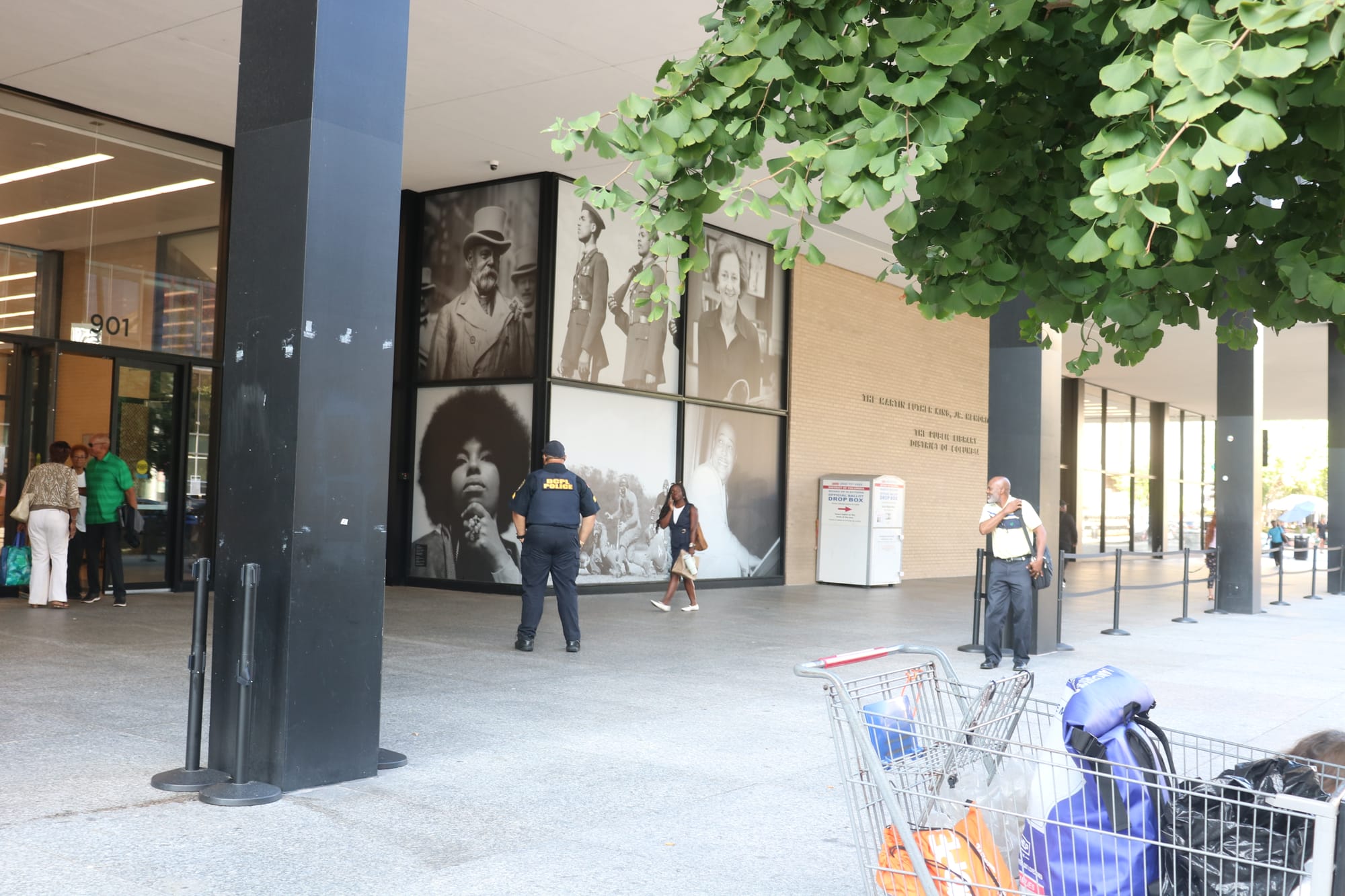
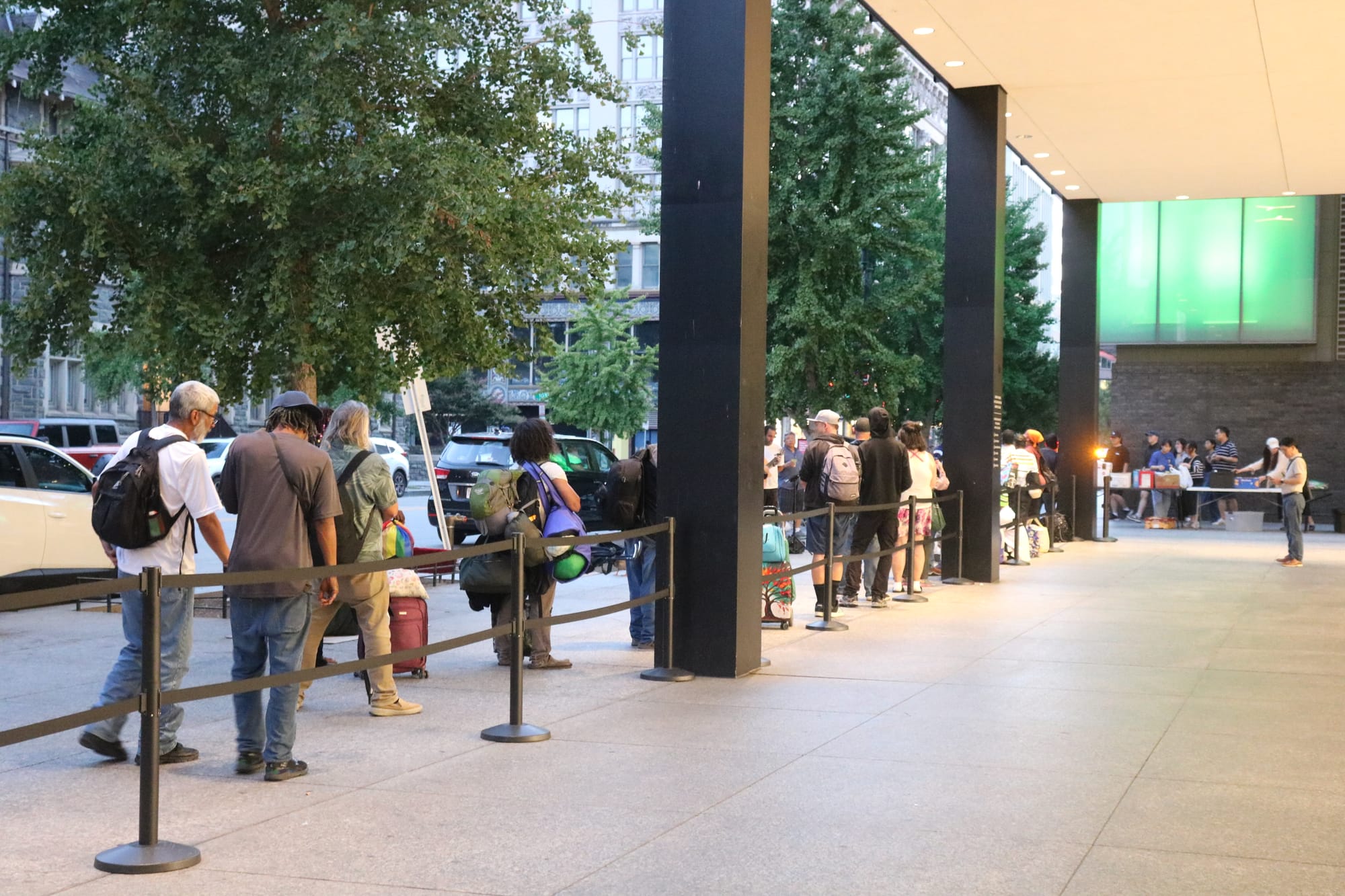
Police at the entrance of the library (left) and a church's weekly food distribution for the unhoused held outside the library's rope barriers (right). (Chih-Rong Kuo)
Georgiann said she is trying to leave sleeping at the MLK sidewalk behind. She received a housing voucher in May but has not yet been able to find an apartment because of inspection requirements and delays in the process. She's not alone: a report by the D.C. government research and design team The Lab @ DC found that between 2023 and 2024, households took an average of five to six months to move into housing after being matched with a voucher.
Until then, Georgiann plans to continue sleeping outside the library, though now without cover from the rain. Clark said other people who used to sleep under the loggia will likely move to nearby blocks or other public spaces, making it more difficult for outreach workers to find them.
“People don’t just disappear when you evict them from an encampment,” Clark said.
Similarly, a spokesperson from Stop the Sweeps, a local group that opposes the clearing of unhoused encampments in D.C., questioned whether the library’s policy would make the space more welcoming to patrons. They said prior to the pilot, the public library had been spraying water on the ground under the loggia, a strategy to deter unhoused people from sleeping under buildings.
People are sleeping there because they have nowhere else to go, said the spokesperson, adding: “The addition of increased police presence throughout the night to deter people from this historic place is counterproductive."
Clark said the library serves a much larger role than simply providing a place to sleep overnight. It's one of the few public places downtown where people experiencing homelessness can spend time indoors, escape extreme weather, and access basic resources. Many people who slept beneath the loggia also use the library to meet caseworkers and connect with services, making the location an important point of contact for outreach organizations.
"Where are they supposed to go?" Clark said. "They go to the library. They go there to check their mail. They read a book. They learn something. They meet their caseworker."
Clark adds that threatening people who sleep under the overhang with a ban from the entire library system risks eliminating a vital source of support.
“[The library] is the main space that folks go to get out of the elements. And it's designated for that purpose,” Clark said. “But now the exact people that absolutely need to be able to have access to that are going to catch a one- to three-year ban because they're also trying to sleep outside when it's closed at night."

Read next

In these hyperlocal ANC races, there's no shortage of drama
Including allegations of stolen signs, homemade attack flyers, mysterious MAGA figures, and a whole lot of name calling


Yes, D.C. does still have a general election … Here’s what to know
Where the competitive local races are, an unusual At-Large voting situation, the fate of foie gras, and more.

D.C. experts warn that e-scooters risk death and severe brain injuries, particularly among children
The recent death of a city official in a scooter collision, alongside riders landing in the ER “every week” has trauma experts questioning whether rental e-scooters should be allowed.

D.C. doulas are struggling to serve low-income families despite landmark legislation
Facing high maternal mortality rates, the District made doula care free for Medicaid patients. But experts say the benefit isn't working out in practice.
