

The 51st in print!
Why we partnered with a collective of D.C. natives to produce a print edition and where you can get a copy
Why we partnered with a collective of D.C. natives to produce a print edition and where you can get a copy

Get to know your neighbors, regardless of their address.

The recent death of a city official in a scooter collision, alongside riders landing in the ER “every week” has trauma experts questioning whether rental e-scooters should be allowed.
Amid an upsurge in immigration enforcement, many are hesitant to head to the polls.

ANC Commissioner Monica Martínez López is “psyched” to vote in D.C.’s primaries. She’s been counting down the days until she can weigh in on the city’s mayor for the first time. Her ballot, however, won’t have an option to vote for the District’s delegate to Congress.
Martínez López is one of three elected officials in D.C. without U.S. citizenship, and one of approximately 1,000 non-citizens registered to vote in the city, where the practice has been legal since 2024. She can’t cast a vote for federal offices, but she sees local political participation as a way to forge a "sense of belonging" in the city she calls home.
“Being an immigrant who is a non-citizen, has lived here for over a decade, works here, has a family here, pays taxes here, cares deeply about what happens in this city; it’s a net positive to be engaged and to exercise my rights to the fullest extent,” she said.
This election is a significant one, with an open mayoral race for the first time in a decade, several competitive battles for council seats, and the introduction of ranked choice voting. It’s also the first election since President Donald Trump’s “crime emergency” last summer, during which federal law enforcement — including immigration enforcement — surged into the city. During the first two months, over 1,100 people were picked up by Immigration and Customs Enforcement (ICE), often without warrants. (Over 80 percent of those arrested did not have criminal records, according to Washington Post reporting.).
While the scale of the surge has abated somewhat, D.C. continues to face unprecedented threats to its autonomy from federal lawmakers and the White House — including attacks on the city’s decision to award municipal voting rights to non-citizens.
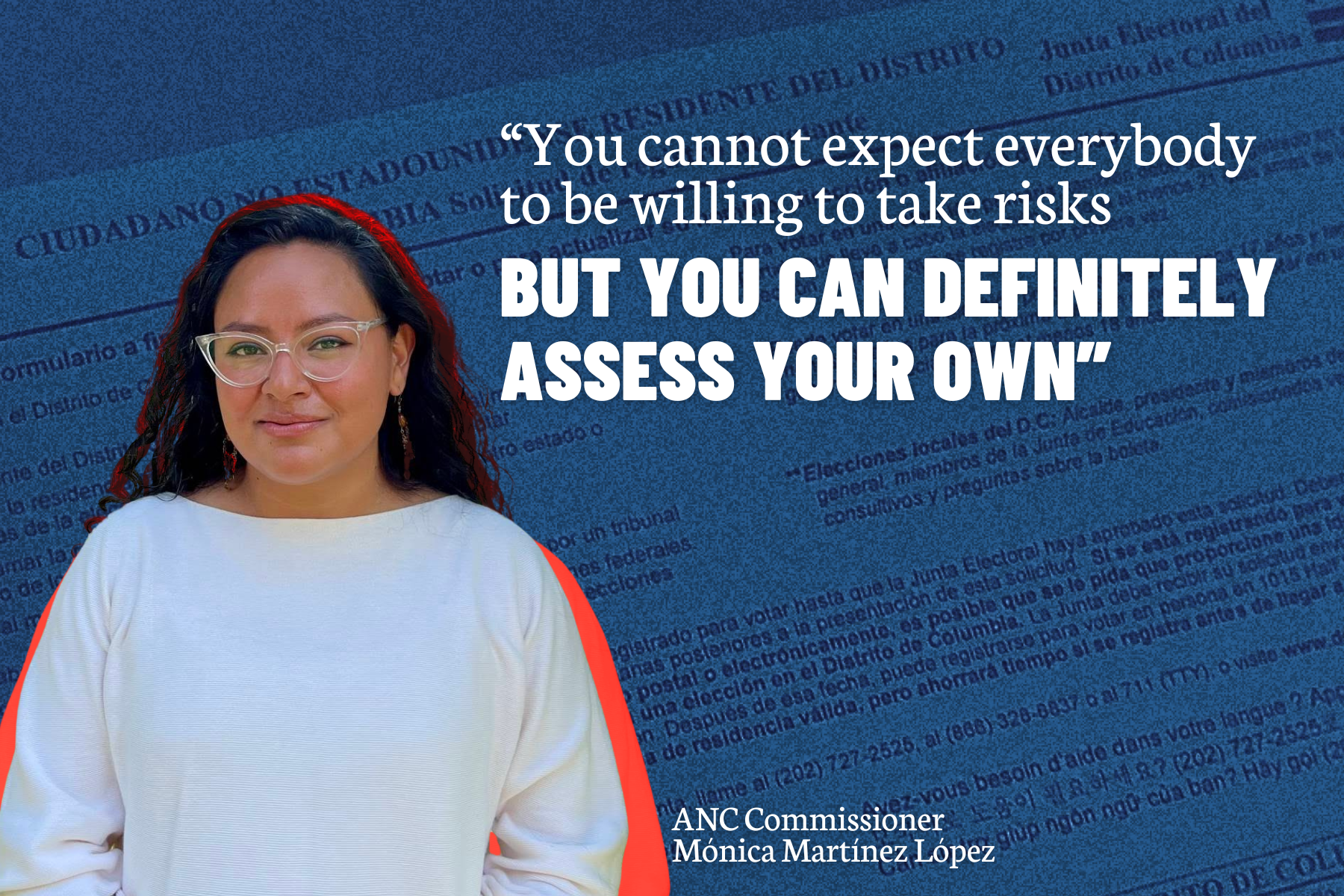
Martínez López recognizes that these circumstances make for a complicated time to use this democratic tool. "It means taking a risk," she admits. "You cannot expect everybody to be willing to take risks, but you can definitely assess your own," she said.
Local election experts told El Tiempo Latino and The 51st that the outsized national focus on immigrant voting, and the fear of entering a public registry in this political climate, has made many non-citizens wary of the polls. Still, some remain excited, buoyed by election experts emphasis that D.C. does have protective measures for these voters. This includes mail-in drop boxes and informational workshops to help potential voters better understand their rights and weigh their personal risks.
The House of Representatives has tried three times in three years to overturn the Local Resident Voting Rights Amendment Act of 2022. (The attempts have never made it past the Senate.)
“Under no circumstance should anyone other than American citizens decide any American elections,” Speaker Mike Johnson said in a statement following the second congressional attempt in 2024. “The radical policy from the DC city council to allow noncitizens to decide local elections is anti-American and dilutes the constitutional rights of DC residents,” said Johnson. President Donald Trump has also pushed fears that a massive influx of ballots from undocumented residents would impact federal elections.
D.C. isn’t alone — many cities in Maryland, as well as those in Vermont and California, have also given non-citizens the right to vote locally. “At the municipal level, they’re so much a part of the community," said Ann Castiglione Cataldo, who does immigrant voter outreach with the D.C. League of Women Voters, of non-citizen voters across the country.
“There is still so much misinformation at the local level and obviously the national level,” said Martínez López. “There’s this idea that it’s tens of thousands of undocumented people, or spies from foreign governments, deciding the fate of the city. And that’s not true.”
Experts warn that these narratives are manifesting into a “generalized fear” about political participation of any kind for non-citizens. Castiglione Cataldo said she’s seen these fears steadily increase. Today, she said voters are “hesitant to even engage with us.”
“This is not just with Hispanic immigrants, but I'm noticing more hesitancy across the board from people who are first generation immigrants,” she said.
Castiglione Cataldo described varied perspectives she’s seen from non-citizens considering voting in D.C., from enthusiasm, to hesitance, to paralyzing avoidance. She’s cautious when advising voters, trying to remain transparent about the risks involved.
“I want them to understand, if you put your name in something, it becomes a matter of public record, and I can’t promise you what will happen in the future,” she said.
Martínez López said her voter outreach efforts in her own neighborhood (as an ANC she represents parts of Brookland, University Heights, and Michigan Park) have often been met with rejection from residents who fear disclosing their addresses or immigration status.
“It’s just very unfortunate to hear people being completely afraid of exercising their right,” said Martínez López.
While she said she proudly participates as a non-citizen voter herself, she "absolutely understands why other people do not see it the same way." She said she’d never try to “convince” a non-citizen to vote.
Still, she said she’s talked to non-citizen voters who are excited, in part because of D.C.’s efforts to support them. She described a recent voter education training where she met with locals eager to participate in the municipal elections, connecting their enthusiasm directly to the city's voter education efforts.
“This is where I think D.C. really helps them,” said Castiglione Cataldo. “When you can participate, you’re part of something.”
“I’m just always so thankful that I arrived to D.C. and made D.C. home,” said Martínez López. “I absolutely love the way that this city tries to protect and empower non-citizens.”
This article has been updated to add that Martínez López represents parts of Michigan Park as an ANC.

Candace Tiana Nelson is eyeing a run in Ward 4, but new allegations could complicate a bid.


In a historic election for D.C., progressive candidates had a strong showing.


Can McDuffie run again? How will the balance of power change? And what’s going on in November?

The democratic socialist won with 52% of the vote after four rounds of tabulation under ranked-choice voting.
With your help, we pursue stories that hold leaders to account, demystify opaque city and civic processes, and celebrate the idiosyncrasies that make us proud to call D.C. home. Put simply, our mission is to make it easier — and more fun — to live in the District. Our members help keep local news free and independent for all: