

In these hyperlocal ANC races, there's no shortage of drama
Including allegations of stolen signs, homemade attack flyers, mysterious MAGA figures, and a whole lot of name calling
Including allegations of stolen signs, homemade attack flyers, mysterious MAGA figures, and a whole lot of name calling

Renters at Faria Management properties say they're battling mold, rats, sewage leaks, and intimidation. They believe a reckoning for unaccountable landlords is finally here.
With food prices on the rise, these restaurants still provide real value.

East Potomac Golf Links isn't just a golf course — it's part of a critical bird migration corridor.

To the human eye, the peninsula of green wedged between the Potomac River and Washington Channel north of Hains Point looks like the golf course it is.
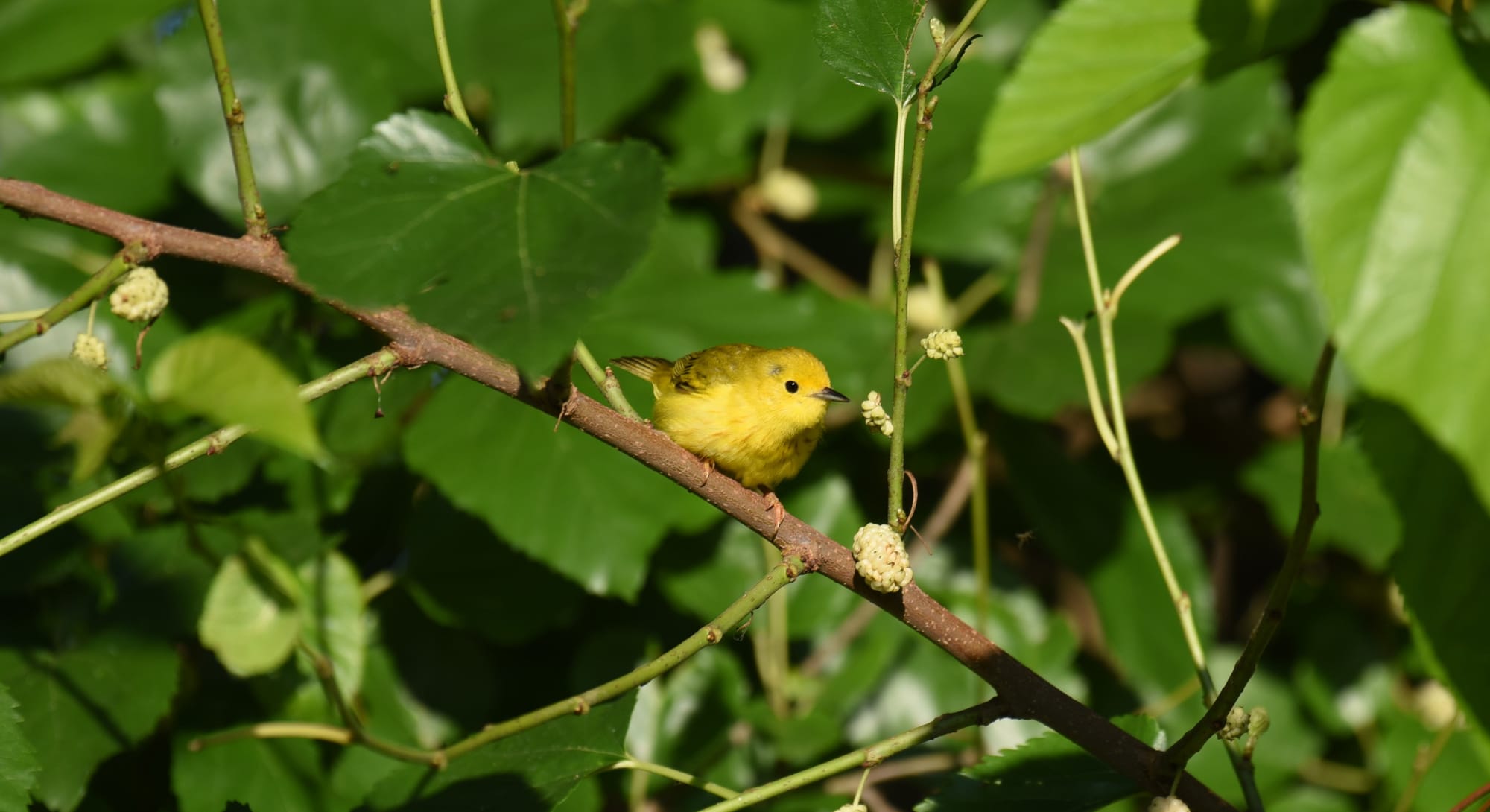
But to a weary, migrating willow flycatcher, yellow warbler, or Virginia rail craving food, rest, and shelter, it’s an indispensable refuge — especially as development continues to encroach upon open space around the nation’s capital.
Enthusiasts have counted at least 264 species of birds in this unique transect where the piedmont meets the coastal plain. It’s a lesser-known mini-migration corridor that, each fall, funnels the feathered fliers from Rock Creek Park and the Potomac River Gorge to Hains Point, and then the Southeastern U.S. and beyond. Each spring, the birds reverse that route.
The value of such a stopover isn’t lost on Arlington County native Mike McCartin, who grew up swinging a club at East Potomac Golf Links before earning a master’s degree in landscape architecture. The 44-year-old is animated by the notion of mixing accessible and affordable municipal golf with habitat restoration, he told The 51st. That passion spurred him to create the nonprofit National Links Trust with his colleague Will Smith, whom he met at graduate school in Georgia.
Six years ago, their organization secured a coveted 50-year lease with the National Park Service to refurbish and manage East Potomac and D.C.’s two other historic municipal golf courses on 455 total acres of federal land — Rock Creek and Langston. “My view of golf was shaped by going to East Potomac,” McCartin said. “Being welcoming and inclusive — that’s the way I want people to think of golf.”
NLT aims to change the perception of golf as insular, elitist and harmful to the environment. Ambitious objectives, with an estimated pre-COVID $70 million price tag, included extensive course makeovers, repairs of eroded streams, and rehabilitation of long-neglected wetlands, meadows and forests. Balancing birds with birdies, so to speak.
“Our philosophy is that golf can’t have a future if it hogs resources that are becoming scarcer,” McCartin explained. “These are big spaces in the city and we wanted people to understand why they matter and should continue to exist.”
On Dec. 30, the endeavor sustained a potentially mortal blow when the Trump administration terminated NLT’s lease, accusing the organization of moving too slowly. For its part, NLT says it had been stymied by the NPS and compliance with federal regulations. Critics claim the president is ending the lease so he can take over the courses himself, something he has mused about publicly. Now, McCartin and Smith worry that years of efforts to preserve and protect wildlife habitats will be summarily erased by whoever comes in next. In the meantime, the three courses are open for business, despite news reports over the weekend that the administration would shut down East Potomac to begin renovations.

Over at the Rock Creek course, NLT’s limbo status has halted progress on upgrades such as a new driving range, a clubhouse powered by solar and geothermal energy, and a 600,000-gallon rainwater-collection cistern for irrigation.
Uncertainty, however, hasn’t completely impeded NLT habitat restoration specialist Brian Wright. On a Monday morning in March, Wright and his assistant Otto Watson busied themselves inside the decrepit Rock Creek clubhouse, sharpening clippers and loppers before heading out in a golf cart to survey four priority projects.
The duo paused enroute to the hilly course’s northwest corner to photograph an ambling red fox before motoring on to a test plot where four acres of meadow could eventually flourish. Juggling a shrinking budget and a murky future mean slow-going. “We’re changing techniques to accommodate the political and financial reality,” Wright said. “That means scaling back restoration expectations. Now it’s about preventing the inevitable backsliding.”
Wright, a seasoned volunteer “weed warrior” with NPS before NLT hired him a year ago, has guided hundreds of volunteers in the removal of multiflora rose, porcelain berry, bush honeysuckle, barberry, bittersweet, and other invasive vines and shrubs that strangle trees and choke out native plants.
Beyond the emerging meadow at the historic 14th tee, volunteers have replaced tangles of invasives with Virginia wild rye and six other native grass species. A combination of nature taking its course and human intervention will allow the area, adjacent to a proposed hiking trail, to slowly morph into a forest.
“We’re not in a world anymore where you can walk away from a natural area and everything will be better,” Wright said. “Everything has been touched by human hands,” so land management is necessary.
Nearby, adjacent to groves of trees, Wright has cordoned off a circle of invasives-free land with 100 feet of fencing to serve as the course’s starter nursery. The aim is to fill the enclosure with a mix of small native shrubs and saplings that will mature into a habitat for birds and mammals.
Over by the historic 17th hole, American toads were whooping it up at a capacious, wet gully that became a bustling vernal pond, thanks to winter’s melting snowpack. Curious observers often gather to watch ducks and decipher individual notes of an amphibian chorus of spring peepers, and green, wood and pickerel frogs.
If time and money permit, volunteers will be ripping out thickets of linden viburnum infesting the banks and replacing it with a blend of native grasses, wildflowers and shrubs. “We can have outsize effect on the rest of the park with the environmental stewardship we’re doing here,” Wright said about the 1,754-acre national park. “We can’t just do nothing … because that doesn’t comport with NLT’s mission.”
Indeed, he walks the course regularly with park botanist Ana Chuquin to ensure his undertakings comply with NPS’s ecological standards. NPS did not respond to numerous requests for comment.
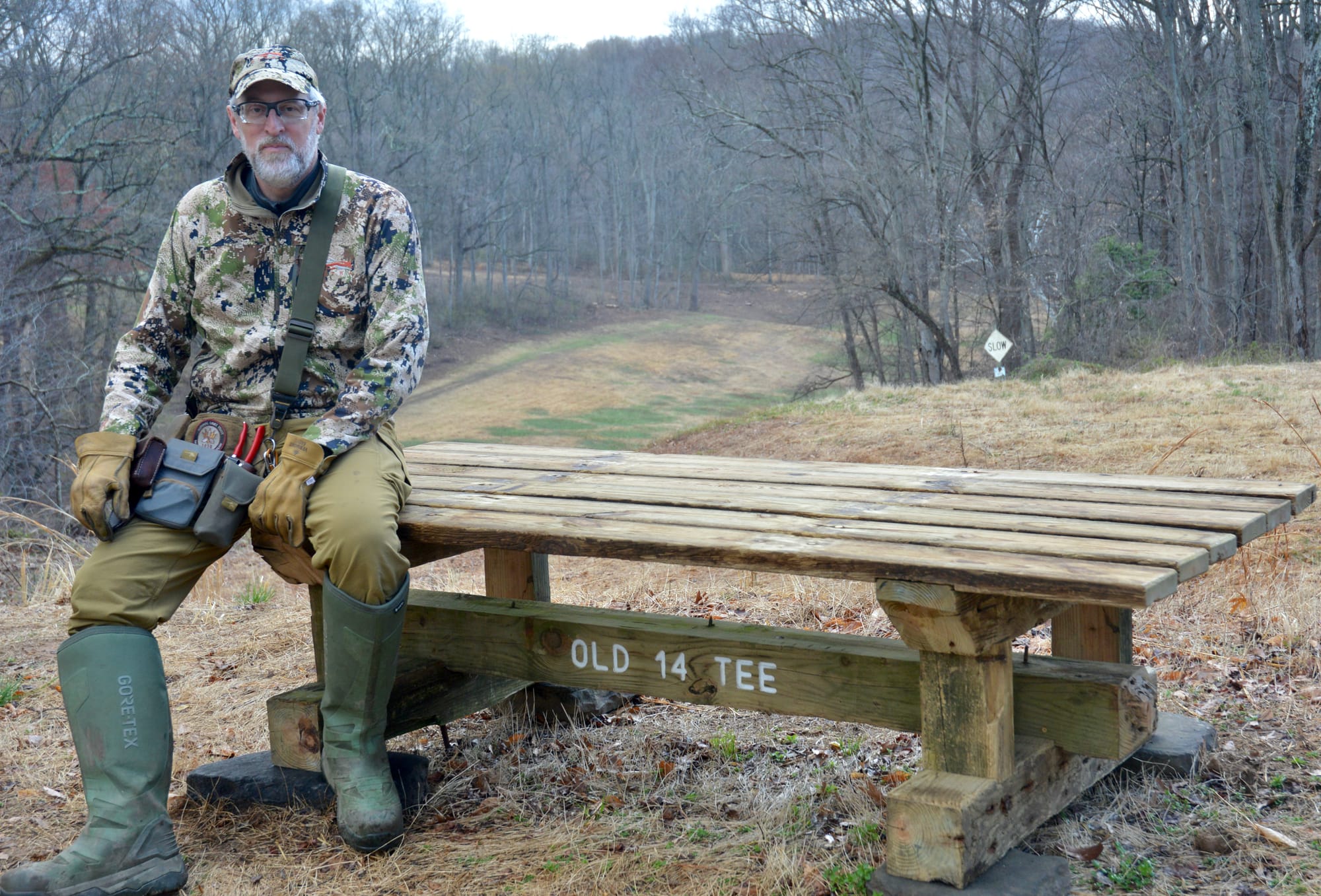
Seven miles to the southeast, NLT’s director of sustainability Andrew Szunyog stands atop an eroded ditch at Langston, lamenting how the Trump administration’s attempted takeover is thwarting advances. The organization has had to halt designs for a pollinator meadow near the fourth hole.
But the foiled environmental breakthrough that breaks Szunyog’s heart is a $9.5 million project to mimic natural freshwater systems, one that NPS has long pined for but couldn’t afford. He’s on the verge of having to return a $7.5 million federal Clean Water Act grant — matched by $2 million from NLT — that would have paid to uncover and restore about three-quarters of a mile of degraded streams, and construct up to 10 acres of wetlands on the 145-acre course.
Langston, which opened in 1939 to serve the Black community, is on Kingman Island between Kingman Lake and the Anacostia River, which both course under Benning Road NE. It doesn’t drain properly since it was built on a landfill adjacent to the National Arboretum. Altering its topography would let dirty stormwater be filtered by the giant sponge of a marsh before flowing into the lake.
“It’s devastating,” Szunyog said about the vanished opportunity. “This effort was all about the positive impact you can make for a community and our partners.”
NLT’s plans for green infrastructure, trash cleanups and invasive plant culling at Langston are all integral components of a D.C. Department of Energy and Environment-led endeavor to rejuvenate 55 acres of wetlands in and around the lake. That’s just a tiny slice of the estimated 2,000 acres of marshlands that once sheltered and fed an abundance of wildlife along the 8.5-mile river between Bladensburg in Maryland and D.C.’s Hains Point.

Even before Trump’s involvement with the courses, little has been simple for NLT. The organization’s 2023 proposal to remove more than 1,000 trees from Rock Creek Park golf course generated furious blowback from some neighbors. Now, however, the organization plans to plant about 1,500 — a 3:1 replacement ratio for each of the 500 healthy trees cut down, McCartin said. The other 500 were either non-native or already dead.
Over at East Potomac, yet another reminder for NLT of the Trump administration’s interference with course modernization is the mountain of contaminated dirt and construction debris that trucks have hauled to the site from the October demolition of the White House East Wing. It has tested positive for lead, chromium, arsenic and other toxic materials, according to recent data commissioned by NPS.
A short walk away from the pile, however, DOEE wildlife biologist Dan Rauch points to “The Boneyard” as one example of how NLT is boosting the region’s ecological health. The restored, brushy corridor has become a haven for birds, as well as foxes, raccoons and other small mammals since the organization cleared away a startling array of rusting vehicles.
Rauch, who singlehandedly counted 127 bird species during a recent three-year East Potomac survey, vividly recalls the day in May 2025 he spied 16 yellow warblers building nests in the now junk-free alley.
“They’re like flying jewels, little works of art in the air,” he said. “Birds are an integral part of our environment and also indicators of human health. They do so much for us by pollinating, transferring seeds and controlling insects, so we need to maintain these migration corridors they’ve used for thousands of years.”
NLT has proved itself an invaluable conservation partner because staffers keep recreation and stewardship on equal footing, he said.
“Think about it,” Rauch said. “These birds are coming through here on fumes. When the resources they need to breed shrink or disappear because of human disturbance, they can’t do it anymore.”
A top-of-mind dread among NLT staffers is that their ecological aspirations will be bulldozed to dust by Trump allies.
“We know what can be accomplished,” McCartin said. “To have great solutions ready to go that we can’t act on because of the uncertainty is frustrating. There’s no guarantee the next person will have that in mind at all.”
Update, May 14: On Friday, May 8, the Trump administration and National Links Trust announced that they'd reached an agreement under which the nonprofit will have long-term leases to run Langston Golf Course and Rock Creek Park Golf Course. They will also operate East Potomac Golf Links in the interim, until the National Park Service begins what the administration calls a "historic restoration" of the golf course.

Including allegations of stolen signs, homemade attack flyers, mysterious MAGA figures, and a whole lot of name calling

Where the competitive local races are, an unusual At-Large voting situation, the fate of foie gras, and more.

Get to know your neighbors, regardless of their address.


The recent death of a city official in a scooter collision, alongside riders landing in the ER “every week” has trauma experts questioning whether rental e-scooters should be allowed.
With your help, we pursue stories that hold leaders to account, demystify opaque city and civic processes, and celebrate the idiosyncrasies that make us proud to call D.C. home. Put simply, our mission is to make it easier — and more fun — to live in the District. Our members help keep local news free and independent for all: