

Community-based herbalism blossoms in D.C.
A growing number of residents are looking to plant-based remedies, practitioners say.
A growing number of residents are looking to plant-based remedies, practitioners say.

Major policy changes leave tenants with fewer options and a higher likelihood of losing their home if they fall behind.

The mayor-elect has made big promises about D.C.’s arts and culture scene.

A growing number of residents are looking to plant-based remedies, practitioners say.

On a Saturday in early August, students in a class at Common Good City Farm, near Howard University, gathered around herbalist Holly Poole-Kavana to look at a strange white-and-purple flower.
It was a passionflower, a species native to D.C. and much of the southeastern United States: one of many that students learned about in between brewing immune-system-boosting elderberry syrup, pressing lemon balm and chamomile extracts, and working in the Common Good herb garden. Pointing out the passionflower’s unusual protruding pistil, pollen-dusted stamens, and frilly corona — edible, but so delicate it will shrivel up just 10 minutes after harvesting — Poole-Kavana recommended the plant to treat anxiety, sleeplessness, and rumination.
That’s for humans, at least. Bees, Poole-Kavana said, also like to take naps in the flowers.
“They get really sleepy,” Poole-Kavana said about the bees, drawing laughs from her students. “There will be three of them on there — they’re, like, cuddling, and you can pet them, and they’re just kind of like, ‘OK.’”
Interest in herbalism — a holistic approach to healing that’s rooted in botany research, folk traditions, and sometimes lived experience — has been blossoming in D.C. recently. During the pandemic, more people grew interested in ways to boost their immune systems and in gardening as both a hobby and a response to concerns about strained supply chains. More recently, varying stresses including climate crises and lack of health care access have continued to drive a longing for natural remedies. Local practitioners say they’ve seen growing energy around workshops and community programs like Poole-Kavana’s Home Apothecary Program at Common Good.
“Oftentimes … when there is a crisis at the national level, people kind of turn toward each other in a way that’s like, how do we build community and take care of each other?” she told The 51st. “Herbalism fits into that really nicely.”
At Poole-Kavana’s apothecary in Takoma, Little Red Bird Botanicals, a large bookshelf is packed with jars and bottles of herbs with healing properties: fennel for bloating and gas; yarrow for upper respiratory infections, skin infections, or excessive menstrual bleeding; skullcap for anxiety, sleep support, and burnout symptoms; ginger to improve digestion.
Poole-Kavana works as a midwife’s assistant, and her background is in botany. She acknowledged that there can be tension between herbalism and Western medicine, with some doctors dismissing herbs as ineffective and some herbalists dismissing pharmaceuticals as ruthlessly profit-driven. Some in the community have gone further, questioning or rejecting well-established treatments backed by extensive bodies of research, including vaccines.
Poole-Kavana, however, fully affirmed the value of modern medicine and believes the two approaches can be complementary. She doesn’t believe herbs can substitute for doctor’s appointments and many kinds of prescription drugs — vital needs that have gotten less and less affordable for many D.C. residents in recent years. However, herbal medicine often can, according to practitioners, help tissues return to normal function, nourish people’s bodies, and keep them from getting sick in the first place.
“There’s a lot of herbs that we can use to support healthy immunity in our bodies, and conventional medicine doesn’t really have anything like that,” Poole-Kavana said. “They have immune suppressants, but not really anything that, like, increases immune function. And I think there’s so much opportunity for those things to function together.”
Poole-Kavana said she’s been able to use herbs to treat symptoms like chronic pain or digestion issues in people who have repeatedly gone to doctors but still feel sick. She said herbs are particularly effective for problems involving anxiety and stress.
Anna Reed, one of Poole-Kavana’s students, has used passionflower to treat these kinds of symptoms since she was a teenager. A homeopathic provider recommended the herb to treat insomnia while she was preparing for a major test.
“She explained that it was not something that was going to be, like, a one and done — take this tonight and all your problems go away. But it was instead going to be a more steady sort of drumbeat,” Reed said.
Reed recalls the herb helping her mind get quiet at the end of the day. Over the course of about six months, she said, she found it easier and easier to get to sleep.
Poole-Kavana said she’s seen many similar stories of clients using herbs to ease their symptoms. “It doesn’t mean that herbs make that go away, but it’s common for someone to say, like, ‘I’m managing a lot better with these,’” she said.
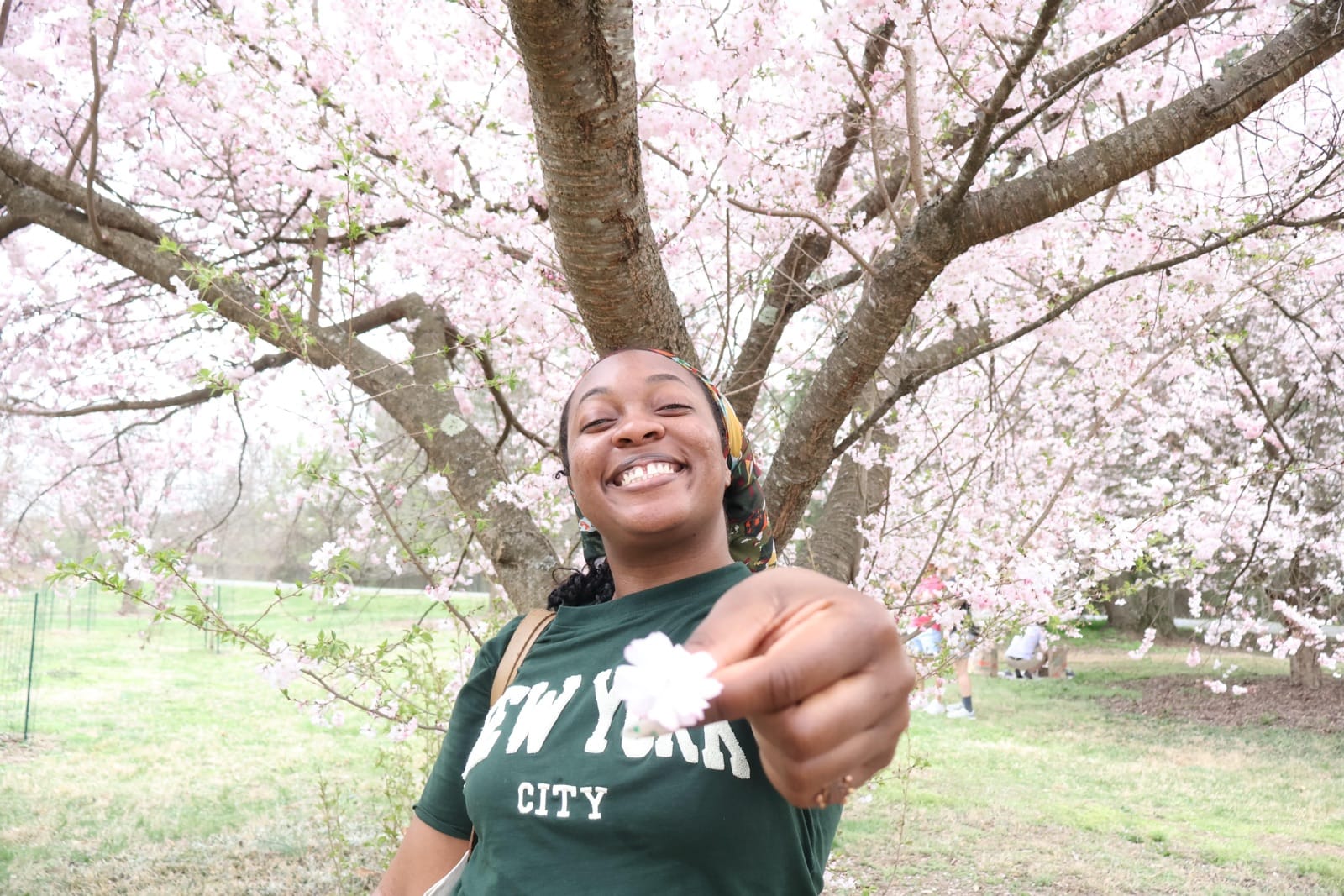
For community herbalist Matresa Flowers, herbal practices keep alive a tradition that supported her family and their community through some extremely difficult periods. Building on remedies and foodways that her grandmother passed down from the segregation era in the Deep South, Flowers seeks to promote “an embodied sense of healing” — healing not only from illness, but also from historical traumas and strained relationships with nature.
“I believe that healing comes in sharing with other people, especially when it comes to land and nature — we get to be around it, we get to be in community with it,” Flowers said.
Flowers, a mental health therapist by trade, became interested in the formal study of herbalism through the D.C. Mutual Aid Apothecary, a project that launched in 2020 focused on communities of color east of the Anacostia River. She has gone on to host classes at Foraging Wellness that run deeper than just using herbs to treat symptoms, cultivating curiosity and connection with the natural world.
Flowers described one recent workshop she ran for community-based therapists and social workers, mainly people of color. It was in a park, and she recalled the tension and discomfort many participants expressed in the beginning.
“A lot of people were like, ‘Yeah, in our free time, we’re not outside. Like, we’re inside, we’re cool — I don’t do outside. This feels very uncomfortable, like in a visceral way,’” Flowers said.
So she opened the floor for discussion, and participants spent the first 30 minutes or so simply naming that discomfort. For many, Flowers said, it was tied to lasting traumas carried down from slavery and other violence in connection to the land: “family stories of horrendous things that have happened on the earth.”
“Once we created a space for the heaviness of being Black in nature, even at a park, right, then people’s shoulders dropped,” she said. “They were able to finally be present, and then we could go around and start identifying plants and noticing what’s coming up in our bodies.”
Flowers’ work is one of several new herbalism initiatives that have sprouted up around D.C. in recent years. In August, for instance, farm manager Kenny Bridgers taught a city-funded class at The Well at Oxon Run in Ward 8, covering topics such as treating pain and inflammation, supporting the immune system, and soothing digestive issues and stress. The Department of Parks and Recreation’s second “Herbalism 101” workshop series is currently happening on a weekly basis at the Joy Evans Therapeutic Recreation Center through Nov. 10.
“Most folks now are looking for the alternative … like a sankofa approach,” Bridgers said. “‘What did our ancestors do before us,’ type of thing. I feel like a certain level of consciousness is returning. It’s spiraling up.”
Blue Nile Botanicals, a dedicated “herbal pharmacy” near Howard founded in 1977, bustled with activity on a recent Saturday morning. Customers lined up with lists of herbs to purchase or questions for staff, who measured out orders from the store’s stock of around 300 different herbs and spices.
Blue Nile is one of several local businesses that offer an accessible place to explore herbal remedies. Others include The Kitchen Physician in Anacostia and, in Maryland, Smile Herb Shop in College Park, Fox Haven Organic Farm near Frederick, Glut Food Co-op in Mount Rainier, and the Takoma Park Silver Spring Food Co-op. Some grocery stores, like Yes! Organic Market and Mom’s Organic Market, also sell a limited supply of medicinal herbs.
If you’re interested in growing your own herbs, Poole-Kavana recommended starting with easy plants including tulsi and lemon balm (both used to treat anxiety) and calendula (for gut health and depression symptoms). Another route, Flowers said, is learning about and foraging plants that are plentiful in an urban landscape, such as the plantain plant (to treat cuts, scrapes, and bug bites) or dandelion (to improve digestion).
Flowers encouraged people to get curious, using herbalism practices and local classes to build deeper connections with their own bodies and the world around them.
“There’s a lot of healing that happens in community,” she said. “It also happens whenever you’re in nature. It also happens whenever you learn something new.”

Major policy changes leave tenants with fewer options and a higher likelihood of losing their home if they fall behind.

The mayor-elect has made big promises about D.C.’s arts and culture scene.

In a largely suspense-free election, the District gets a democratic socialist mayor and says au revoir to foie gras.


D.C. needs artists who remain connected to the city, so we can preserve things that money, development, and time can’t recreate. Here are some tips to keep you here.

With your help, we pursue stories that hold leaders to account, demystify opaque city and civic processes, and celebrate the idiosyncrasies that make us proud to call D.C. home. Put simply, our mission is to make it easier — and more fun — to live in the District. Our members help keep local news free and independent for all: