

Wheels up: A D.C. historian is working to keep roller skating alive in the District
Tasha Klusmann wants D.C. to have a premier indoor roller skating rink again. She’s using history to make her case.
Tasha Klusmann wants D.C. to have a premier indoor roller skating rink again. She’s using history to make her case.

The party vowed to pick his replacement quickly after maneuvering to preserve its appointment powers, but rapidly approaching deadlines have already jumpstarted the race.

A Georgetown professor’s forthcoming book provides a major retrospective of D.C.’s Black history.

Tasha Klusmann wants D.C. to have a premier indoor roller skating rink again. She’s using history to make her case.

Some of Tasha Klusmann’s most vivid memories from growing up in D.C. involve roller skating. Watching her brother get spiffied up before heading to a roller rink in Forestville, Maryland. Discovering the Anacostia Park Roller Skating Pavilion with her mother. Skating down Constitution Avenue for the Cherry Blossom Parade in the 1980s with her performance roller skating team, Wheels of Fortune. Even briefly holding Mayor Marion Barry’s hand during a Union Station roller skating performance.
Over the years, Klusmann’s love for the sport never faded: At 58, she still skates, and she often brings her kids to Anacostia’s outdoor rink. In fact, her appreciation for what she calls “America’s overlooked pastime" — its physical, mental, and community benefits — is the basis for the work she does today.
Since 2004, Klusmann has set out to document and preserve the crucial function that roller skating has played, not only in her own life, but in D.C. history and Black culture across the United States. Her research has shown how the District’s style of roller skating, known as “snap,” is a kind of folk art, passed down from one generation to the next, just like go-go or hand dance.
“It's literally happening by the people, for the people, amongst the people,” said Klusmann.
She is now president of the nonprofit Our Family Skate Association and curates for the National African American Roller Skating Association, working with Howard University’s Moorland-Spingarn Research Center to store oral histories, photos, and objects for permanent archiving. Her hope is that telling these stories will help keep roller skating alive in the District — and inspire the city to preserve the long-overlooked Anacostia rink and build a premier indoor rink for the first time since the late 1980s, when the 2,000 person-capacity National Roller Skating Rink in Kalorama closed.
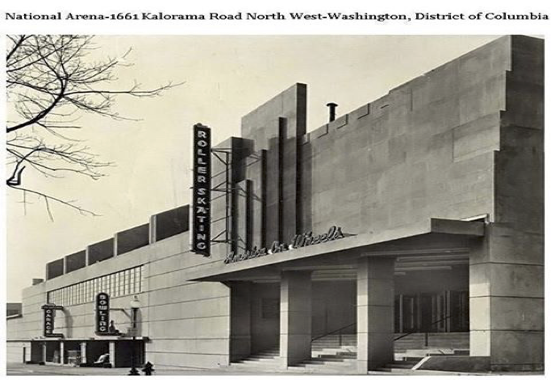
“All we need is one rink. And as opposed to me telling you why … I use the history to make that case,” said Klusmann.
The 51st spoke with Klusmann to understand what her work as a roller skating historian and her 35-plus years experience skating have unearthed about D.C. life, culture, and history.
This conversation has been edited for length and clarity.
What took your passion for roller skating from a hobby to historical research?
I had some skate elders, people older than me who I really respected, start to tell me about things I didn't know about.
So Howard “Honey Boy” Williams was a skater. He skated at [National Roller Skating Rink]. He was always helping people learn to skate. He was just everywhere all the time. All of us knew Honey Boy, and you could ask people who really weren't even big into skating about Honey Boy.
One day, [he] was telling me how when he was in his preteen/teens, and he had heard about a roller skating rink in what he described was down where the Kennedy Center is today. He said that he'd heard how beautiful it was. So he went down, and there was a big window that faced the water. He said the rink was huge, and he looked through this window, and he could hear the organ music playing. Inside, people were skating. But it was whites only, and so he'd always wanted to skate in there.
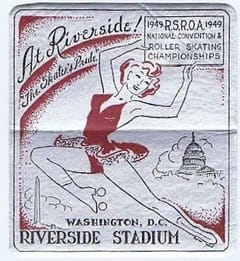
I had never heard about this rink, and so it really propelled me not only to document his story, but to follow up to find out some details about this place, and that's really what I've been doing. I have documented the stories of skaters, a lot of elders, fortunately — because many of them have passed away, as has Honey Boy.
I see the archiving as being advocacy. History can be terribly inaccurate for a variety of reasons, and I think that communities of color definitely need to be archiving their own stories for preservation's sake. Hopefully, one day, all the history comes together to get a complete story.
What makes D.C. skating culture so unique?
In the late '90s, there started to be national [roller skating] parties — one of the biggest was in Atlanta, Georgia. You had a lot of very avid skaters, but we didn't all skate the same way. It was African American, and I would say the average age of the person was probably 40. You got some younger people, and then you got some people [in their] 60s, 70s.
Immediately, we could see the difference [between D.C. skaters and skaters from other places]. It was how we dressed. It was the way your skates were set up: In D.C., we traditionally wear tall boots laced up. Guys wear black skates. Girls wear white skates.
The difference from New York to D.C. is extreme. New York has one of the fastest tempos in the style genre, being almost a house beat, very up-tempo. Then we have one of the slowest, being that slow R&B, what I always say is really that “quiet storm” sound, that same tempo, that same jazzy rhythm and blues. It ties back into D.C. having a longtime free Black community [and] U Street corridor being one of the first entertainment districts for African Americans.
D.C.'s skate style is very upright. We had traditional dance and figure skating going on in our environment. But what we added to it is a style or a flavoring to it, and we're fast to the outside. The reason why they call our style “snap” is because we snap our fingers. It's also because we do a three turn, and we don't rotate all the way, so you get a snap effect.
[This style is] not written down and it's not by the book; it is literally passed down from generation to generation. We’ve been doing this for at least five generations.
How does D.C.'s skating culture look different today than in the past?
What's new [today], through social media, is that for the first time the face of roller skating is style skaters for the most part. People watch and go, "I want to do that move." So they are really hodgepodging together the things they want to do. And if you talk to people from those skate communities, it feels a bit like cultural appropriation, mostly because they're not doing it right.
I always skated with people who were old enough to be my parents, and they didn’t necessarily stop to teach you. You learn by watching, and how you knew that you had gotten good enough was now they would invite you to be a part of a trio, or you’d get your first couple. It’s that folk art type environment: You emulate, and then it gets passed down.
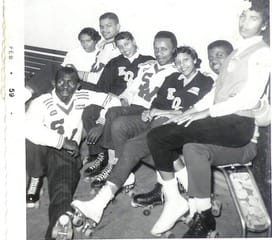
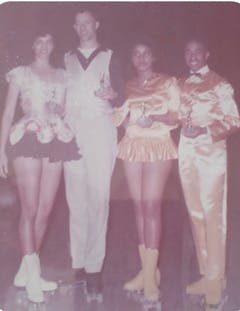
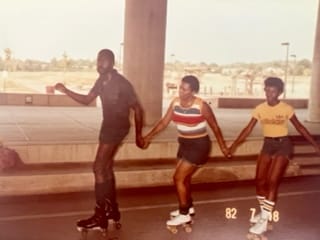
Left to right: Supreme Wheelers at National Roller Skating Rink in 1959 (NAARSA, Willie Monroe Sr. Collection); D.C. roller skater Connie Pollard receiving a trophy for pairs competition (NAARSA Collection, donated by Charles Hawkins and Connie Pollard); a trio roller skating at Anacostia Roller Skating Pavilion in 1982 (OFSA Anacostia Park Collection – Jackie Morgan Collection)
As we look for a roller skating rink in D.C. now, [it’s] really important to bring back lots of multigenerational skating opportunities. I guess this is the way with many folk arts – it is such a high degree of excellence being created without a clear structure, right?
Through your research and your own experience growing up roller skating in D.C., what have you learned about what roller skating has meant to Black Washingtonians?
There is just a pride and energy of being at the rink. We have so many multigenerational families where the parents took the children, and then the children took the next [generation]. So we've got grandchildren skating with their grandparents, and sometimes even a great-grand.
I've definitely decided, not only for my continuation of our documentation, but for our foundational base to ask for a skating rink, I got to go to the seniors. They're on their walkers. They're never gonna skate again probably. But they will come to the skating rink. They'll say, "Yeah, I still got my skates," or "Yeah, I never skated with those clip-ons. I always had my skates." You can always just tell who they are, where they're from, right? That kind of thing. They start talking about who they were dating or different little stuff. It is a sociology lesson. You get a real chance to hear about the community.
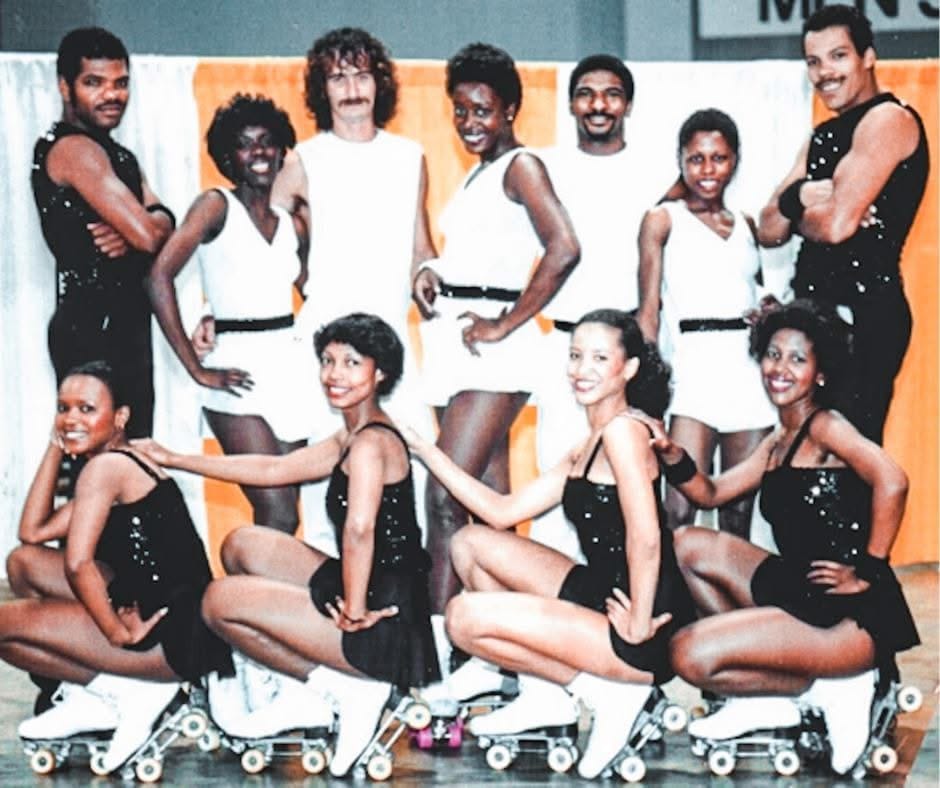
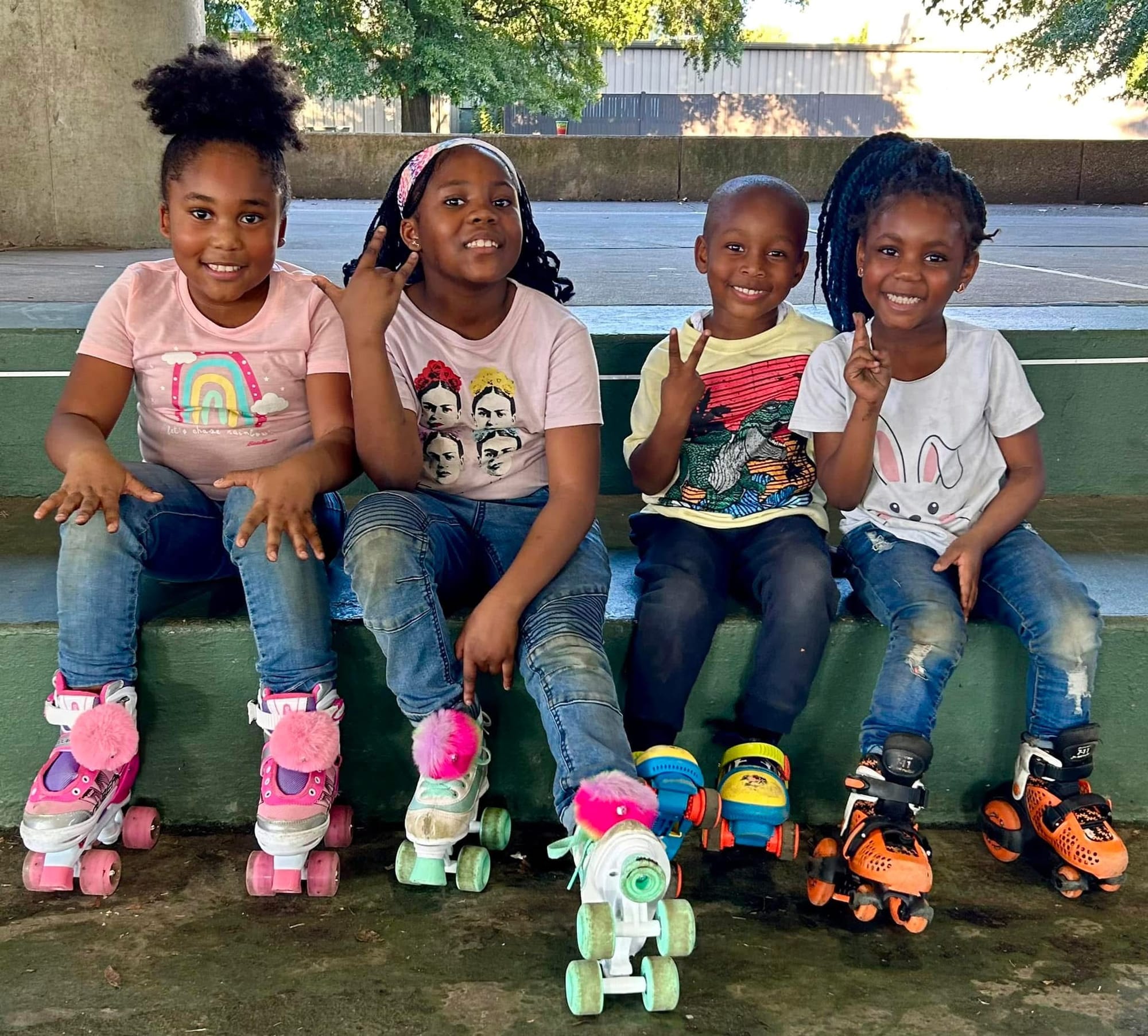
Left: The Wheels of Fortune performance team. Tasha Klusmann poses the bottom row, second to the right. Her husband, Norbert, is standing in the top right. (Uwe Klusmann) Right: The next generation of D.C.'s roller skaters. (Sheva Moore/OFSA/NAARSA)
Through the roller skating, I get D.C. history a bit differently. I get Black culture. And there's a sass and a pride and an energy that they share off the floor, that I know is also on the floor.
What do you think is stopping D.C. from getting a new indoor rink?
We want a floor the size of [National Roller Skating Rink’s] floor so that we can have that big rink experience, and we can continue to support our very unique genre of roller skating. That's part of the preservation, to have a rink that size.
But it's also about it having the money for maintenance and programming. When we get these resources, and then the funding's not there to really run them properly, it's too often blamed on the community. I mean, I had somebody tell me that, “We don't need a rink. We just opened up that ice skating rink and nobody's going over there.” Well, how is it being managed? How is the community being encouraged to come in, and how are they being treated when they get there?
Anacostia Park is the nation's rink. It is free. But right now, it's got mosquitoes. It's dirty. I am very mixed about going down there. I worked there — I used to vacuum that floor. I used to mop that floor. And it doesn't have to look like that. It should be that we have an indoor rink and that Anacostia Park be funded [and] refurbished. We really need to recognize roller skating for the value that it has to the community.

The party vowed to pick his replacement quickly after maneuvering to preserve its appointment powers, but rapidly approaching deadlines have already jumpstarted the race.

A Georgetown professor’s forthcoming book provides a major retrospective of D.C.’s Black history.

Residents transformed these tiny public areas into something magical.

Trump’s One Big Beautiful Bill has left the District scrambling to protect D.C. residents' federal food aid and medical coverage.
With your help, we pursue stories that hold leaders to account, demystify opaque city and civic processes, and celebrate the idiosyncrasies that make us proud to call D.C. home. Put simply, our mission is to make it easier — and more fun — to live in the District. Our members help keep local news free and independent for all: