

We spoke to 5 people about their experiences with homelessness and their relationship to D.C.
Get to know your neighbors, regardless of their address.
Get to know your neighbors, regardless of their address.

The recent death of a city official in a scooter collision, alongside riders landing in the ER “every week” has trauma experts questioning whether rental e-scooters should be allowed.
Facing high maternal mortality rates, the District made doula care free for Medicaid patients. But experts say the benefit isn't working out in practice.

Get to know your neighbors, regardless of their address.

This article is part of The 51st's 2026 contribution to the D.C. Homeless Crisis Reporting Project in collaboration with other local newsrooms.
It’s easy to get mired in the numbers when it comes to people experiencing homelessness. In D.C., that's about 5,363 people "on any given night", according to the 2026 Point in Time count. But since people avoid government services or otherwise fall through the cracks, the number of people counted on one night can be as low as one-third of the total people in need. And neither figure includes people in non-permanent housing, such as couch surfing with friends or family.
We spoke to five people, all who have experienced homelessness and written about it for Street Sense, to show some of the human stories behind those numbers. Their responses were lightly edited for length and clarity.
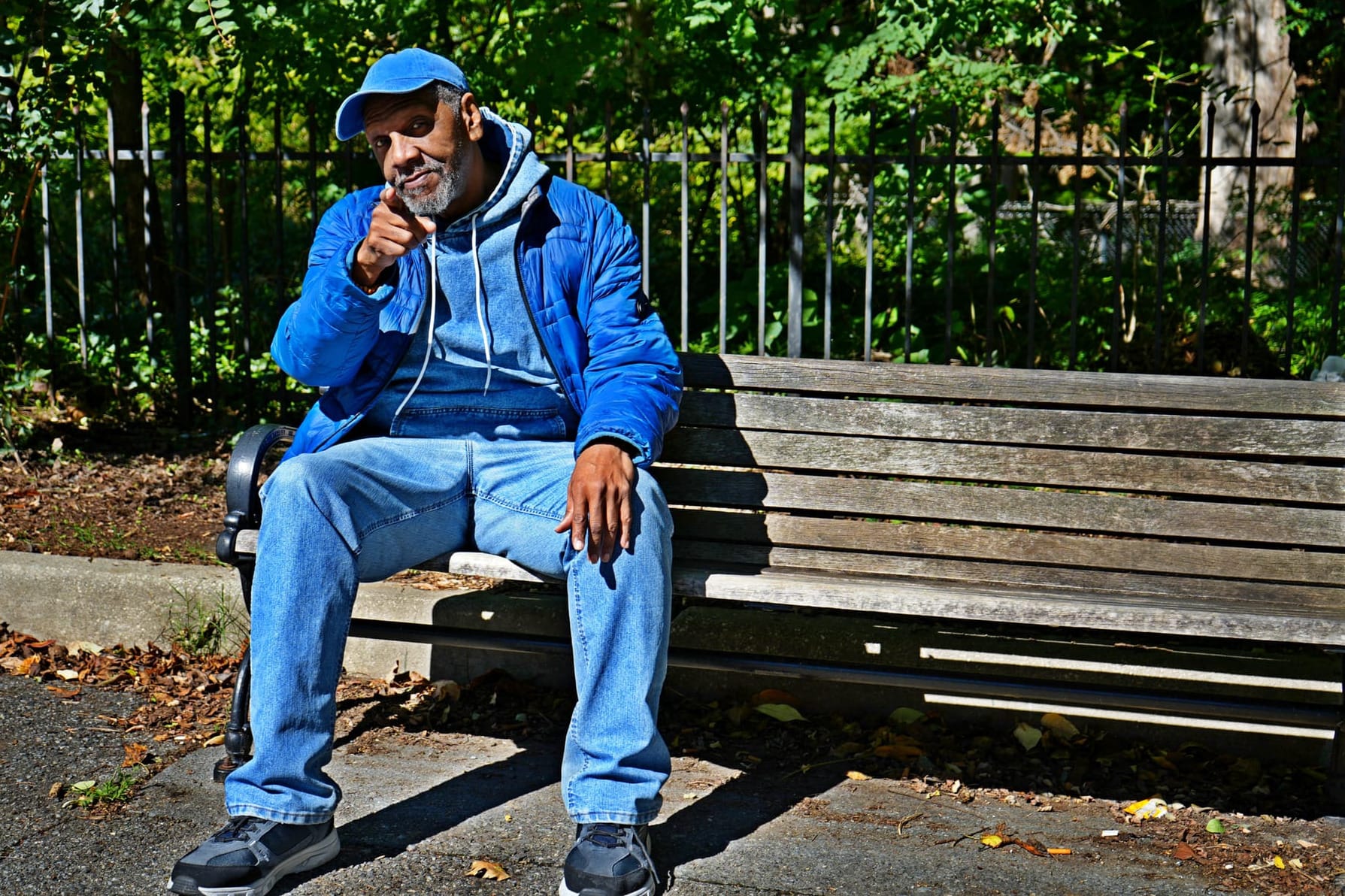
Ken Martin, 72, has seen housing insecurity from just about every angle. He’s worked as a real estate professional, a shelter manager, a transitional housing program administrator, a crisis intervention counselor, and an advocate for people experiencing homelessness. He also went without secure housing for more than a decade – during which time he experienced three heart attacks. Eventually, he obtained a housing voucher. Martin is also a music aficionado, particularly jazz and blues. He works at Tiny Vinyl Shop in Adams Morgan on Wednesday afternoons. He’s also a perennial entrepreneur and hatter who’s worked at the Proper Topper and the Hattery of Georgetown Park. Now he’s advising on a project to reopen Potter’s House in Adams Morgan, where he’ll be one of the vendors in a holiday market, running from Nov. 12 to Dec. 23.
Native son, lived in D.C. all but 12 years of my life. I was one of the last babies born in Garfield Hospital. I grew up in the Near Northeast community. In my misspent youth, that was where I drank. But when I got older, it was also where I wanted to give back. I like music, so I would hang out in the record stores on H Street. One of my dearest friends' mother owned a record store, and that was the hangout spot on Saturdays. Mrs. B and Mr. B knew their stuff, they were probably the hippest people around. DJs would be coming in, and I mean you met all kinds of folks. It was just a cool place to be.
Once I stopped drinking, I became a (AmeriCorps) VISTA volunteer and started working in the Martin Luther King Center. That's where I really got involved in community action and met one of my best friends, who was a community librarian. I was the government butter and cheese man during the Reagan years, distributing USDA commodities. So I got to know everybody in the neighborhood. Everybody came to see Mr. Martin because they wanted to get that cheese. I’m told it makes the best grilled cheese sandwiches.
The first night, I sat at a Metrobus shelter on Massachusetts Ave., and I just looked around and just thought: “Where in the hell am I going to stay? What am I going to do?” And I had people that I could have called, I just didn't want to ask. That bench had the little curved thing on it, and I tried to lay there, and I couldn't do it. And I just got up and started walking and looking for benches that I could lay on. I finally found some in Foggy Bottom, across from the Red Cross building. That bench was home for me for a long time. During all of that, I had people who cared enough to come by and do things to help me. I’ve also had plenty of people who condemned me for being in a bad situation. Like, you think you don't like the situation I'm in? Imagine how I must feel.
People tell me that I'm crazy for focusing on this, but I keep coming back to community education. We need to interact with our neighbors, then we'll begin to want to see each other not only survive but thrive. We did rent parties on my block to raise money if someone was facing eviction, back when homelessness was not even considered a national crisis. So for me, it's getting everybody together in a space and talking about stuff. And when you get to homelessness, and people not wanting to be stepping over nobody in the street: Let's talk about it. Is that person okay? When somebody falls out in the street, do you want to call a cop or do you want to call for an ambulance? These things matter. Some of the best people I've known in my life did not have an address.
D.C. is not what it once was. I would have said spending the day on H Street before the 1968 riots. But after the riots? Maybe downtown, though it’s not what it used to be. Today, I probably would go to Georgetown because it’s got Blues Alley. But before that, I would go to the Arboretum. It’s the most beautiful place in D.C. I don't care what kind of mood you're in, once you get in there, you're going to feel good. I used to play hooky from school in the Arboretum when I was a kid. I'll always love it there. Great date spot, too.
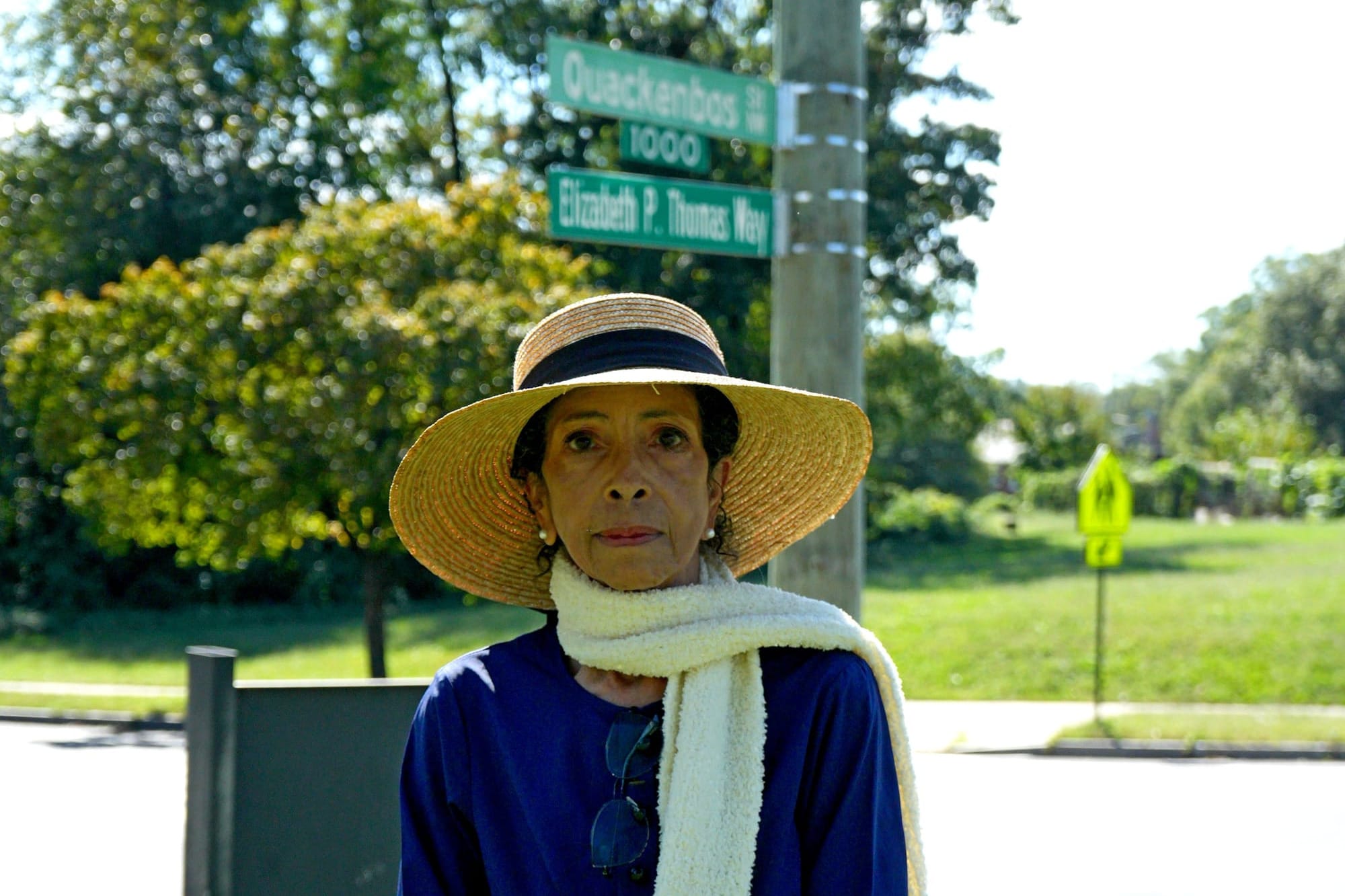
Angie Whitehurst, 74, can usually be found at a local advocacy meeting with ONE D.C., the local Poor People’s Campaign chapter, Fair Budget Coalition, and many others. She’s on the board of the League of Women Voters and just finished her term on the board of D.C. Peace Team. She also works part-time for the Statewide Independent Living Council and with the D.C. Humanities Truck oral history team. And every once in a while, you’ll see her wearing antebellum fashion as part of Female RE-Enactors of Distinction (FREED), an initiative of The African American Civil War Memorial Museum. Whitehurst portrays Elizabeth Proctor Thomas, a free Black woman whose land was taken to build Fort Stevens. “I picked her because my 21st-century self and her both had their homes taken from them,” Whitehurst says. “I knew how she felt, because I lived through it.”
I was born at Freedman's Hospital, which was a hospital for Black people in the District of Columbia that most people now know as Howard University Hospital. We [lived on] the 1400 block of Oak Street, and then from there we went to 128 Peabody Street. And that’s where my life was first impacted by eminent domain. It was a very unique neighborhood then, because we had Black people, white people, and immigrants thriving together. Then the commissioners (who were federally appointed to run the District) took 19 of those homes, saying they needed to build a junior high school, which was called Rabaut [Junior High School]. My mom was upset about it till her dying day. Those were unelected city leaders — like the ones that we're at risk of getting again today.
I was about 10 or 11 years old when my whole family was eminent-domained. Later, as a young woman, I had come back to live at home, but my father told me I had to get out the house — that’s when I faced literal homelessness. So I'm very sensitive about people being forced off of their land, out of their homes, and being told, “Oh, you own it, but we're taking it anyway.”
I have a roof now, because I'm responsible for taking care of my mom's house, which is all she left because she didn't have money. But I have no legal claim to it, and that precarity is a type of homelessness.
Just as we have hospitals for people in crisis, housing and homes should be automatically available. Any bank that’s able to fund multi-million-dollar luxury developments has enough money to fund a home for everybody in the city. It would take a fraction of the [federal] defense budget to provide the basic housing and resources needed to help people thrive. So we can fix it, but we choose not to.
I can't answer that question because life seems so tense — we've had COVID, and these political changes. I spend my time doing things to help other people and volunteering. That's what makes me happy right now, helping other people.
If things were more normalized and our society seemed to be a little bit more balanced, a great day for me would be like when I was a kid. We would go to Rock Creek Park, and my father would take us and drive through to see the old fords for wagons and horses to cross the creek. They had one right before the zoo, and then one further up on Beach Drive. That would be a fun day. Or flying kites, or just eating lunch outside.
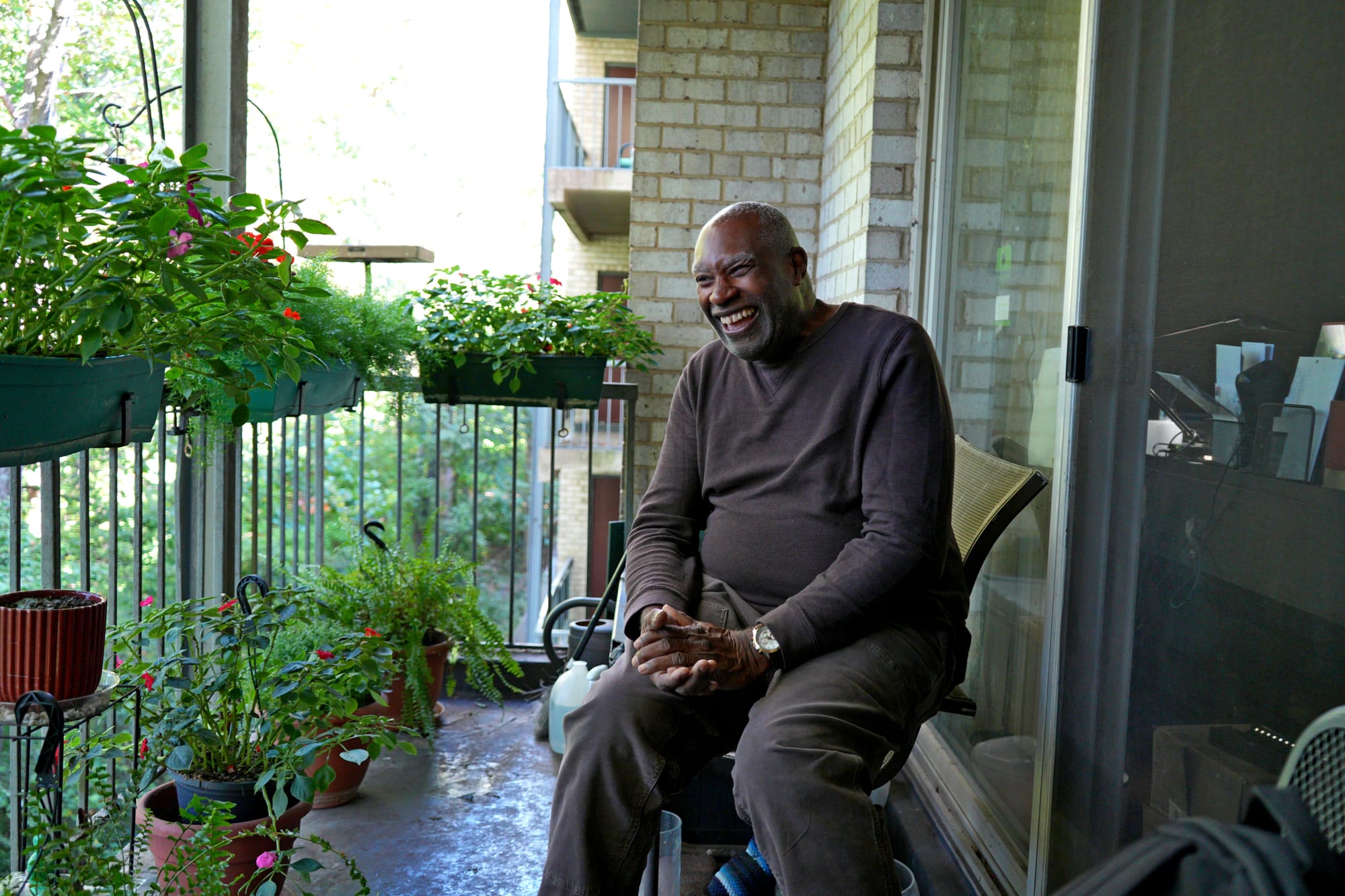
Wendell Williams, 75, insists he’s "not special” for getting sober and escaping homelessness. After a long career in broadcast radio that broke down thanks to addiction, he has spent the last decade helping people in the D.C. region. “I was lucky enough to survive that dumb shit,” Williams said. “I don't want homeless people to survive; I want people to thrive.” He became a certified recovery coach in Northern Virginia and worked as a shelter staffer in D.C., among other roles. Most recently, he worked as a homeless “navigator” for Prince George’s County — which included catching COVID-19 four times during the pandemic and left him with long COVID symptoms today.
My great-grands were enslaved in D.C. and Southern Maryland. I grew up in Barry Farm until I was eight or nine, and then we moved over to about two blocks from RFK, in the Kingman Park neighborhood. My brother still lives in my dad's house there. He’s one of three or four people left on that block who are Black — my neighborhood was all Black growing up. I went to the District of Columbia Teachers College, which trained Black teachers during segregation in D.C., and became UDC after I left. Where I'm at now [just over the D.C. line in Prince George’s County], I've been living in the same apartment for 11 years — that's a new record for me.
Too long. I lived years and years without a dime and not knowing where my next dime was going to come from. I could have died or been killed on the street, and nobody would even be able to identify my body. I just wanted to stop feeling like shit all the time, and feeling like I deserve to be shit on all the time. My biggest fear now is I'm gonna be homeless again, and it's a reality. I've been living off my savings for two and a half years [since my contract with PG County ended]. I don't have any retirement because all the work I've been doing was from the heart. And my Social Security is meager. It doesn't even cover my rent. But you couldn't have convinced me that I would live this long. A lot of the ailments I'm having now – like severe arthritis in my feet — have something to do with being out walking all night or sleeping in some of the places we slept in: abandoned cars, hallways, doorways, and stuff. Because a lot of times the physical part doesn't come into play until you're older. But there’s no comparison between my problems today and my problems back then. Like, my stomach ain't touching my back, you know? I'm not walking around with all my possessions in a fucking ziplock.
As someone doing outreach, I can’t make anyone go somewhere safe. I’ve offered to take people to shelter or to treatment and they say “How about tomorrow, Mr. Williams?” Then tomorrow comes and they’re nowhere to be found. Free will comes in this form: “That's okay, [case manager]. I feel what you're saying, but I want to do it my way. I think I can do it on my own.” And they fail to look at the carnage in the rearview mirror. What we used to say in Alcoholics Anonymous is “that's free will gone awry.” In this business, people die. Just in L.A. [County] last year, more than 2,000 people died on the street. That should move the needle. If I said 2,500 college students died last year, oh, it'd be a congressional investigation tomorrow.
[I’d visit] Washington Overlook, which is where Mayor Barry's house was when he was married to Cora Masters Barry. When the trees are down, you can see all the way to Virginia. People don't even know this part of Washington exists. It doesn’t feel like the city: It's peaceful, it's like Mayberry — like an Andy Griffith kind of thing. This is one of the prettiest parts of D.C.
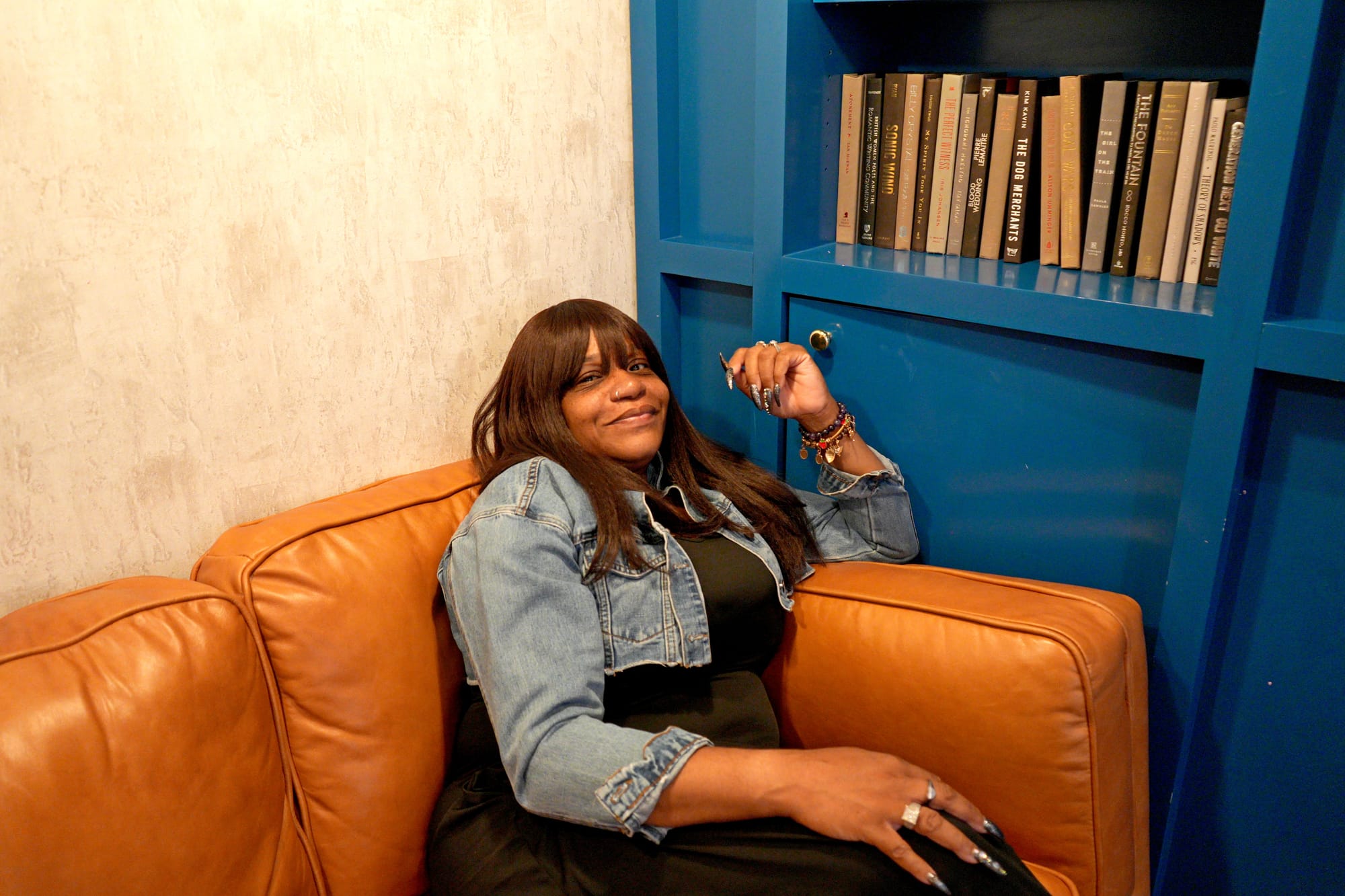
Nikki Campbell, 48, graduated from Howard University’s Peer Case Management Institute this summer to help District residents access safety-net supports. Campbell had long operated as an informal case manager with mutual-aid and community groups, helping people get supplies and fill out forms to access city services. She is also a voting member of the D.C. Interagency Council on Homelessness. Campbell came to D.C. from Philadelphia four years ago while struggling with addiction and got sober while moving through various housing situations, including a tent, a shelter, and now an apartment.
I couldn't handle a lot of things going on with life. We were trying to maintain life and having kids while my husband was struggling with the same addiction. It was really, really hard, and I just walked out one day. Spent about two weeks just walking around the train station and talking to myself. I knew I was deteriorating. Made up my own little world in my head. I remember this man in the train station [in Philly] kept saying, "You can't stay here. You gotta buy a ticket. You gotta go.” And I kept seeing the cops come in and out. I knew I better move, and I went and [randomly selected a destination], and that's how I got here.
It was not easy to get to today and sit here and talk to you. The thing that messed me up was my addiction to PCP. So I blame no one for that but myself. You can't blame everything on the system because we have free will. But it wasn’t until I got [to D.C.] that I was able to analyze my situation. Growing up in poverty, abuse, everybody I knew had an addiction, except for one young lady. How could that be? Now I know it's politics: I was going through systemic racism.
I want to be self-sufficient. I don't want to live on a voucher. I feel like state property. I want them to remove that stupid benefits cliff so I can earn enough money to start saving to cover my full rent. I can't speak for everyone, but for me, I'm being held down, and I don't like it. I'm really starting to get irritated, cause I know I can do much more. It costs four grand to live [in this apartment]; I could have took four grand and put it down on a house. Why do only federal [vouchers let] you put that down for a down payment? It should be the same thing with [local vouchers]. If y'all don't want to keep paying people’s rent, pay toward the mortgage. It just makes me sick sometimes. Like, come on, guys. My grandkids gonna go through this, too, if I don't get a home. My grandkids won't go through this.
I just like to stay home. Most of my trauma is not over with. I'm never really outside after dark. Because the rats, from when I had a tent. They never came in my tent — for anybody who's reading, if you put Vick’s VapoRub on the outside of your tent, the rats will not come in; neither will mosquitoes or bugs. My past homelessness is taking a lot from how I engage with my son today, and possibly my grandkids. We used to go hiking together in Philadelphia, but I won’t go hiking ever again. I won't sit on my terrace either. But I like to cook.
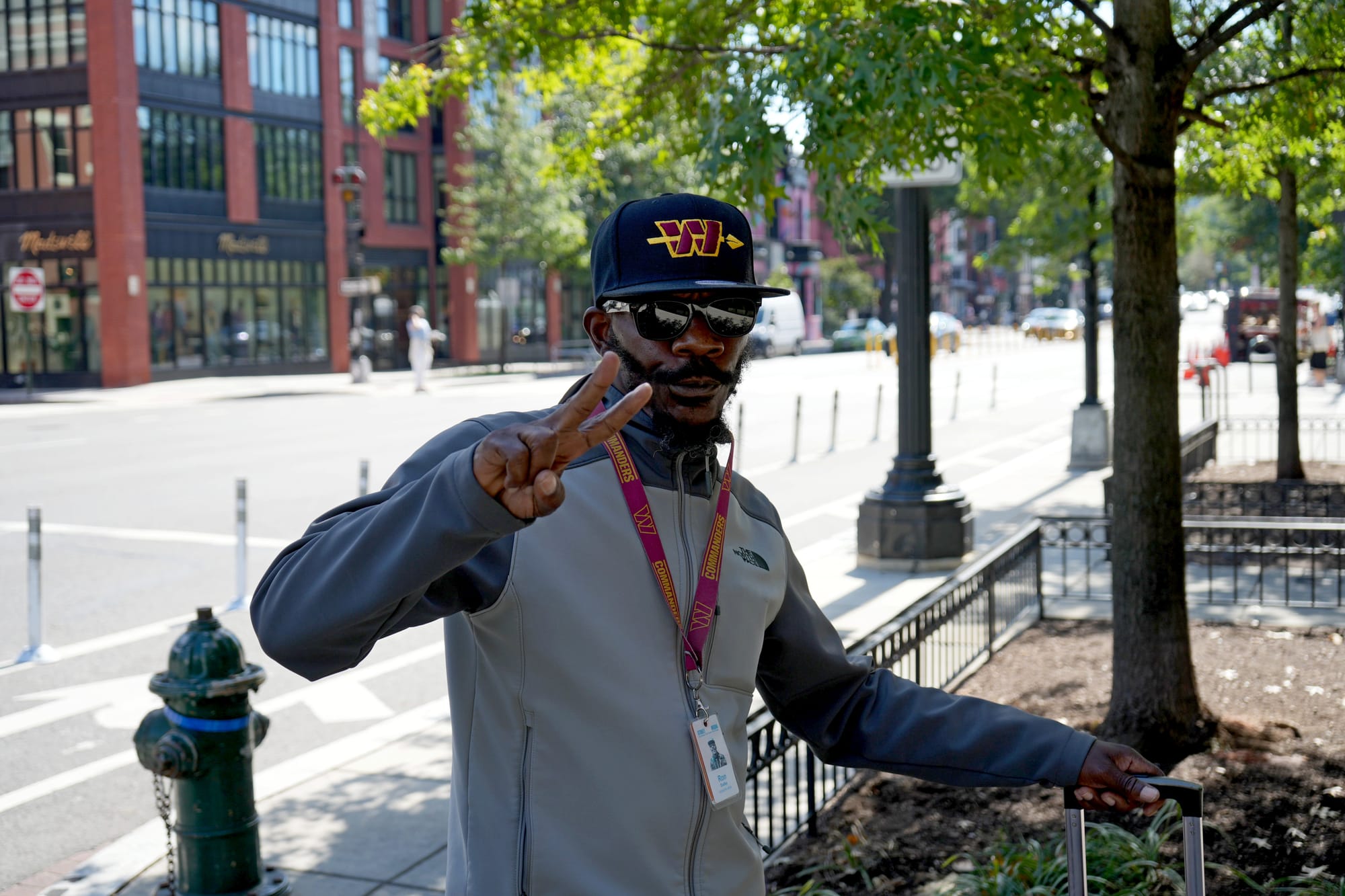
Walk down 14th Street NW between U and T, and you can’t miss Ron Dudley, 52. Seven days a week, since 2014, he’s been there selling Street Sense while throwing a peace sign or thumbs up for every pedestrian, cyclist, and motorist who passes. More recently, he’s been limited by his struggles with spinal stenosis, which affects his ability to walk. He’s also a writer and musician whose poetry is frequently published in the paper.
I was born in D.C. and raised in Southern Maryland after my mother died when I was young. When I left college after two years, I came back to D.C. and stayed.
Good, bad, ugly — for years now. The last time my name was on a lease, it didn't last long. I didn't know the rules and the laws. I was happy for a little bit of time, but I haven't had a lease on my own, ever. I’m still going through it now, living in a shelter.
But it's not the end of the world. You take the ups and downs. Those good people, good friends, they help you get through the worst.
Watch the Commanders win the Super Bowl. I’d probably go eat some crabs to celebrate. I used to always go to a spot at The Wharf to get good crabs. They took food stamps and all that good stuff. But the whole wharf closed down for that new construction years ago. So maybe Ben’s Chili Bowl instead. Everybody used to go to Ben’s Chili Bowl back in the days. It’s still a landmark. I worked there for a little while. It was one of my first places where I made some real money, had real friends.
Just end it. Period! That's the worst thing that happened to me in my life, besides walking this way. I don't mind working for things. Even if you pray, you still got to put in the work. I just think it should be easier.

Facing high maternal mortality rates, the District made doula care free for Medicaid patients. But experts say the benefit isn't working out in practice.

The outlet is pitching its newly robust metro section with ads and activations around town


The Revada Arts Center will be home to a theater company, film house, and “anti-opera” collective.


The presumptive mayor is pledging a new approach. But can she push past critics?
With your help, we pursue stories that hold leaders to account, demystify opaque city and civic processes, and celebrate the idiosyncrasies that make us proud to call D.C. home. Put simply, our mission is to make it easier — and more fun — to live in the District. Our members help keep local news free and independent for all: