

In these hyperlocal ANC races, there's no shortage of drama
Including allegations of stolen signs, homemade attack flyers, mysterious MAGA figures, and a whole lot of name calling
Including allegations of stolen signs, homemade attack flyers, mysterious MAGA figures, and a whole lot of name calling

Renters at Faria Management properties say they're battling mold, rats, sewage leaks, and intimidation. They believe a reckoning for unaccountable landlords is finally here.
With food prices on the rise, these restaurants still provide real value.

The District’s largest immigrant community faces chaos as Trump’s attacks on Temporary Protected Status continue.


At this time of year, most D.C. students are preoccupied with the back-to-school routine, but 16-year-old Marilyn has bigger issues on her mind. Her mother, Soledad, has lived here since moving from El Salvador over 30 years ago — but now, she fears she’ll be forced to leave her longtime home.
On Wednesday, Temporary Protected Status was set to expire for Soledad, along with 170,000 other Salvadorans living in the United States, including 34,000 in the D.C. region, threatening chaos in the lives of D.C.’s largest immigrant community. DHS issued a statement Wednesday evening saying that an announcement "will be made at the appropriate time" but that for now "Salvadoran individuals present in the U.S. under TPS retain protection including work authorization."
DHS is supposed to announce whether or not they’ll extend a TPS designation 60 days before it expires. If they don't, it should theoretically trigger a six-month extension, but advocates aren’t convinced the Trump administration will play by the rules, leaving many Salvadorans uncertain of their fate.
Since she was seven, Marilyn and Soledad (who are going by their first names due to Soledad’s uncertain immigration status) have organized with the National TPS Alliance to protect the program, which allows immigrants from certain countries deemed unsafe to live and work in the United States. “[My mother] always tells me that it's better to be defeated standing up and fighting than to be defeated doing nothing,” Marilyn said. But as the expiration date approached, she said it became harder to keep up her spirits: “I would be lying if I said I feel resilient during these times."
When Congress created TPS in 1990, El Salvador was the first country to receive the protection, after waves of people fled the brutal violence of a years-long civil war. Two years later, the country lost its designation — but it was granted again in 2001 after devastating earthquakes displaced over a million people.
In his second term, President Trump’s administration has sought to effectively end the program, with 13 countries having lost their status since May 2025. Along with El Salvador’s TPS termination this week, Sudan, Ukraine, and Lebanon are set to expire by the end of the year.
“Temporary Protected Status was always supposed to be just that: Temporary,” reads an October 2025 press release from the Department of Homeland Security (DHS) after the Supreme Court granted a request by the Trump administration to end TPS for Venezuelans.
For Salvadoran recipients, the abrupt termination of a program that has existed for decades is existentially destabilizing in ways that reverberate across the region.
“These are people that have created roots, that have homes, that have raised families,” said Abel Nuñez, executive director of the Central American Resource Center (CARECEN), a D.C.-based immigration advocacy organization started by Salvadoran immigrants in 1981. “And now overnight, are going to be left out in the cold.”
Many feel discarded by a country that they’ve contributed to for decades. According to Ayuda, a legal and social services organization that works with immigrants, over $965 million is generated every year by Salvadoran TPS holders in the Washington metro area alone.
“They feel betrayed by a country they have given so much to,” said Carmen Elena Rodriguez, executive director of the National Salvadoran American Association.
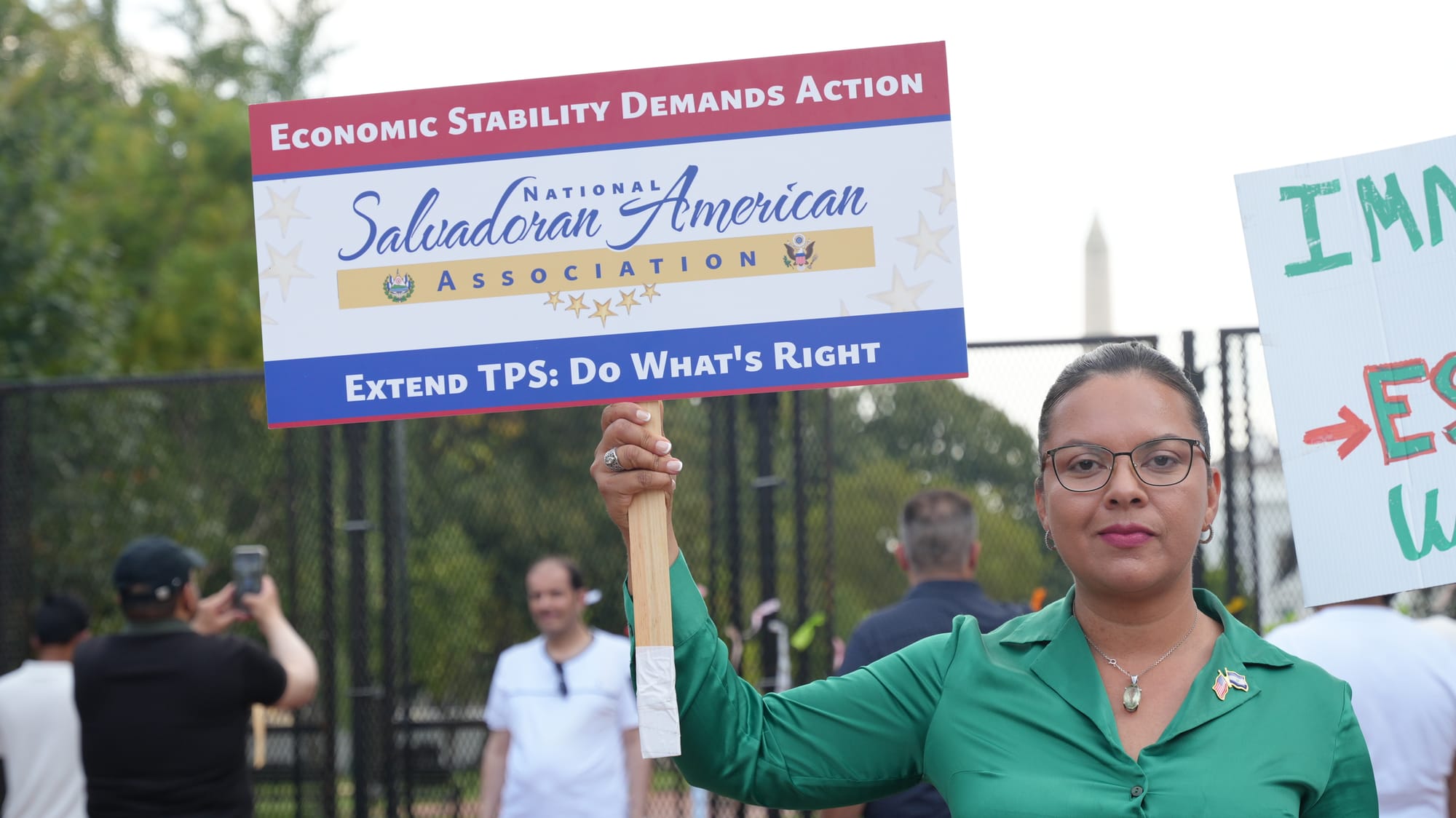
Salvadoran culture is deeply woven into D.C's history and daily life. Salvadoran immigrants played a central role in the fight for police reform and tenants’ rights following the 1991 Mount Pleasant uprisings, which were triggered when a police officer shot a Salvadoran man. Artists from the diaspora, like poet and community activist Quique Avilés and photographer Muriel Hasbun, have shaped the city’s creative landscape for decades. And the Salvadoran-owned restaurants and pupuserias that dot the city’s Northwest quadrant have become central to the region’s cuisine.
As they built their communities in neighborhoods like Mount Pleasant, Adams Morgan, and Columbia Heights, Salvadoran activists also forged “strong ties” with federal lawmakers on Capitol Hill and lobbied for “legislation to protect the hundreds of thousands of undocumented Salvadorans in the United States,” wrote historian and Georgetown University adjunct lecturer Patrick Scallen in his dissertation on the history of D.C.’s Salvadoran community. Their advocacy would eventually help lead to the creation of TPS.
“[TPS] would not exist if not for our community, and so many nations and individuals have benefited from it here in this country,” said Nuñez. “But it's poignant that we are also a community that is losing it now, after so many years of existence.”
Terminating TPS for Salvadorans won’t just uproot families, it will significantly disrupt local economies and the workforce, Rodriguez argued. “There's nothing temporary about it when it's been renewed for 25 years, and these people are now part of the fabric of each of the communities nationwide,” she said.
As the expiration date loomed closer, NSAA has urged Congress and the Trump administration to extend the program for Salvadorans by 18 months so recipients can have time to apply for other forms of legal status, or get their affairs in order.
The lack of clarity has left Salvadorans with “major uncertainty,” said Francisco Semião, chair of NSAA’s board of directors, about how to navigate this looming upheaval. Will they be able to sell their homes in time? What will they do about their children who are U.S. citizens? And what if they leave the U.S., only to have TPS extended at the last minute?
“It's just a cruel game,” said Semião. “This is just playing politics with people's lives, and it's absolutely disgusting.”
CARECEN is working around the clock to help TPS-holders prepare to leave if they have to, said Nuñez. The organization is helping them think through logistics like collecting medical records, managing assets like 401(k) plans, and deciding what happens to their children. They tell clients that it’s better to be prepared than scared — but Nuñez acknowledged that this period will be distressing for many.
“There's going to be a lot of pain and a lot of sorrow and a lot of tears as we see people and families get devastated,” he said.
Like other TPS families, Marilyn and Soledad are uncertain about their future. With Marilyn translating from Spanish, Soledad said that she began feeling unwell and her blood pressure shot up as the expiration date approached. Marilyn worries for her mother, who is a single parent. “I don't want her to feel like she's alone,” she said. “I just wish that I could do more.”
Marilyn fears for her mother’s safety if they remain in the United States after TPS expires. “We have seen plenty of stories and … so many murders and killings at hands of these federal agents,” she said. “I wouldn't want my mom to face those types of horrific acts.”
If she’s forced to leave the United States, Soledad would be returning to a country that, for many Salvadorans who have called the District home for decades, can feel almost like a foreign country.
For the D.C. region, the future of a large, vibrant, and influential diaspora may be less bright. “They are your neighbors, they are your friends, they are your fellow worshippers in whatever faith you practice,” said Nuñez. “And because of the politics of the moment, because of who is in the White House, you may find that they just leave one day — not by choice.”
This story has been updated to include the latest information from DHS about Salvadoran's Temporary Protected Status and to reflect the number of Salvadorans in the D.C. area.

Including allegations of stolen signs, homemade attack flyers, mysterious MAGA figures, and a whole lot of name calling

Renters at Faria Management properties say they're battling mold, rats, sewage leaks, and intimidation. They believe a reckoning for unaccountable landlords is finally here.

Where the competitive local races are, an unusual At-Large voting situation, the fate of foie gras, and more.

Yasmin Williams is helping to book artists for the free Millennium Stage concert series.

With your help, we pursue stories that hold leaders to account, demystify opaque city and civic processes, and celebrate the idiosyncrasies that make us proud to call D.C. home. Put simply, our mission is to make it easier — and more fun — to live in the District. Our members help keep local news free and independent for all: