

The Washington Sun’s aggressive local marketing campaign swings at The Post
The outlet is pitching its newly robust metro section with ads and activations around town
The outlet is pitching its newly robust metro section with ads and activations around town

The Revada Arts Center will be home to a theater company, film house, and “anti-opera” collective.

Live music, silent reading, fall festivals, and more to explore around the city.

Many of these residents have lived in Columbia Heights for decades. Their precarious situation shows just how hard it can be for longtime residents of D.C. to stay here.



This article was reported with support from SpotlightDC.
On the morning of Sept. 20, in an old building on Columbia Road, the gas stove in apartment 31 exploded. Isabel Menjivar felt the boom rock through the whole building like an earthquake, and then she heard her neighbor scream.
“I didn’t know whether to hide or to leave the building,” Menjivar tells The 51st in Spanish. She went out the front door to find a cluster of neighbors huddled around Rosario Aguilar, a 64-year-old woman who had lived in the building for nearly 30 years. Her neighbors fanned her with rags as smoke appeared to come off her clothes, an expression of shock on her face. Aguilar suffered severe burns to nearly 60% of her body in the explosion, her son told The 51st. A neighbor yelled for Menjivar to call 911.
“It was the most terrible day, I couldn’t even talk. I only wanted to cry,” Menjivar says.
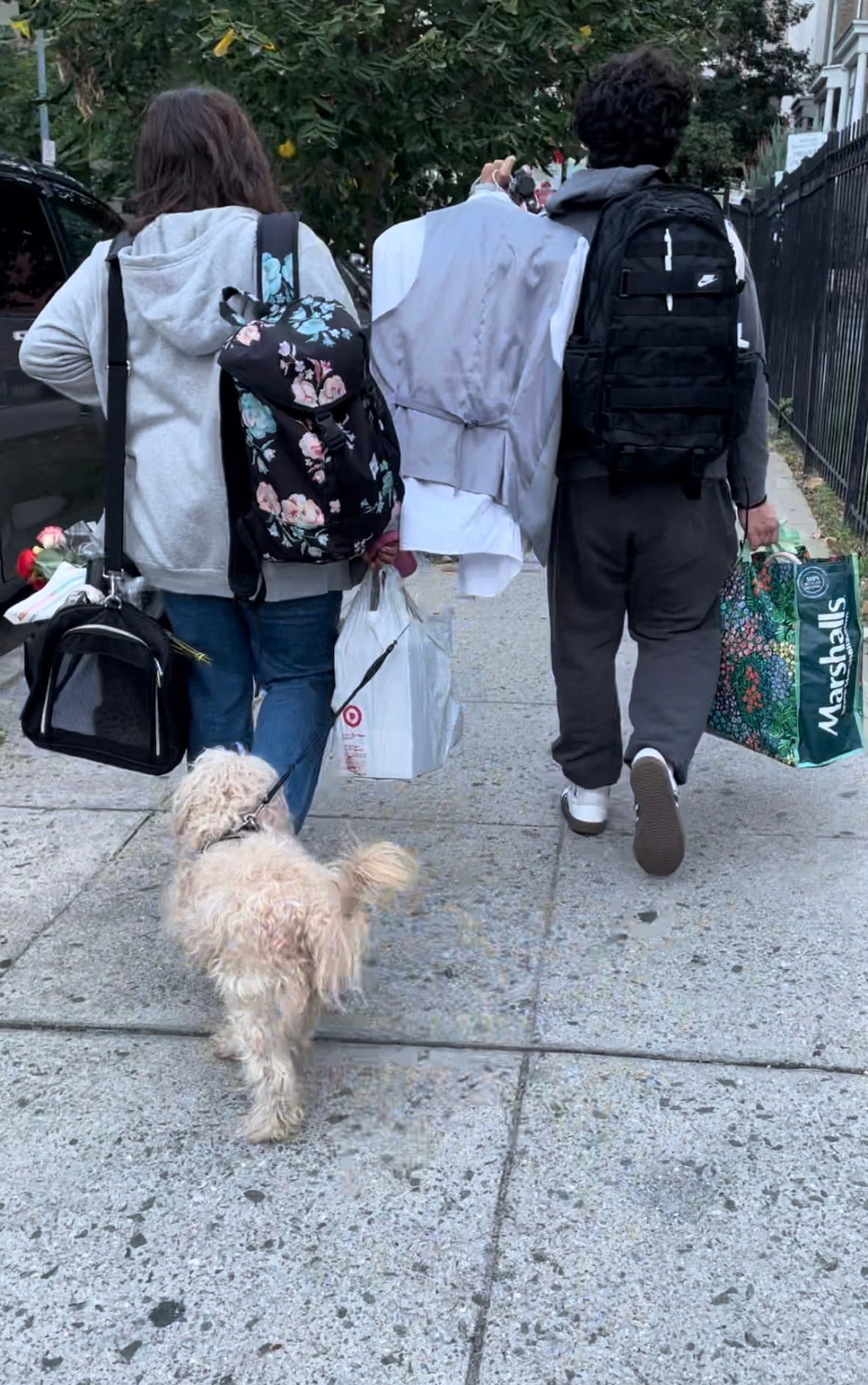
That day set off a chain of events that resulted in tenants filing into their second hotel shelter Thursday morning, arms loaded with suitcases, bags of clothes, and crates for their pets. After the explosion, the city declared 1433 Columbia Road uninhabitable. Now, the building is caught in a complicated web of bureaucratic proceedings in an attempt to get repairs made. Residents have been let in a few times to collect belongings, but so far there appears to be no realistic route to returning to the building – at least not any time soon.
Many of these families are in the process of securing new units through Jubilee Housing, a local affordable housing developer that stepped in to match families with apartments just this week. But the process of actually getting families moved in takes time, and in the interim they’re living without most of their possessions, crammed with pets and belongings in hotel rooms. As of the night of Oct. 23, the District government had declined to extend a 33-day hotel stay for the tenants; they'd been expecting to get kicked out onto the street Thursday morning, but were instead moved to another hotel. It's unclear whether this hotel stay is being paid for by the D.C. government, or how long tenants can stay there; a spokesperson for the mayor did not respond by publication time.
Menjivar says she stayed up most of the night worried about what would happen if the city’s hotel didn’t get extended. Her neighbors made a plan to set up tents and camp outside the building, and she’d planned to follow them, she says. She hopes she's able to secure more permanent housing before she's forced to move again.
The tenants at 1433 Columbia Road suffered a specific tragedy, but their story reflects a larger reality across the city. By tenant and advocate accounts, the building was in poor condition before the explosion. Menjivar says the whole building was infested with rats and cockroaches, and her bathroom ceiling was constantly waterlogged and leaking – something she says happened to other neighbors, too. Rosario Aguilar’s son, who preferred not to be named in this article, said conditions in the building have been poor since he grew up there in the ‘90s and early aughts. He also named infestations as an issue, and said appliances were often old and broken. The Wash reported that some tenants had to use buckets to flush their toilets and shower.
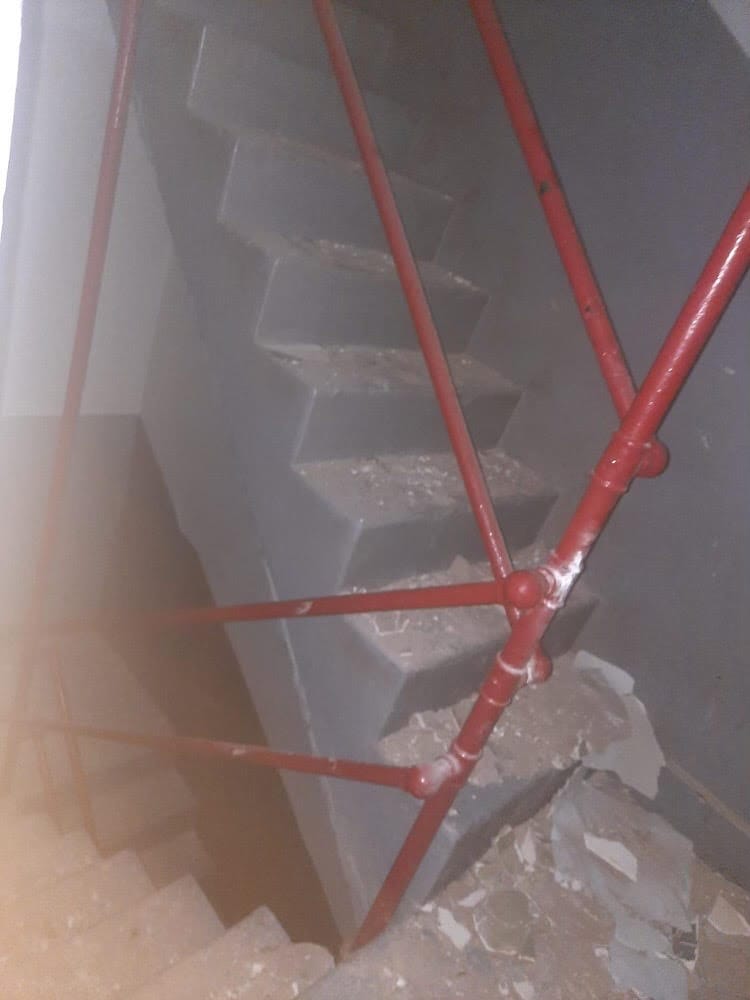
Because rent was so low ($670/month for her one bedroom), Menjivar says she didn’t press as hard as she could have to get things fixed. Maybe, she thinks, if she’d insisted, repairs would have been made and the explosion never would have happened. (It’s not clear that the explosion was ultimately caused by lack of maintenance.)
Court filings show that in August, the building’s landlord Herminia Steininger was appointed a guardian ad litem in a foreclosure case involving the property, which was sold at a tax sale last year. The guardian ad litem, Elizabeth Forgotson Goldberg Esq., said she is not the appropriate person to comment on issues related to the property’s condition, as she only represents Steininger in the foreclosure case. Steininger’s son, John Steininger, who is also addressed in paperwork outlining code violations, did not respond to repeated email requests for comment on the building conditions Thursday.
So far, the owners have not been responsive to the city’s letters outlining code violations in the building after the explosion, says Pacyinz Lyfoung, an attorney who has been working with the Central American Resource Center to help tenants assess their legal options with regard to the building. The D.C. Department of Buildings has not received a plan to abate problems at the building.
After the explosion, a DOB inspection found 37 code violations, including an urgent one related to the building’s structural safety. These violations were mostly related to the damage the building sustained in the aftermath of the explosion. An investigation by The Department of General Services and Washington Gas found gas leaks throughout the property.
“The Department of Buildings’ mission is to ensure safety for residents, and the building is unsafe to inhabit. Landlords must obey District law by providing properties that are safe, habitable, and livable,” a DOB spokesperson told The 51st in a statement. “Our goal is to work with property owners so they fix violations. DOB is ready to issue the permits to the landlord to do the necessary repairs and until that happens, the building unfortunately must stay closed.”
The DOB generally inspects properties based on tenant complaints, but does not have capacity to regularly assess D.C. housing stock for violations. So when tenants don’t know their rights or are otherwise not inclined to make formal complaints, poor conditions abound – especially in buildings with lower rents.
“For some landlords, it’s a very gradual thing, they accrue more and more deferred maintenance and it eventually snowballs and they end up in an ongoing cycle of making patch repairs when what’s really needed is a gut renovation,” says Adam Marshall, the managing attorney for housing law at the Neighborhood Legal Services Program. “Then in other scenarios, you have a more deliberate or calculated eviction by neglect, where it might be in a landlord’s interest to disinvest in a property in order to flip it.” Marshall says the overwhelming majority of people his firm represents live in housing stock that is not up to code.
Dangerous rental conditions in the city have had tragic consequences. In 2019, two people, including a nine-year-old boy, were killed after an unlicensed rental caught fire. The building had been subdivided to allow for more tenants, who were mostly Ethiopian immigrants. This included unexpected security gates – a major hazard when a fire breaks out. In a press release following the tragedy, a city official reminded tenants that they have rights, and encouraged them to report unsafe conditions.
But in a city where there’s only affordable housing available for a third of extremely low-income renter households, that can place a high burden on tenants, who may opt for staying in unsafe housing rather than risk losing it entirely. Menjivar says she overlooked serious problems because of the price of her unit.
For many residents like her, poor conditions seem like the price to pay for affordable rent. 1433 Columbia Road was precious to the people who lived there for lots of reasons, but perhaps chiefly because it was a sliver of affordable housing in a neighborhood where many of them had lived for decades. In those years, Columbia Heights changed around them, becoming more expensive with every passing year. With the building gone, it seems unlikely they’ll be able to find anywhere else they can afford in the neighborhood.
“It has been extremely difficult to find new housing for these families,” Lyfoung says. “For them to find other housing … it would be double or triple what they were paying.” Menjivar, who works in a local restaurant, says she can’t swing any rent payment over $900 – already a huge increase from what she was paying at 1433.
The loss of these tenants would represent a continued erosion of D.C. neighborhood history, says Ward 1 Councilmember Brianne Nadeau, whose office has also been providing support to tenants. “If people can’t afford to live here, then we lose history, we lose racial and cultural diversity, and we lose some of our beloved residents who built lives here,” Nadeau says. She notes that Ward 1 is the most diverse ward in D.C., which isn’t possible to maintain without the existence of affordable housing.
The situation at 1433 is further complicated by other issues with the building, including a tax sale, a massive debt to DC Water, and a bankruptcy from one of the owners, according to court filings. Because of the complex ownership, tenants don’t currently have rights under the D.C. Tenant Opportunity to Purchase Act, or TOPA, according to Lyfoung. The act provides tenants with first right of refusal to purchase a building that goes up for sale.
Many tenants understood that leaving the building would immediately throw them into indefinite precarity – per Menjivar, when they were first told the explosion made the building unsafe and they’d have to leave, a group of neighbors chatting via WhatsApp considered barricading themselves inside. Others floated camping on the front sidewalk. This, they thought, might force the landlord (or someone) to fix the building and allow them to return.
“It’s the familiarity of a place you know,” Menjivar says. “You fix your house the way you like … you know people, and when you move you don’t know anyone, you don’t know anything.”
Her greatest hope is that the building will be fixed, conditions improved, and that they’ll all be able to return, Menjivar says.
So far, that’s looking like an unlikely outcome, says Lyfoung – at least in the near term.
By a stroke of luck in timing, local developer Jubilee Housing happens to have 23 deeply affordable units in or near Columbia Heights they can soon make available to residents of 1433. This number of vacancies in their housing stock is highly unusual, says Jubilee Vice President of Institutional Advancement Darrel Drobnich.
Without Jubilee’s help, it’s likely that many or all of these families would have had to enter the homeless services system or leave D.C. As yet, families who haven't been matched with units are waiting to hear whether other providers have units for them.
Even with this help, tenants are continuing to experience precarity. Menjivar says she, her 20-year-old daughter, and her pets have been promised a place to live by Jubilee, but there’s no firm timeline for its availability yet. For now, they’re grateful to be in the new hotel.
“At least we have a roof. That’s more than enough,” Menjivar says.

The outlet is pitching its newly robust metro section with ads and activations around town

The presumptive mayor is pledging a new approach. But can she push past critics?

The public housing agency is considering cost-cutting measures that could lead to major changes for the 20,000 residents it serves.

The Ward 8 councilmember remains in legal limbo and confronts an uncertain political future.
With your help, we pursue stories that hold leaders to account, demystify opaque city and civic processes, and celebrate the idiosyncrasies that make us proud to call D.C. home. Put simply, our mission is to make it easier — and more fun — to live in the District. Our members help keep local news free and independent for all: