

Goodbye, Dukem, and thanks for 30 years of service
As the iconic U Street Ethiopian restaurant prepares to close, thousands on social media shared their praise and memories
As the iconic U Street Ethiopian restaurant prepares to close, thousands on social media shared their praise and memories

The outlet is pitching its newly robust metro section with ads and activations around town

The Revada Arts Center will be home to a theater company, film house, and “anti-opera” collective.

At just 16 years old, I made a drastic decision that derailed my life. But I'm the beneficiary of a law that allowed me to redefine myself.

Too often, the conversation around public safety is dominated by fear and political rhetoric, completely missing the reality of what happens when we invest in human potential. My name is Robert Barton, and I am living proof of the transformative power of a second chance.
At just 16 years old, I made a drastic decision that derailed my life, resulting in my incarceration and a devastating sentence of 30-years-to-life. For nearly three decades behind bars, I refused to let my past define my future, working hard to educate myself and support others. I am a beneficiary of the Incarceration Reduction Amendment Act (IRAA), a local law that allows people incarcerated before the age of 25 to seek release after serving 15 years.
This landmark D.C. legislation has changed lives and ultimately made our community better. It gave me the opportunity to return home and prove that true accountability does not occur in prison. Accountability occurs when a person transforms their experiences into tangible action that improves the lives of others. When incarcerated residents are encouraged to become civically engaged citizens, when they’re empowered to believe they can make a positive difference in the world, and when they’re given the tools to succeed, they can be truly accountable.
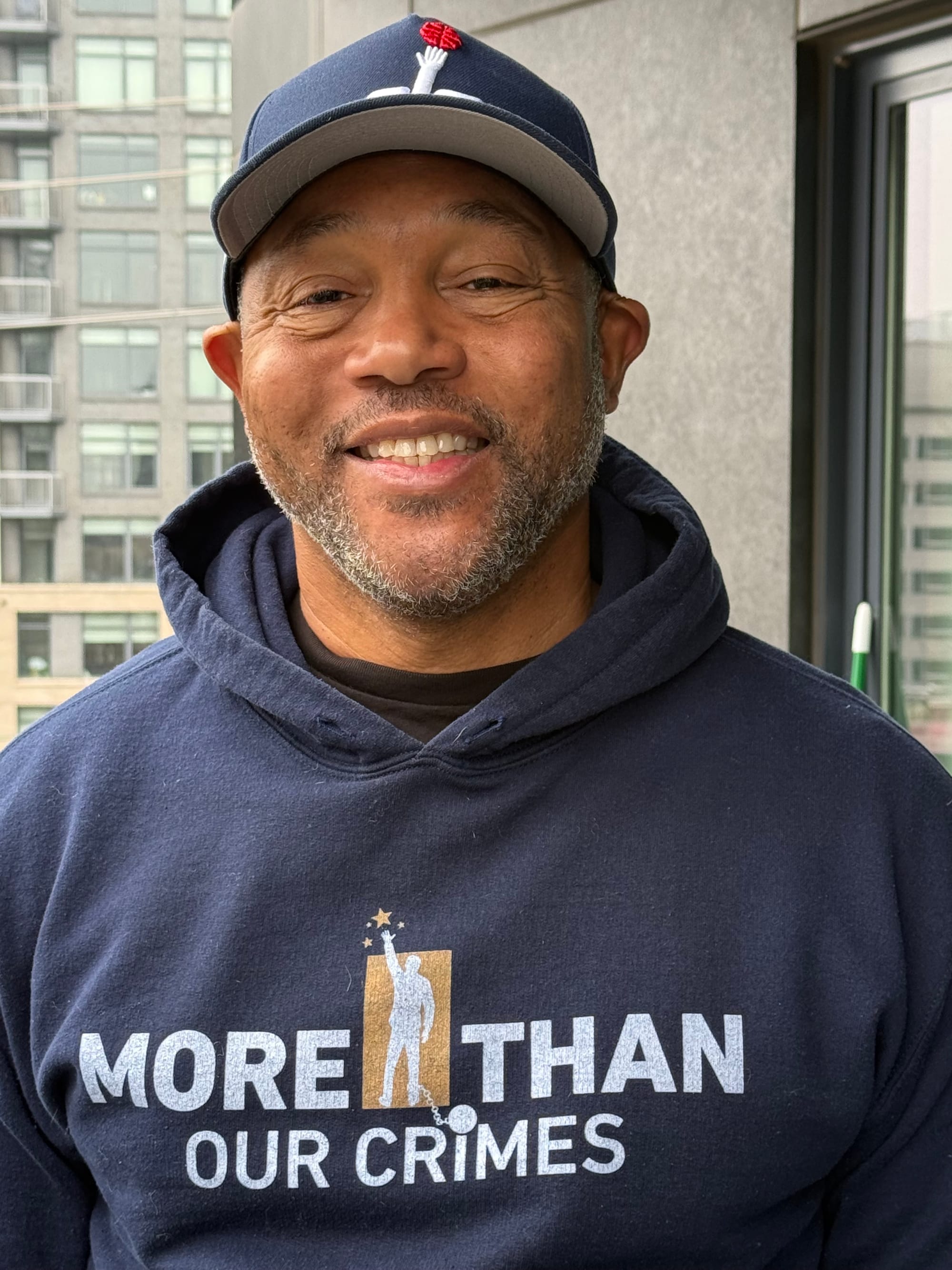
I believe I’ve shown that to be true. Upon my release, I founded More Than Our Crimes, an organization dedicated to uplifting D.C. residents caught up in the justice system. Today, our work bridges the gap between the cell block and the ballot box by actively educating and organizing currently and formerly incarcerated residents to participate in our democratic process. We help men and women register and prepare to vote from inside the walls of the D.C. Jail.
D.C.’s vital progress in these areas is under threat. Despite the law’s benefits, federal lawmakers in both the House and Senate are working to repeal IRAA, arguing that the measure is too soft on crime. Lawmakers are also attempting to overturn the Restore the Vote Amendment Act of 2020, which made D.C. one of the few jurisdictions in the U.S. allowing incarcerated people to vote. Because D.C. is not a state, our local laws are subject to federal override.
Overruling D.C.’s local public safety and voting laws will not make the District safer; it will only dismantle the very networks that are doing the heavy lifting of rehabilitation, civic education, and community healing. My work since release offers a clear, fact-based counter to the current rhetoric surrounding sentencing reform and illustrates the outcomes the IRAA was designed to achieve.
We cannot allow political rhetoric to override fact-based outcomes — second chances work, civic engagement saves lives, and it is time for our laws to protect progress, not extinguish it.

Policing in Navy Yard is already out of control, and criminalization is likely to only make things worse.

Debates about the city’s new graduation requirements only skim the surface of our students’ problems with college- and workforce-readiness, writes a member of the D.C. State Board of Education.


Kids should be receiving their full child support benefits, advocates say. Right now, they're not.


Under my administration, economic growth will be inclusive across all communities, connected to our residents in need, and fiscally disciplined.

With your help, we pursue stories that hold leaders to account, demystify opaque city and civic processes, and celebrate the idiosyncrasies that make us proud to call D.C. home. Put simply, our mission is to make it easier — and more fun — to live in the District. Our members help keep local news free and independent for all: