

This guitarist still wants you to see Kennedy Center shows
Yasmin Williams is helping to book artists for the free Millennium Stage concert series.
Yasmin Williams is helping to book artists for the free Millennium Stage concert series.

The team plans to ask for an exemption to the city's climate law that would allow it to add a natural gas-burning plant, which is worrying environmentalists and lawmakers.

Why we partnered with a collective of D.C. natives to produce a print edition and where you can get a copy

Prime Ability started as one P.E. teacher's attempt to keep kids safe. It’s become so much more.


To an outsider, that drizzly Wednesday afternoon in late May didn’t look like the best day for biking.
But none of that mattered to the 14 students from Paul Laurence Dunbar High School as they followed their teacher, Alex Clark, on a group ride from their campus in Truxton Circle to downtown Anacostia. The all-boy group was full of energy, popping wheelies along the four-mile trip. Even when one student’s bike chain came off as they were cycling up the 11th Street Bridge, it barely slowed them down — two classmates worked together to push the bike up the incline.
The students finally slowed to a stop outside their destination: Grounded, a plant shop and cafe on Martin Luther King Jr. Avenue. They hopped off their bikes and removed their helmets, chatting excitedly until Clark addressed the group.
“Let’s be on our best behavior, and let’s be focused,” he said. “Everyone say, ‘Focused.’”
Immediately, the boys chanted back in unison: “Focused.”
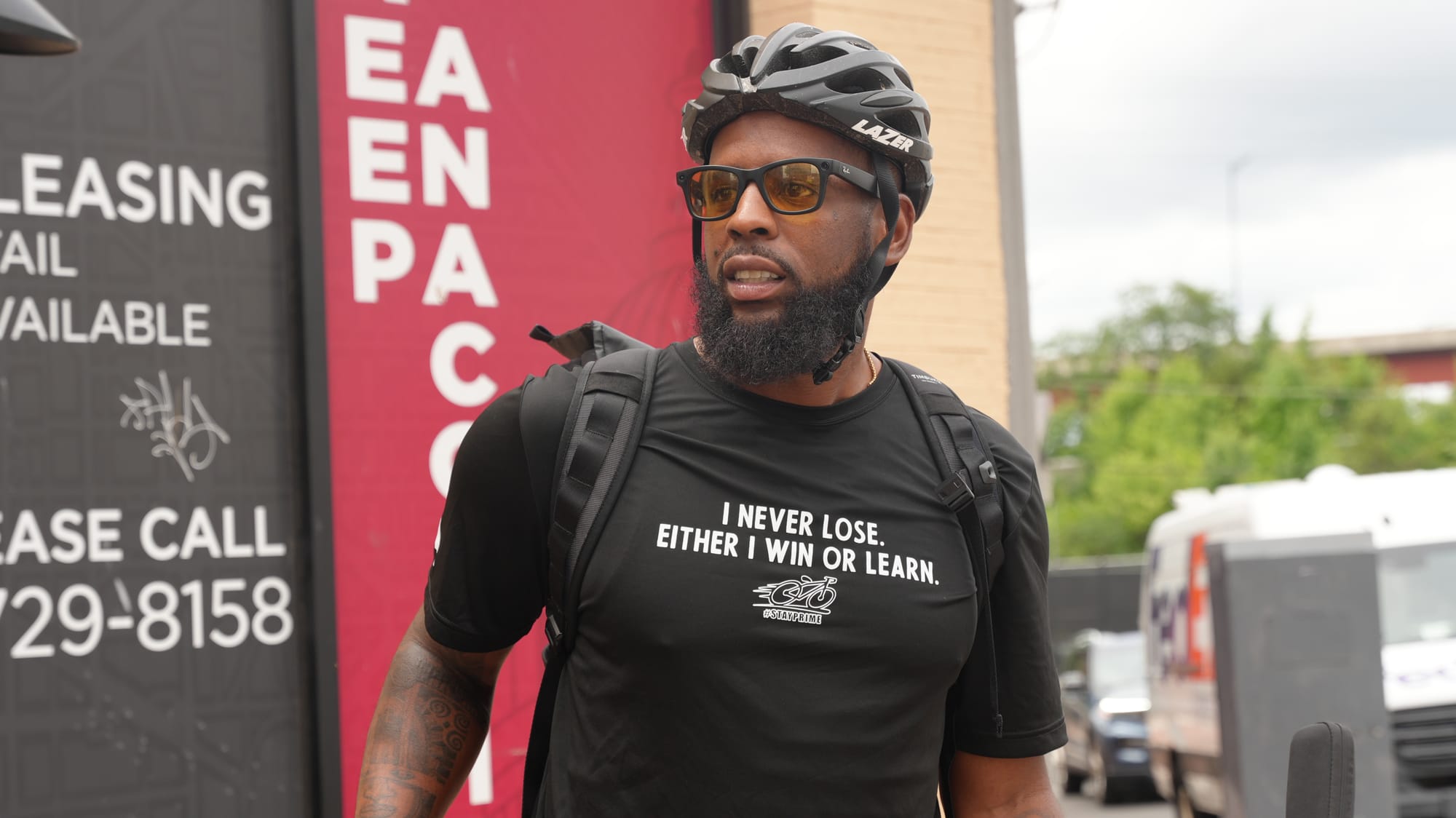
Clark, a health and physical education teacher who’s been at Dunbar for seven years, has long been passionate about using movement and exercise to empower people, particularly youth of color (88% of students at Dunbar are Black, and the rest are mostly Latino). He originally founded his nonprofit, Prime Ability, in 2019 with that mission in mind. When the pandemic shut down the city’s gyms and indoor exercise spaces the next year, Clark picked up cycling as a hobby. He found himself exploring parts of the District he’d never seen before — and wondering whether his students, especially the at-risk ones, ever had the opportunity to do the same.
“I wanted to provide them with that experience,” he explained. His hope was to help youth of color by creating a safe recreational outlet for them — something he knew many of his students needed, in a year when over a third of D.C.’s gun homicide victims were under the age of 24.
In his decade of teaching, Clark says he’s lost over 20 students to gun violence (one just last year: 18-year-old Wayne McDaniels, a beloved member of Prime Ability, was tragically killed last February). “We had a lot of kids that were just falling subject to a lot of violence that was going on,” he said. “We just wanted to create an outlet for them to be able to get out of their neighborhoods.”
So he began leading group rides for Dunbar and other D.C. students — and soon had upwards of 50 kids showing up to each ride.
Clark’s “bike buses” brought students on miles-long rides around the city, visiting places like the Washington Monument and the Martin Luther King Jr. Memorial. Riders got to explore parts of the city they rarely (if ever) got the chance to see, and do so while being unabashedly kids, singing along to music and cracking jokes.
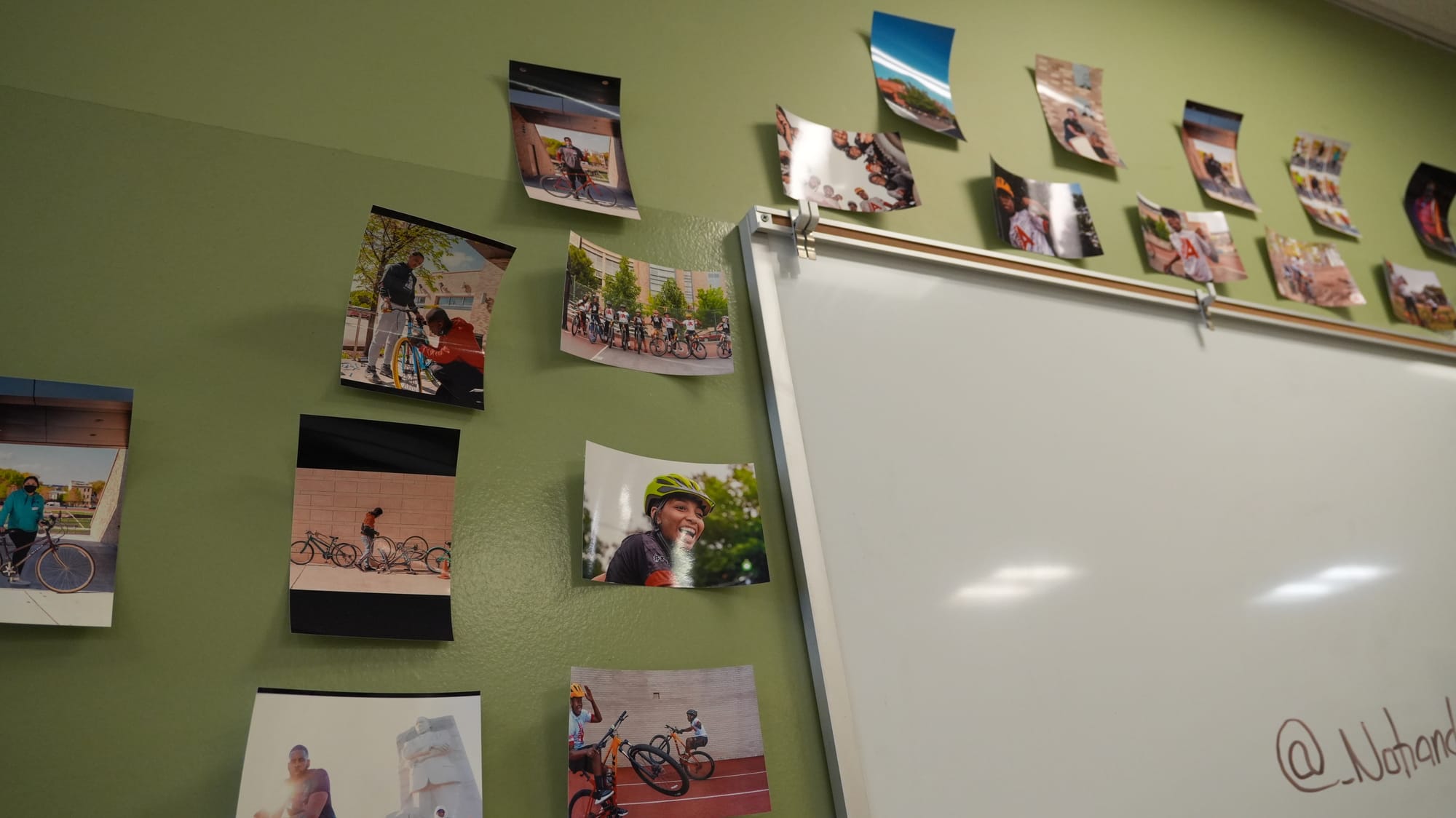
The road didn’t stop there. In 2022, Prime Ability created a competitive mountain biking and road cycling team that includes students across the District. Around the same time, Clark started a bike mechanic program, and this past year, for the first time, he taught a bike mechanic class at Dunbar. At the end of the semester, students can earn a bike mechanic certification, and the best students in the class get the opportunity to intern at local bike stores, such as Trek Bicycle in D.C.’s Skyland neighborhood.
The mechanics program is well-loved by Dunbar students, as is Clark. Kadir Hailstorks, a graduating senior, said he took the mechanic class because he’s had Clark as a teacher since the 10th grade, calling him a “stand-up guy” and “honest.” Tasai Parker, another senior, called Clark more down-to-earth than other teachers. “He'll understand what you're coming from,” he added.
The class has given students the technical skills they never thought they’d master. At the beginning of the semester, senior Donivan Gottschalk went into the class thinking it’d be difficult. Now, he jokes he can put together a bike in his sleep. “Every single time I see a messed-up bike on the street,” he said, “I can understand what's wrong with the bike.”
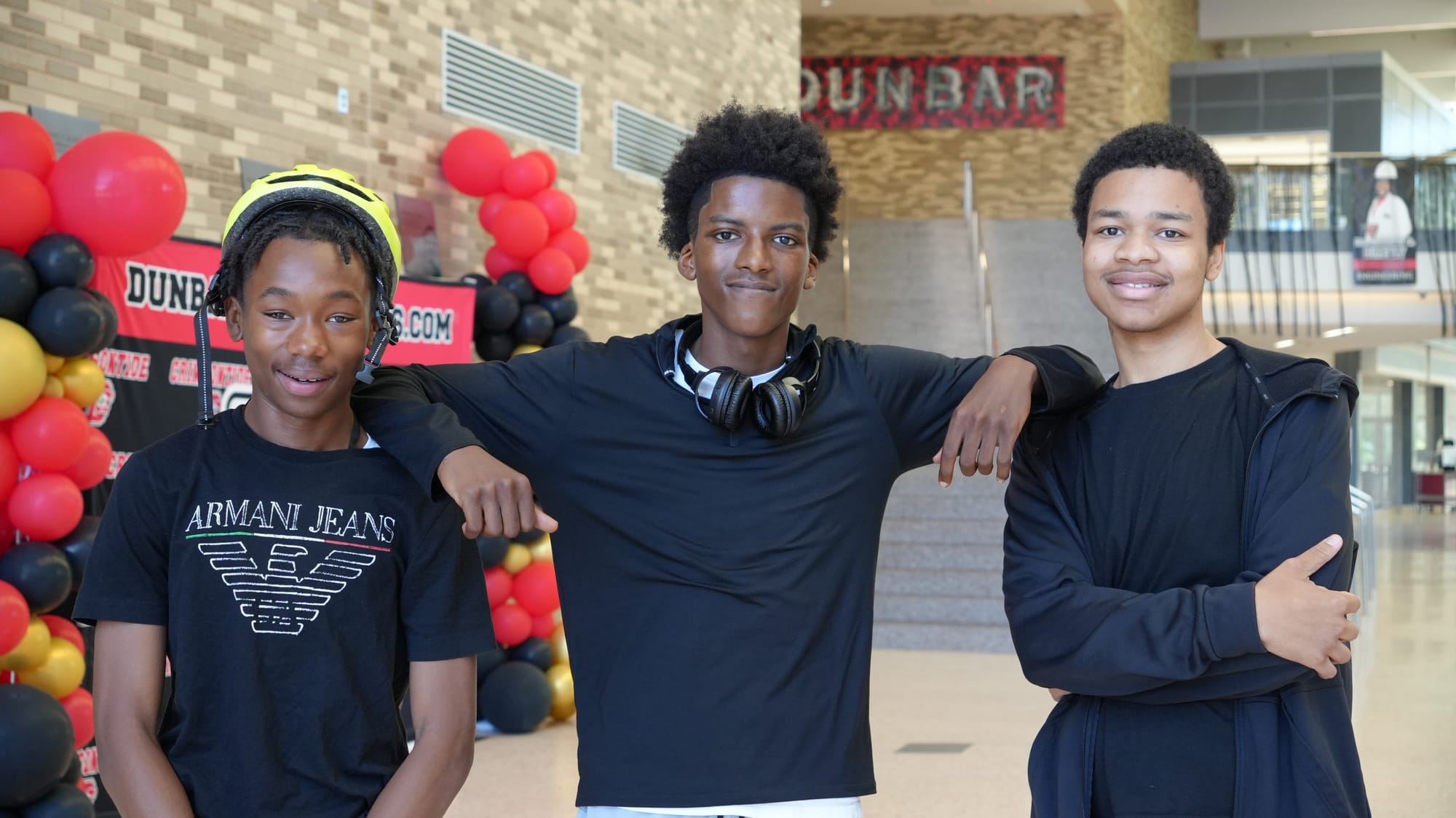
Meanwhile, Prime Ability has begun expanding its programs to Charles Hart Middle School in Ward 8. Last fall, Dunbar bike mechanic students went to Hart’s campus to teach bike anatomy to the middle schoolers. There’s even a Hart student on the competitive team this year.
As Prime Ability has grown, other cycling groups and shops have provided resources and funding for the students. Outride, a cycling nonprofit, helped Prime Ability secure 20 bikes for Hart students and 25 bikes at Dunbar. Several young cyclists on the competitive team have also secured scholarships from the bike company Trek and the National Interscholastic Cycling Association.
And of course, as the rainy Wednesday trip to Grounded showed, Prime Ability’s bike bus program is still going strong.
Prime Ability bike buses can go in many directions. Sometimes the group takes a morning ride to get breakfast and start the day right. Other times they cycle to businesses and institutions across the District, like a visit to Audi Field where students learned about careers in the sports industry, and a group class at CycleBar.
The trip to Grounded was a little different than the usual bike bus. The group that day was smaller than an average ride. It was also all boys, across a mix of grades. And rather than ramping up the energy, the plan for today’s trip was to help the students slow down.
After parking their bikes inside the cafe, the boys shuffled into Grounded’s wellness studio, a cozy back room with mats and small pillows laid out for them. Grounded was an online plant store up until 2024, when Mignon Hemsley and Danuelle Doswell opened up a storefront in Anacostia and expanded their business to include a cafe and wellness space for classes like reiki, yoga, and meditation. That day, Hemsley and Doswell had planned something special: a mini-soundbath session.
A soundbath is a type of meditative experience that involves laying still on the ground listening to soothing vibrational sound. “What I encourage you guys to do is to lay down, be calm, really free your mind of all the stress that school has brought you,” Hemsley instructed the students. And for five minutes, they did just that, backs on the mats and eyes closed, silent (apart from the occasional stifled giggle from a couple of the younger students).
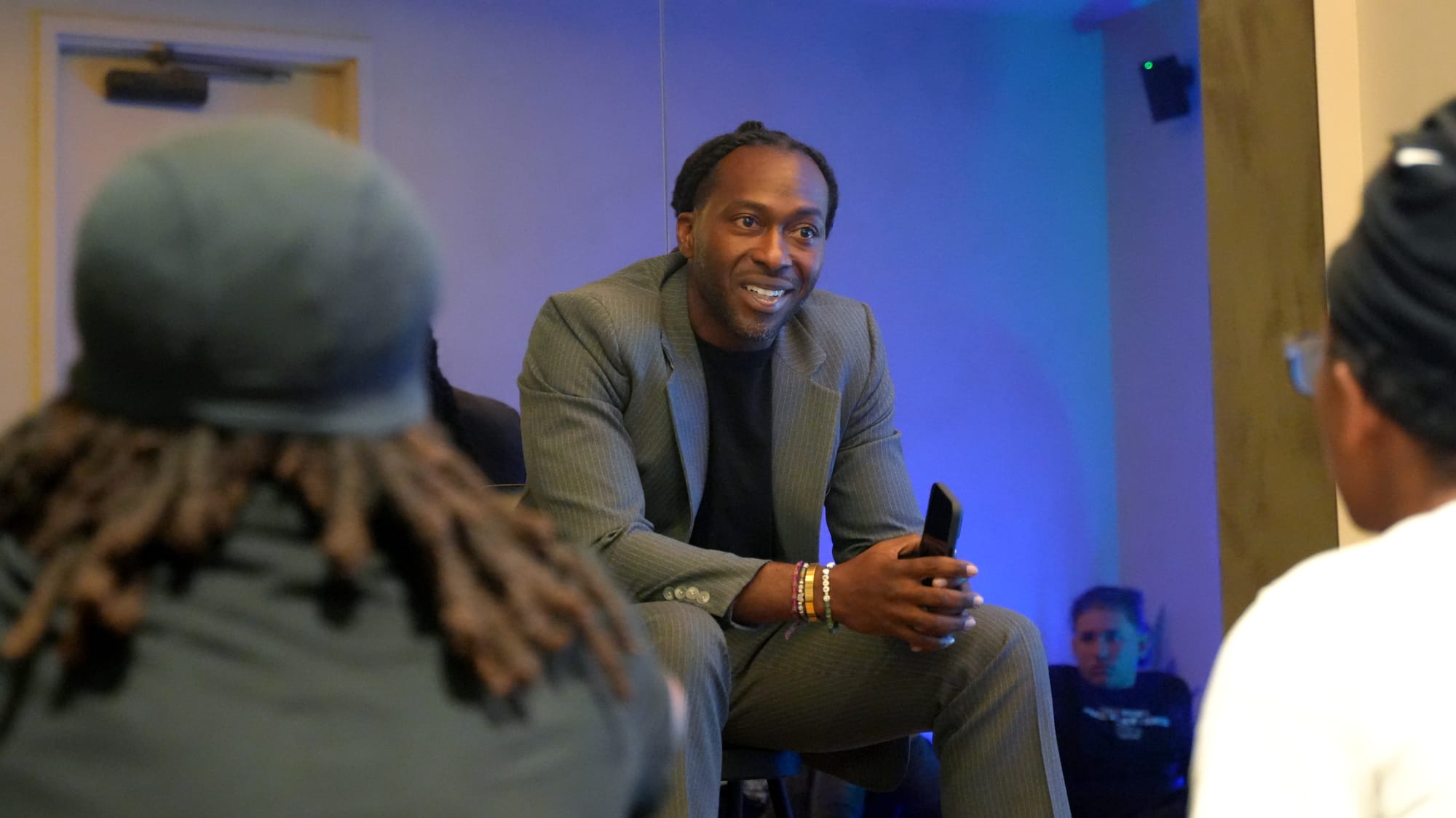
Next, Clark introduced Patrick Walker-Reese, a motivational speaker from Nashville, Tenn. The students didn’t know it yet, but Walker-Reese is an important part of Prime Ability’s story: Clark heard him speak at an event years ago, and after “seeing that representation of a Black man that's pouring into youth, and doing something that I've dreamed about doing,” he was inspired to start the nonprofit.
Now, Clark wanted his students to have the same experience.
Sitting in front of them, Walker-Reese started off on a serious note: “What we're going to talk about today is like anything else in life: It only matters if it matters to you.”
He then shared the hardest part of his job: knowing that of the people he speaks to, mostly Black and brown youth, few will be able to achieve their dreams. “The reason that I do what I do, the reason he does what he does,” Walker-Reese added, nodding to Clark, “is we want to increase those numbers.”
Over the course of an hour, Walker-Reese led the students in a conversation about reaching their highest potential. He weaved in affirmative mantras (“Dreams come true,” Reese declared; “Every day,” the students chanted back) and questions to get the group talking about the kind of person they aspired to be. The Prime Ability students shared their dream jobs: graphic designer, barber shop owner, real estate agent, engineer, clothing designer, and more.
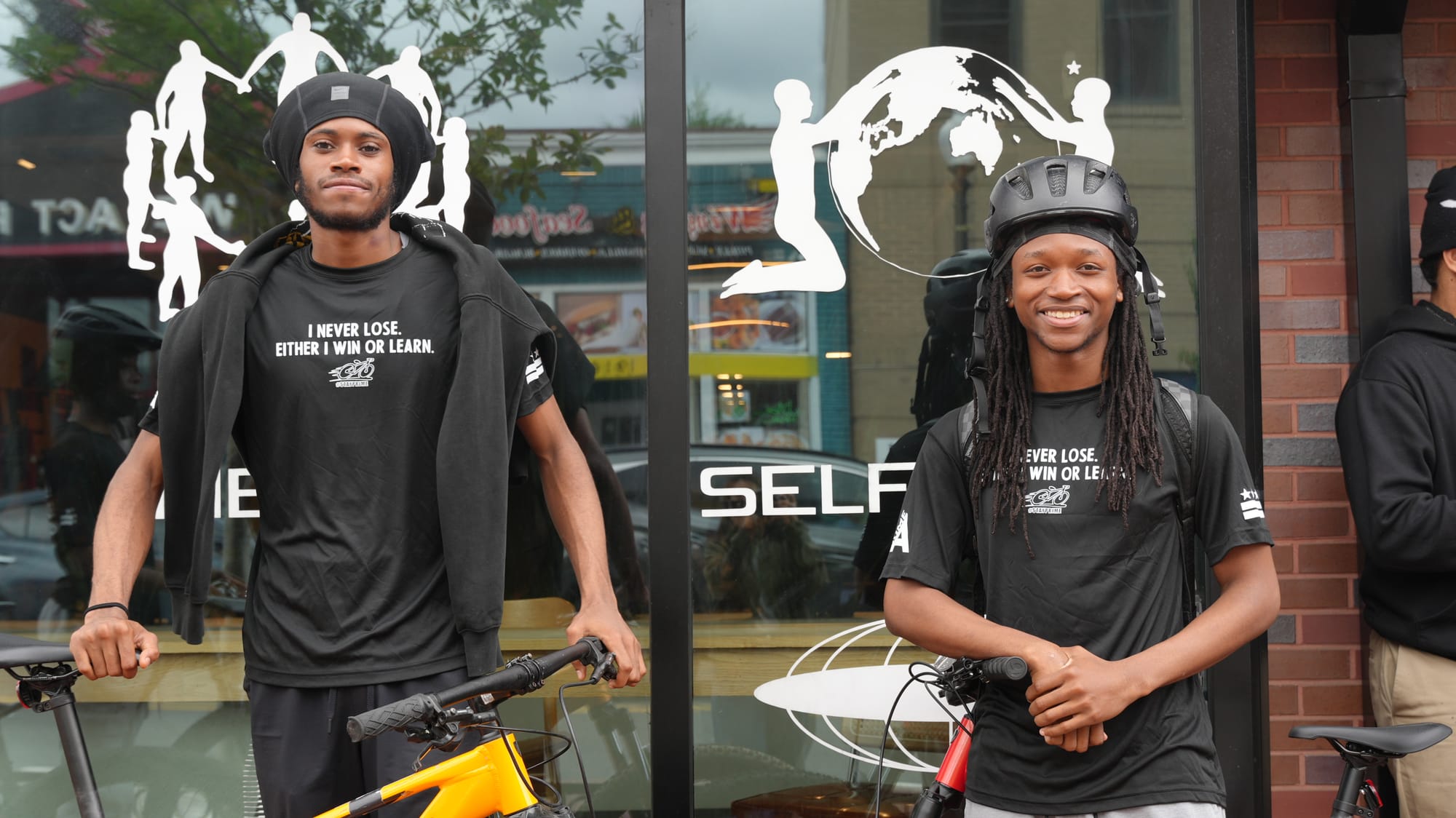
Senior Eugene Coleman was rapt during Walker-Reese’s talk. He’s a member of Prime Ability’s competitive team who cycles at least 40 miles a week.
The trip to Grounded came at the right time for him.
“It really took my mind off of things, because I had been going through a lot lately,” Coleman said after the event. “It really helped me build strength and perseverance.”
Prime Ability started as a way to let kids take risks in a safe environment, and over six years, biking has taken Clark's students to new heights: They’ve won races in biking competitions, served as leaders in local cycling clubs, worked at bike shops, and gone on to college.
With graduation just around the corner, Coleman said the conversation at Grounded made him think deeper about his own next steps — like how he would achieve his dreams of becoming a chef.
“I'm still a little scared for the real world,” he admitted. “But I'm ready.”

The outlet is pitching its newly robust metro section with ads and activations around town

A new Obama Center sculpture honoring Harriet Tubman has thrust one of the District's most talented artists into the national spotlight.

Domo Wells’ designs for women’s soccer merch have deep roots in D.C. culture.

Our reporter survives an overnight journey of ambient music — and the soul — at Rhizome.
With your help, we pursue stories that hold leaders to account, demystify opaque city and civic processes, and celebrate the idiosyncrasies that make us proud to call D.C. home. Put simply, our mission is to make it easier — and more fun — to live in the District. Our members help keep local news free and independent for all: